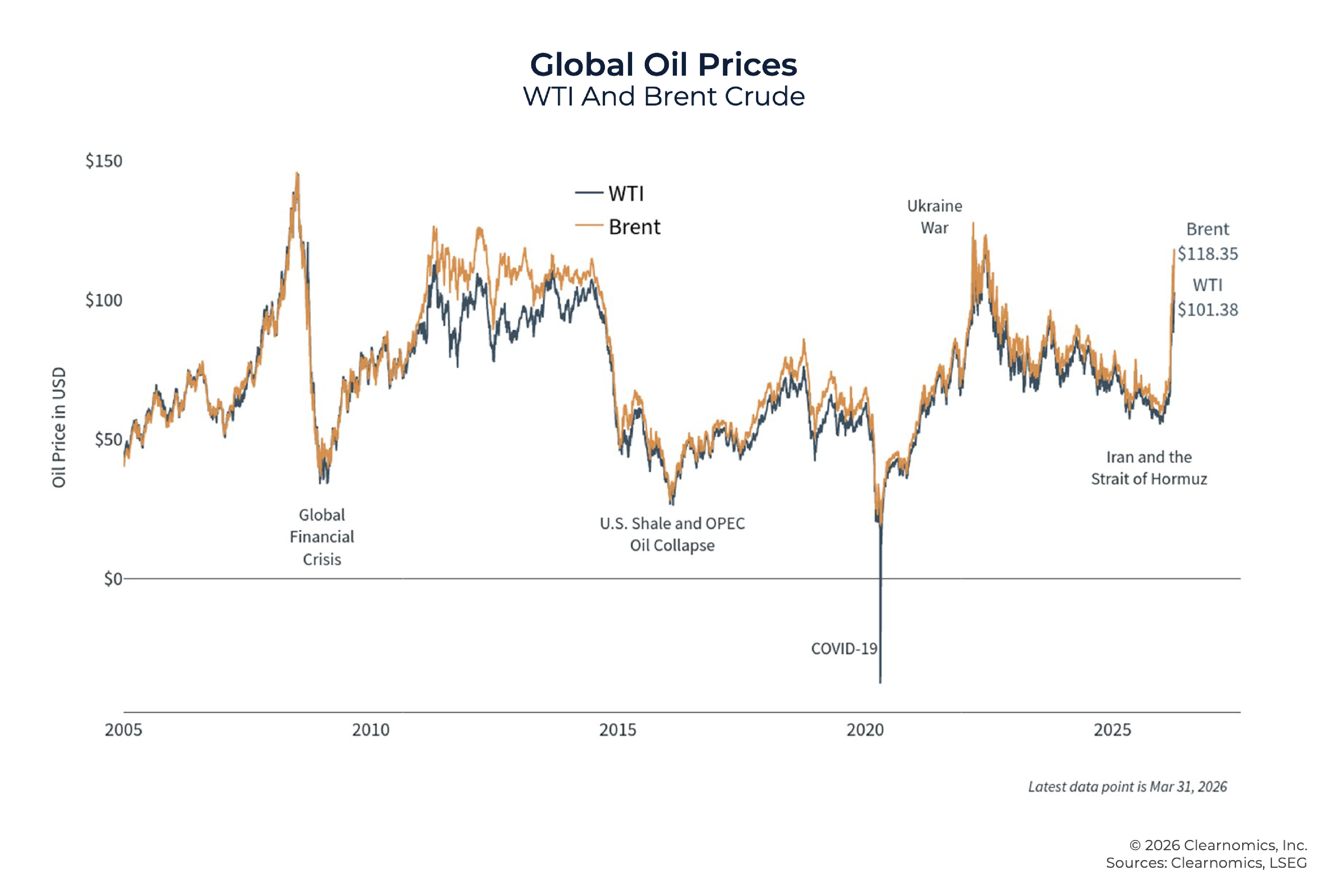
Advisors entered 2026 facing a familiar but challenging dynamic: a surge in headline-driven uncertainty prompting clients to question whether they should take action with their portfolios. A combination of geopolitical conflict, rising oil prices, evolving tariff policy, persistent inflation, and questions around artificial intelligence has contributed to the first meaningful market pullback following a strong 2025. While these developments can heighten investor anxiety, the more pressing challenge for advisors is helping clients distinguish between short-term noise and long-term fundamentals, avoiding reactive decisions that could undermine financial plans.
In this article, James Liu, CEO of Clearnomics, explores how advisors can address client market concerns in a reassuring, data-driven way, helping clients maintain perspective and recognize that the underlying economic and market backdrop remains more resilient than headlines may suggest.
Corporate earnings are growing at an above-average pace, bond yields are meaningfully positive after years of near-zero rates, and diversification is proving effective as leadership broadens beyond large-cap U.S. equities. Even the current decline remains well within historical norms, with pullbacks of similar or greater magnitude occurring regularly without derailing long-term returns. At the same time, geopolitical shocks – while consequential in the near term, especially through energy markets – have historically been temporary drivers of volatility rather than lasting determinants of portfolio outcomes. Oil price spikes, for instance, can contribute to inflation and complicate central bank policy, but are often moderated over time as supply adjusts and demand responds.
At the same time, there are legitimate risks. Inflation remains above target across multiple measures, and rising energy costs may limit the Federal Reserve’s ability to ease policy. This creates a more complex environment for both equities and fixed income, particularly as bond markets adjust to a higher-for-longer rate backdrop. Meanwhile, the labor market is showing signs of cooling beneath the surface, with a growing divergence between higher- and lower-income households. Credit conditions are also tightening even as yields remain attractive. Structural shifts – including the ongoing AI investment cycle and evolving global trade policy – further complicate the outlook by introducing both opportunity and disruption across sectors, while elevated valuations in parts of the market leave less room for error.
In this environment, portfolio construction and risk management take precedence over prediction. Diversification across sectors, asset classes, and geographies remains valuable as leadership rotates and different segments respond differently to inflation, interest rates, and global events. Similarly, equity investors are increasingly reliant on earnings growth rather than expanding valuations, reinforcing the importance of focusing on fundamentals and maintaining broad exposure rather than concentrating in a narrow set of themes such as mega-cap technology or early-stage AI beneficiaries.
Ultimately, the central lesson is that while the sources of uncertainty evolve, the principles of successful investing remain consistent. Periods of volatility and discomfort are not anomalies to be avoided, but inherent features of markets that reward discipline and long-term thinking. Advisors play a critical role in helping clients understand that well-constructed portfolios are designed not to avoid every downturn, but to endure them and participate in subsequent recoveries. By reinforcing perspective, emphasizing diversification, and maintaining alignment with long-term goals, advisors can help clients navigate uncertainty with greater confidence while demonstrating the long-term value of financial planning.
Read More…