Financial advisors often begin new client relationships with a long checklist of logistical onboarding tasks – transferring accounts, gathering data, completing paperwork, and integrating information into the firm’s CRM. Yet focusing exclusively on these operational details risks overlooking a more important foundation: understanding what truly matters to the client. A clear picture of a client’s goals and motivations serves as a kind of ‘North Star’ for planning decisions, helping ensure that technical recommendations align with the client’s broader vision for their life. Which is why discovery meetings play such an important role early in the relationship. They help advisors build trust, clarify priorities, and signal that financial planning is about more than numbers – it is also about helping clients build lives that feel meaningful and fulfilling.
However, helping clients articulate meaningful goals is often more difficult than it first appears. Many clients feel uncomfortable discussing their finances openly, especially with someone they have only recently met. At the same time, clients often struggle to connect specific financial goals with the deeper values driving them. A client who says they want to buy a boat, for example, may actually be expressing a desire for family connection, relaxation, or a sense of accomplishment. Without exploring those underlying motivations, advisors may end up planning around surface-level objectives that fail to capture what truly matters.
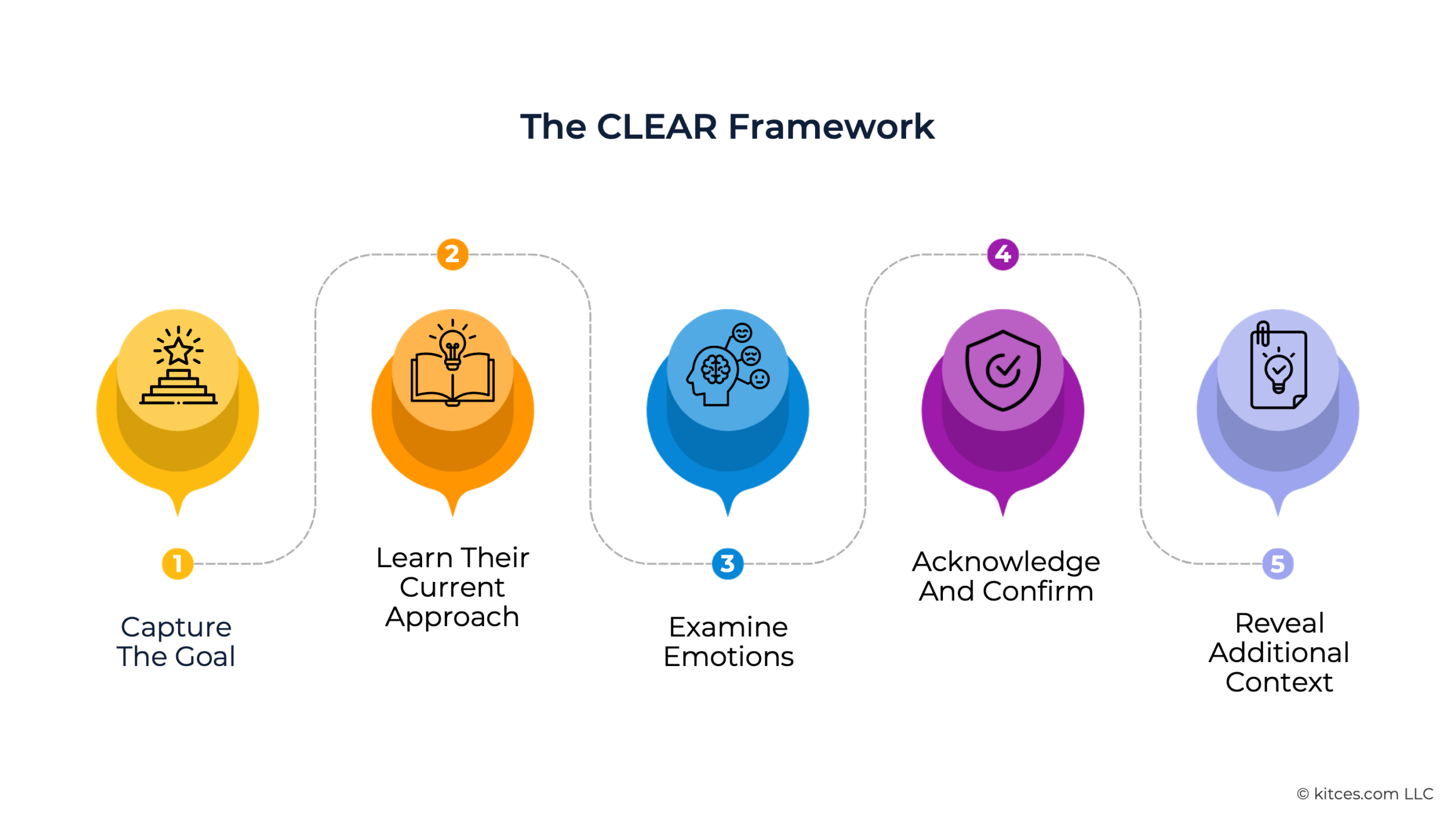
In this article, Senior Financial Planning Nerd Sydney Squires describes how the CLEAR Framework can provide advisors with a structured approach to bring more depth to discovery conversations. The process begins by Capturing the Goal, clarifying the client’s objective in practical terms such as timing, scale, and expectations. Advisors then Learn the Client’s Current Approach, exploring what steps – if any – the client has already taken toward the goal. Next, advisors Examine Emotions, asking how the client feels about their progress and what achieving the goal would mean to them personally. After gathering this information, the advisor Acknowledges and Confirms their understanding by summarizing what they have heard and allowing the client to refine or correct it. Finally, the advisor invites the client to Reveal Additional Context by sharing any remaining details or considerations that might influence the goal. Taken together, these steps move the conversation from surface-level facts to a deeper understanding of motivations, assumptions, and emotional significance.
Ultimately, the key point is that effective discovery meetings are not just about collecting a list of goals, but about understanding what those goals represent. By asking thoughtful follow-up questions, listening carefully for emotional cues, and creating space for clients to reflect on their values and experiences, advisors can uncover the deeper meaning behind financial objectives. Frameworks like CLEAR provide helpful structure, but their real value lies in supporting curiosity, empathy, and deeper listening throughout the conversation. And when advisors move beyond simple goal capture to explore the deeper motivations shaping those goals, they are better positioned to craft recommendations that resonate personally with clients – improving engagement and follow-through while helping ensure that the resulting financial plans truly support the lives their clients want to lead!
Read More…