Add Silicon Canals to your Google News feed. 
Research suggests that chronic stress or trauma can trigger an overactive fight-or-flight response that persists long after the original threat has disappeared. That single fact explains a phenomenon millions of people experience but rarely have language for: the vacation they can’t enjoy, the weekend that feels like a holding pattern, the promotion that brings no relief. They earned the rest. They have the time. And their body won’t let them take it.
Your Body Is Still Running the Old Program
The sympathetic nervous system appears to mobilize you during danger. Heart rate climbs. Muscles tense. Digestion slows. Attention narrows. This is brilliant engineering when you’re facing an actual threat. The problem is that this system increases activity in response to stress and prepares the body for extra demands, and it doesn’t come with a calendar. It has no way of knowing the crisis ended three years ago.
So the person who grew up in a volatile household, or spent years in financial freefall, or endured a relationship where safety was conditional, can build an entirely new life and still feel the hum. That low-grade alertness. The inability to sit without reaching for something productive. The way silence feels suspicious rather than peaceful.
This is what it looks like when the emergency is over but the nervous system hasn’t been informed.

Survival Mode as Identity
Here’s the part nobody warns you about: when your body has been in survival mode long enough, productivity starts to feel like safety. Rest starts to feel like vulnerability. And the distinction between “I want to do this” and “I need to stay busy or something terrible will happen” collapses entirely.
I wrote about a related pattern in my piece on people who stay calm during crises and fall apart two days later over a dropped glass. The nervous system holds the weight precisely long enough to be useful, then releases it at the first safe moment. But what happens when no moment ever feels safe enough for that release?
The weight just stays.
People in this state often describe a strange guilt when they try to relax. Not the mild “I should probably be doing something” variety. A physical sensation closer to dread. Their chest tightens. Their thoughts race toward worst-case scenarios. Lying on the couch feels like standing on the edge of a cliff.
What Dysregulation Actually Looks Like
Nervous system dysregulation doesn’t always look dramatic. It often presents as a collection of habits that seem perfectly reasonable on the surface:
Checking your phone within seconds of waking up. Filling every gap in the day with tasks. Feeling strangely anxious on the first day of vacation. Sleeping lightly, always half-alert. Needing background noise to tolerate stillness.
As observers of the nervous system regulation trend have noted, beneath the wellness aesthetics and breathwork reels, there’s a genuine physiological reality driving this conversation. People are recognizing themselves in the language of dysregulation because the experience is widespread, particularly among those with histories of chronic stress, poverty, discrimination, or unstable caregiving environments.
In my earlier piece on children labeled “too sensitive,” I explored how emotional suppression in childhood creates adults who treat their own needs like an imposition. The inability to rest follows the same architecture. When your early environment taught you that stillness was dangerous (because unpredictable things happened in the quiet moments), your nervous system filed a permanent memo: keep moving.
The Body Keeps the Emergency
One of the more persistent misconceptions about trauma is that understanding what happened is enough to resolve it. You do the cognitive work, identify the patterns, maybe even forgive the people involved, and then wonder why your body still jolts awake at 3 AM.
The reason is that common understandings of the nervous system often miss something fundamental. Many researchers suggest that trauma responses aren’t stored neatly in the part of the brain that processes language and logic. They appear to be embedded in the body’s threat-detection systems, which operate faster than conscious thought. You can know, intellectually, that you’re safe. Your nervous system runs on a different kind of knowing.
This is why someone can have a beautiful apartment, a stable relationship, money in the bank, and still feel like something terrible is about to happen. The cognitive evidence says safe. The somatic evidence says danger. When those two signals conflict, the body usually wins.

The Productivity Trap
Modern work culture accidentally provides the perfect camouflage for a dysregulated nervous system. Hustle culture rewards exactly the behaviors that chronic stress produces: hypervigilance rebranded as “attention to detail,” inability to rest reframed as “drive,” constant availability as “dedication.”
The person who can’t stop working gets promoted. The person who can’t stop scanning for threats becomes the one everyone relies on in a crisis. The coping mechanism becomes the career.
And then, eventually, it catches up. Burnout, chronic pain, insomnia, autoimmune flares. The body presents the invoice for years of operating without a pause.
Some frameworks for trauma therapy map recovery across multiple levels: inner parts, relationships, and meaning. A key consideration is knowing when to process and how integration unfolds. You can’t just think your way past a body that’s still bracing for impact.
What “Getting the Signal” Actually Requires
If the core issue is that the nervous system never received the message that the emergency ended, the work is about delivering that message. Repeatedly. Through channels the body actually trusts.
Cognitive understanding alone won’t do it. The signal needs to arrive somatically: through breathing patterns that may help activate the parasympathetic system, through physical environments that consistently prove safe over time, through relationships where repair happens after rupture (rather than rupture being the only pattern the body knows).
This is slow, unglamorous work. There’s no single breakthrough moment where the nervous system suddenly flips from alert to calm. There are small accumulations of evidence, collected by a body that has every reason to be skeptical.
The person who flinches when someone raises their voice, even though nobody in their current life raises their voice. The person who hoards food even though the fridge is full. The person who can’t nap, can’t delegate, can’t take a compliment at face value. These aren’t character flaws. These are translations of old emergencies into present-tense behaviors.
Safety Has to Be Practiced, Not Just Declared
You cannot convince your nervous system that safety exists by telling it once. Safety, for a body that has been chronically activated, is a language it has to relearn through repetition. The same way someone learning a new language needs thousands of exposures before comprehension becomes automatic, a dysregulated nervous system needs thousands of moments of actual safety before it stops waiting for the other shoe to drop.
This means the person trying to recover will look, from the outside, like they’re doing nothing. Sitting still. Breathing. Tolerating boredom without filling it. That “nothing” is some of the hardest work they’ll ever do, because every cell in their body is screaming that stillness is the prelude to catastrophe.
In my piece about people who apologize before asking a question, I traced how childhood dynamics imprint onto workplace behavior. The inability to rest follows the same logic. It’s not about discipline or willpower. It’s about a body that learned, during a formative period, that letting your guard down had consequences.
The emergency is over. It has been for years, sometimes decades. The work now is convincing the body of what the mind already knows. And that work deserves patience, not productivity hacks.
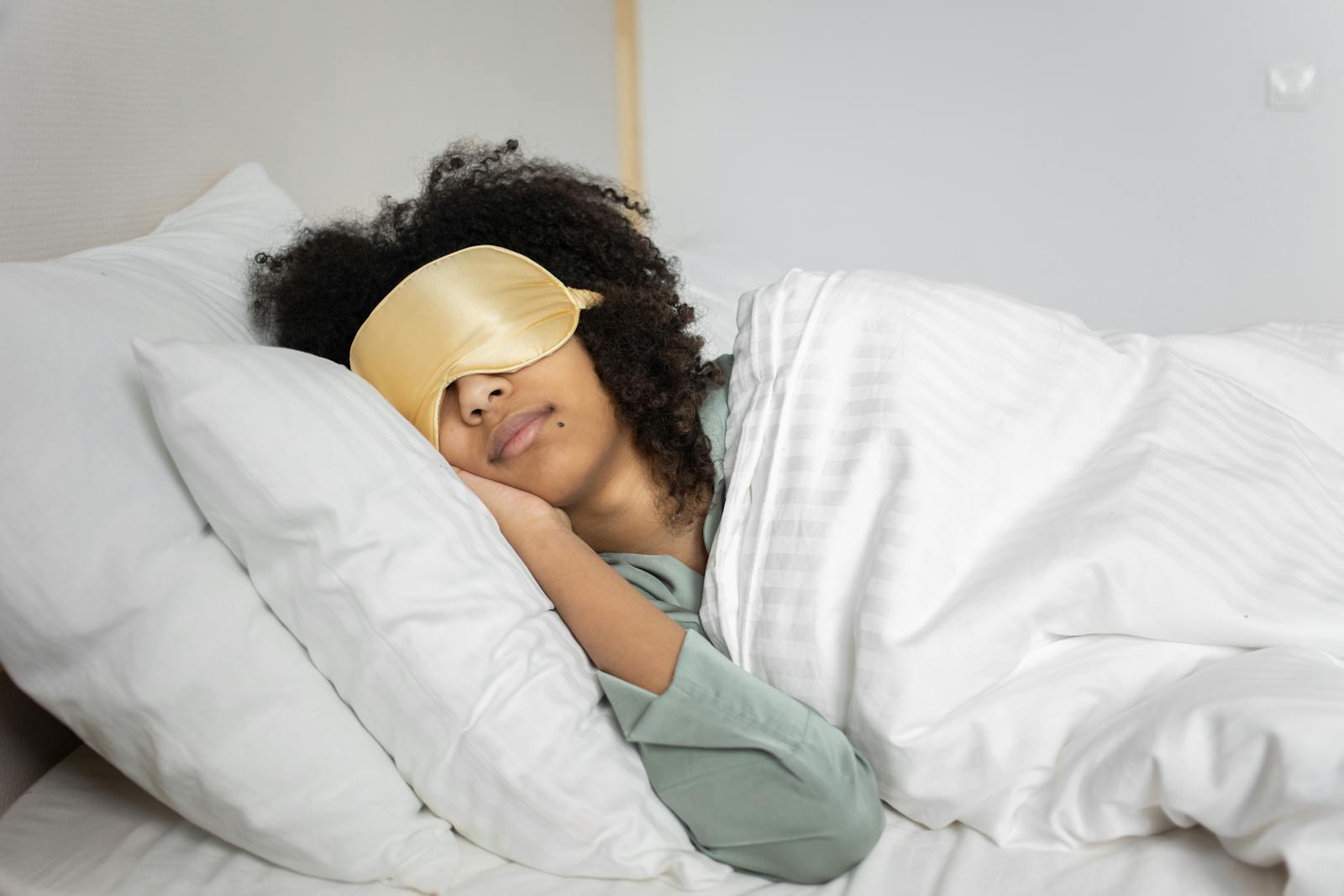
Feature image by KATRIN BOLOVTSOVA on Pexels
From the editors
Undercurrent — our weekly newsletter. The sharpest writing from Silicon Canals, curated reads from across the web, and an editorial connecting what others cover in isolation. Every Sunday.
Free. No spam. Unsubscribe anytime.