Add Silicon Canals to your Google News feed. 
You’re half asleep, one arm tucked under a pillow, when you feel a warm body press into the curve behind your knees. You don’t reach for your phone. You don’t adjust your position. Something in your chest just loosens, and you sink a little deeper into the mattress. The warm body is your dog.
Millions of people know this exact feeling. And most of them, if pressed, would describe it the same way: it feels like being held. Even though no one is holding them.
That feeling has a biological explanation, and it runs deeper than comfort or habit. The warmth of a dog pressed against your body appears to activate some of the same neurochemical pathways that fire during intimate human contact. Which means that for the growing number of people who sleep alone, a dog on the bed may be doing more than keeping them company.

The Oxytocin Loop Between Dogs and Humans
Oxytocin is often reduced to a headline about “the love hormone,” but the reality is more layered. It’s a neurotransmitter that substantially impacts a range of social and reproductive activities, including pair bonding, maternal behavior, and collaborative engagement. It shapes how safe we feel in the presence of another body.
What makes the human-dog relationship unusual is that the oxytocin system appears to work in both directions. Research on the bond between dogs and their owners has revealed what scientists describe as an oxytocin-mediated strong social bond, one that evolved over thousands of years of close association. Studies indicate that when dogs and humans gaze at each other, oxytocin levels rise in both species. This is a feedback loop that appears to mirror bonding mechanisms between parents and infants.
That loop doesn’t shut off at bedtime. If anything, the conditions of sleep amplify it: sustained physical contact, reduced stimulation, rhythmic breathing, warmth.
Why Warmth Matters More Than We Think
Skin-to-skin contact has been studied most extensively in the context of newborn care, where it’s shown to stabilize heart rate, regulate temperature, and trigger oxytocin release in both parent and child. The mechanism relies heavily on warmth and pressure against the body.
Dogs run a baseline body temperature between 101°F and 102.5°F, which is several degrees warmer than the human average. When a dog curls against your torso or behind your legs, the warmth they radiate is persistent and localized. It’s the kind of steady thermal input that the body’s somatosensory system registers as contact with another living being.
This is where the comparison to partner contact becomes less metaphorical and more physiological. The body doesn’t always distinguish between sources of warmth and pressure. It responds to the signal. And the signal from a dog sleeping against you shares key features with the signal from a partner doing the same.
The Self-Soothing Dimension
There’s also evidence that non-noxious sensory stimulation (gentle touch, warmth, rhythmic pressure) activates self-soothing behaviors linked to oxytocin release. The body has built-in mechanisms for calming itself through sensory input, and a sleeping dog provides several of those inputs simultaneously: warmth, weight, the subtle vibration of breathing, and the particular softness of fur against skin.
Some people who sleep with their dogs report falling asleep faster and waking up less anxious. The mechanism isn’t mysterious. Their nervous system is being regulated by another body’s presence, the same way it would be in close contact with a partner.
“Feeling Held” Is a Neurological Event
The phrase “feeling held” sounds emotional, and it is. But it also describes something happening in the brain. When oxytocin levels rise and the autonomic nervous system shifts toward parasympathetic dominance (the rest-and-digest state), the subjective experience is one of safety, containment, being held in place by something outside yourself.
This is why people who sleep with their dog frequently describe the experience in language that sounds like intimacy. “I feel less alone.” “I sleep better when she’s there.” “It just feels like someone’s with me.” They’re not projecting human qualities onto their dog. They’re accurately reporting what their nervous system is telling them.
Research on how oxytocin shapes our relationships shows that the hormone reduces fear and anxiety while increasing trust and empathy. These aren’t daytime-only effects. The neurochemical environment that oxytocin creates is precisely the one most conducive to deep, restorative sleep.

The Loneliness Gap
There’s a broader context here worth naming. Rates of people living alone have been climbing across Europe and North America in recent decades. Single-person households have become increasingly common. And while living alone carries many advantages, one consistent challenge is the absence of nighttime physical contact.
Sleep is when the body is most vulnerable, most open to the presence or absence of another. For people who sleep alone, the bed can become a nightly reminder of solitude. A dog changes the sensory landscape of that experience entirely.
This isn’t a substitute for human connection. But the neurochemistry suggests it is a genuine form of connection, one that evolved alongside the domestication of dogs and runs deeper than mere affection. The bond is ancient, and the body recognizes it.
Studies have also shown that dog ownership can boost oxytocin levels and improve empathy and social behavior over time, suggesting the relationship compounds. The longer you live with a dog, the more attuned your nervous system becomes to their presence.
What This Means for How We Think About Sleep
Conventional sleep hygiene advice often treats the bedroom as a zone of sensory minimalism: dark, cool, quiet, alone. And for some people, that works. But research on oxytocin and co-sleeping suggests that the presence of a warm, breathing body may actually improve sleep quality for many people, not degrade it.
The key variable seems to be whether the dog’s presence is experienced as soothing or disruptive. Dogs that sleep calmly and maintain contact without excessive movement may offer the most benefit. Dogs that pace, scratch, or take up the entire bed may trigger a different neurochemical cascade altogether.
In my recent piece on the assumptions couples make before retirement, I explored how proximity and physical presence get redefined during major life transitions. Sleep arrangements are part of that redefinition. For people entering retirement alone, or for anyone navigating extended periods without a partner, a dog’s nightly presence can be quietly transformative.
The Permission Problem
There’s a subtle stigma around admitting that your dog is your primary source of physical affection. People joke about it, but the joking carries a defensive edge. As if needing to be touched is something to outgrow, or as if a dog’s warmth is a lesser form of comfort.
The biology tells a different story. Oxytocin doesn’t rank its sources. The body responds to warmth, pressure, and the rhythmic presence of another living creature. Whether that creature is a partner or a dog, the downstream effects appear to show significant overlap.
People who sleep with their dogs aren’t compensating for something missing. They’re responding to something real: a body next to theirs, generating warmth, triggering oxytocin, and telling their nervous system that tonight, they are not alone.
That’s not sentimentality. That’s physiology.
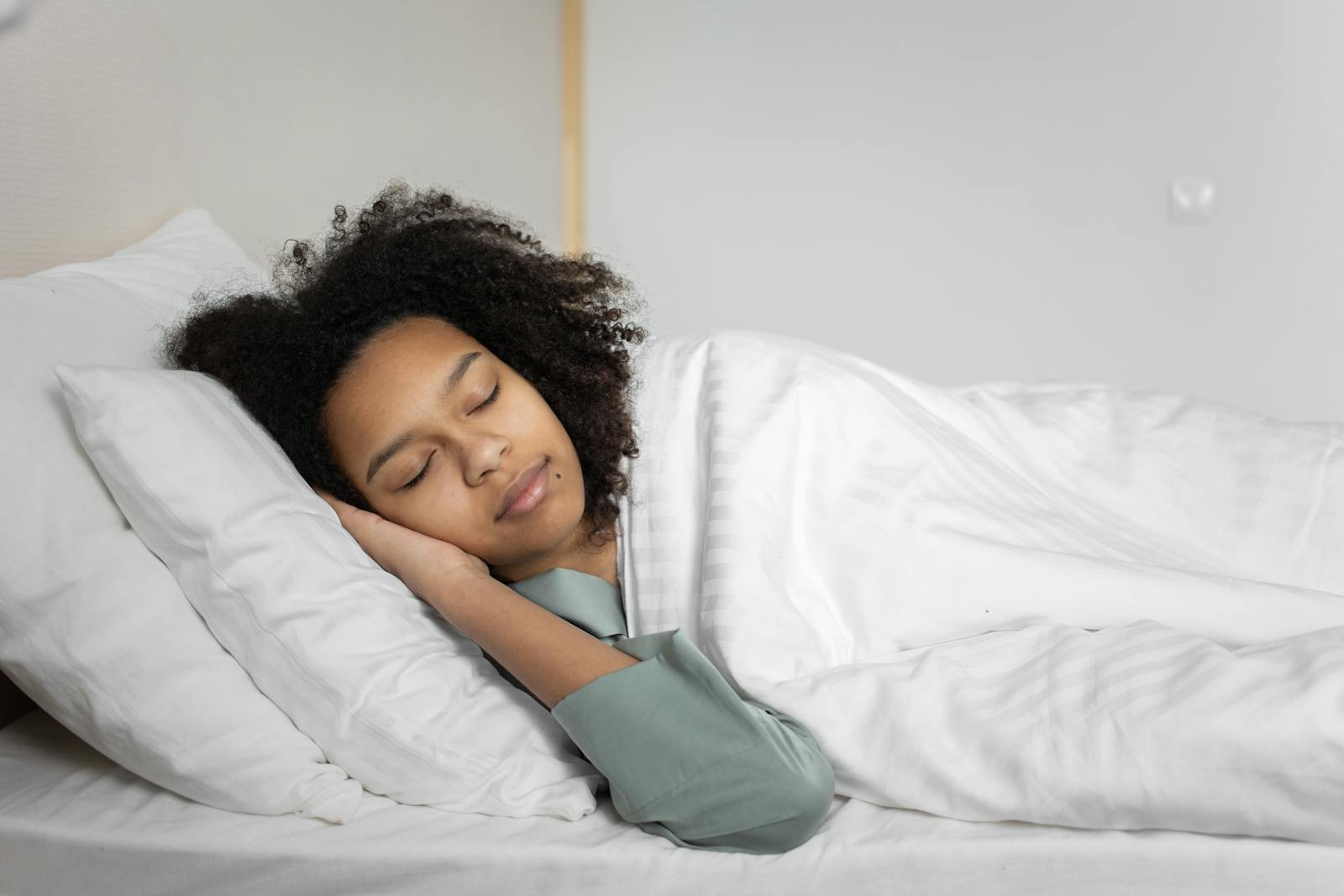
Feature image by KATRIN BOLOVTSOVA on Pexels
From the editors
Undercurrent — our weekly newsletter. The sharpest writing from Silicon Canals, curated reads from across the web, and an editorial connecting what others cover in isolation. Every Sunday.
Free. No spam. Unsubscribe anytime.