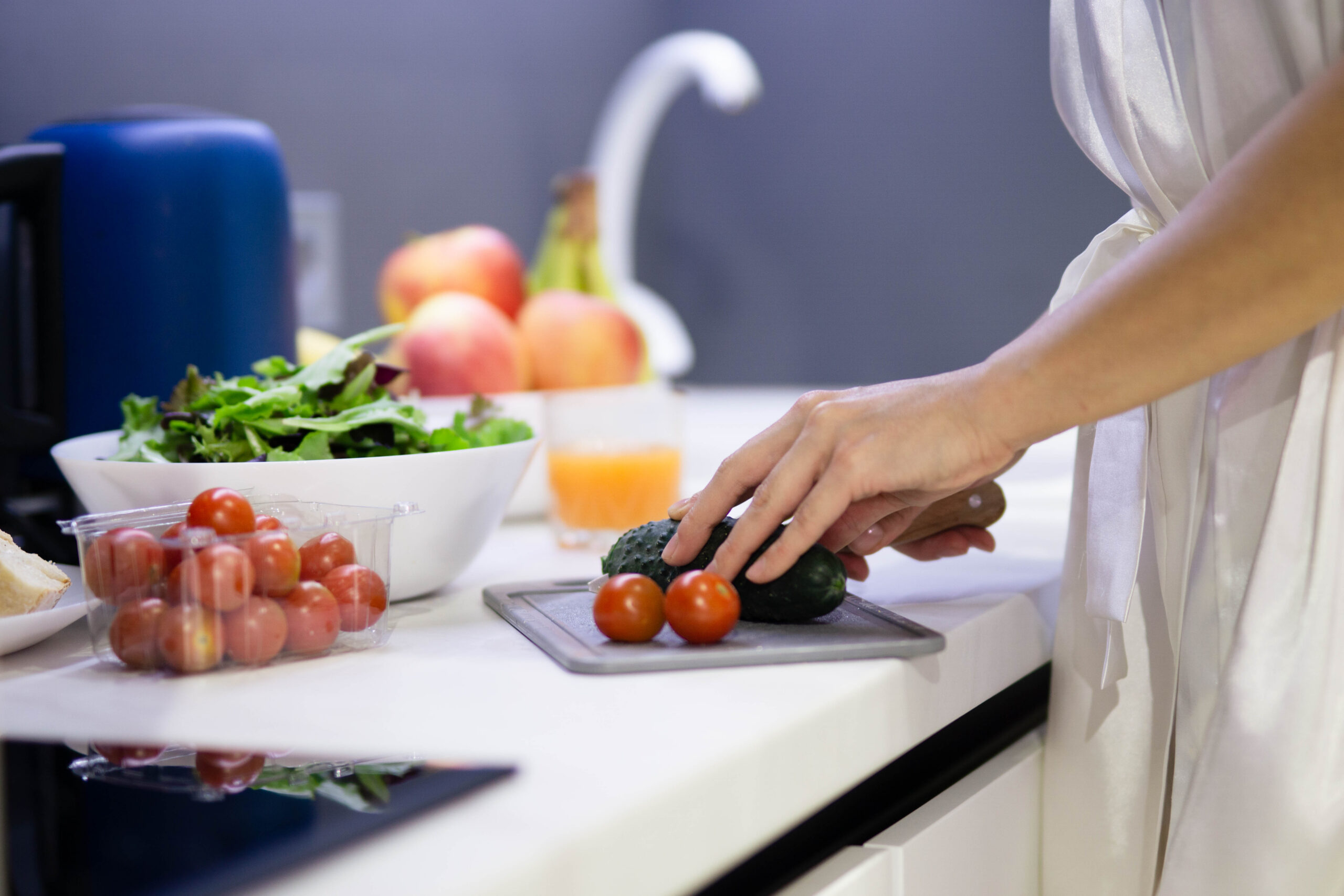
Women are three times more likely than men to invest in eating well.
What’s your healthiest habit, and why are you investing in it? For the women featured here, the answer begins with food. A sudden loss, a diagnosis, heartbreak, or family health challenges pushed nutrition from the background to the forefront.
Now they cook from scratch and spend more money on high-quality groceries. They set boundaries around what they will and will not eat. These women don’t talk about diet trends. They talk about having the energy to think clearly and handle what comes next. The following excerpts from “Health is wealth: What’s your healthiest habit?” are lightly edited for clarity.
Melek Gür, a health & longevity coach in Istanbul was diagnosed with Hashimoto’s thyroiditis at the age of 35. “This was a real wakeup call for me. After 18 years in high-stakes finance, I knew how to perform under pressure. I was disciplined, consistent, and always fit,” Gür explains.
“But I was also constantly hungry — physically and mentally. I lived in gyms and offices, counted every calorie, and spent years compensating for every meal,” she admits. On paper, she was thriving. But she grew tired of chasing health through restriction and control. “That’s when I decided to create a different approach — one that works with the body, not against it.”
What’s Gür’s healthiest habit today? “I never eat trash.” In Turkish culture, eating what is offered is considered polite, she explains. “But I set boundaries now and say, ‘No, I don’t eat that.” Gür has changed her diet completely and no longer eats gluten or refined sugar. “Importantly, I choose nourishment over convenience even though this comes with a price tag. Healthy food is expensive in Türkiye.”
Azielia Anne, a corporate strategist at Group Maybank Islamic in Kuala Lumpur, reconnected with her passion for movement when she began her career in finance. “The long hours of the job made physical activity a much-needed outlet. In the fast-paced world of finance, where Type A personalities often dominate, health isn’t just a habit, it’s a way of life. We need to be intentional about what we eat, how we rest, and how we move.”
Anne’s healthiest habit lately is prioritizing diet. That’s a challenge in the corporate environment of Kuala Lumpur, she says, where irresistible food is both affordable and everywhere. “The after-work culture often tempts one away from nutritious choices, and healthy options are both scarce and expensive.” Small efforts such as choosing better meals are part of a broader commitment to living with intention, Anne points out. “Health, clarity, and mindful choices shape what I define as a rich and fulfilling lifestyle.”
Cheryl Evans, director at Milken Institute in Washington, DC, was an only child whose parents were healthy eaters. They were focused on the value of eating vegetables and a balanced diet.
Evans’s mother earned a business degree and later passed the state nursing exam with the highest score. “Since she was very interested in health and science, I could ask her medical questions, and because of her influence I know a lot about health.”
Her mother died suddenly of a brain hemorrhage at 67. “This got me thinking about the precariousness of life. I did a lot of looking inward and I became even more focused on fitness and nutrition.”
Evans’s says her healthiest habit is being cognizant of what she eats. “I try to take note of it every day. At times, I forego eating things I like but try to maintain balance. I will eat dessert but try to do so right after a meal so that I don’t spike my blood sugar. I prepare food most days and this can be time consuming.” Evans’s notes that she spends more money on high-quality groceries and eats out less frequently than most of her friends.
Montreal-based Sévrine Labelle, directrice générale at Lab Excelles et Fonds Excelles Repreneuriat, BDC Capital, was influenced by her father’s health challenges. He was diabetic, had heart surgery at age 45, and never worked afterward. Eventually, he died of colon cancer at age 67.
“I was pretty sure I had bad genes, so I decided to help my odds by doing some research. When I was 39, I watched a documentary about the benefits of a whole food plant-based diet, and I decided at that time to go vegan. Exercise came a bit later in my life, but now I do yoga nearly every day, I do strength training a few times a week, and I walk a lot.”
Labelle says her healthiest habit is eating a plant-rich diet with fresh organic food. “I see this as an investment. I know that an omnivore diet probably costs even more, but when I look in my refrigerator I realize I am a privileged person with all my colorful and sometimes expensive fresh food. I have the responsibility to lead some intense work projects, and my way of eating gives me the energy I need to thrive.”
Elizabeth Frank, a management consultant in Toronto, first became aware of the importance of health in high school. “My brother Damian was super fit and a marathon runner. I baked him ‘marathon muffins,’ and this inspired me to start running casually.” A couple years later, however, Frank spent the summer with her other brother, Vincent, in the UK and gained about 15 pounds.
“When I came home, Damian said, ‘Oh my God, what happened to you?’ That was the start of a rather unhealthy relationship with my body. I felt like I was always battling my weight.” Frank broke the trend when she met her first husband at the age of 21. “He helped me shift my focus away from my weight. Instead, I began to focus on self-acceptance and proper self-care.”
Frank identifies her healthiest habit as eating super-fresh, homemade, and healthy food. “My only food rule today is that I cook everything from scratch.” She combines recipes and uses her intuition to pick and choose ingredients. “I particularly love making sourdough bread, granola, or pasta. My favorite dish is orecchiette with rapini and fennel sausage in homemade chicken stock.”
Frank views eating well as a contributor to fiscal responsibility. “I never compromise on the quality of my groceries — I only buy the best meat and fish. If I compare this to the alternative of eating out, my groceries are a savings.”
Monique Kavanagh, co-founder of Camp Joy Retreats in Toronto, admits she has always had a complex relationship with health. “My mother was gorgeous and skinny, a woman of her time who dieted, drank black coffee, and smoked. When I was 14, she asked me if I wanted to go to Weight Watchers.”
It wasn’t until she was 36, at the end of a relationship, that Kavanagh started to think more seriously about her health. “I was heartbroken, all of a sudden I had a stark realization that I can have control over my own decisions. ‘I’m an adult, I don’t have to have kids, and I can eat veggies’ I told myself.”
Despite taking a firm interest in her health later in life, Kavanagh says she has started every morning over the past 10 years with a healthy juice consisting of a head of celery, half an apple, ginger, and three handfuls of spinach. “I mainly eat high-protein salads for lunch or dinner when at home. I especially enjoy meatballs and chicken. Eating well has become my consistently healthy habit. Chocolate and ice cream are my kryptonite.”
Key Takeaway
Across industries and cultures, these women describe a similar shift. Nutrition is no longer incidental. It is planned and prioritized. In demanding professional lives, what they eat becomes less about indulgence and more about staying energized, focused, and resilient over time.
For more on this topic, read the full report, “Health is wealth: What’s your healthiest habit?“ It includes insights from interviews with 25 women and 25 men from across cultures and professions.