Add Silicon Canals to your Google News feed. 
There’s a moment that nobody talks about when someone loses a spouse. It doesn’t come at the funeral. It doesn’t come when the sympathy cards stop arriving. It comes at around 5:30 in the evening, when the light changes and the house goes quiet, and the person standing in the kitchen realizes they have absolutely no reason to do anything next.
No meal to prepare for two. No “how was your day” conversation to have. No familiar rhythm of someone else moving through the house, opening the fridge, turning on the news. Just a void where an evening used to be.
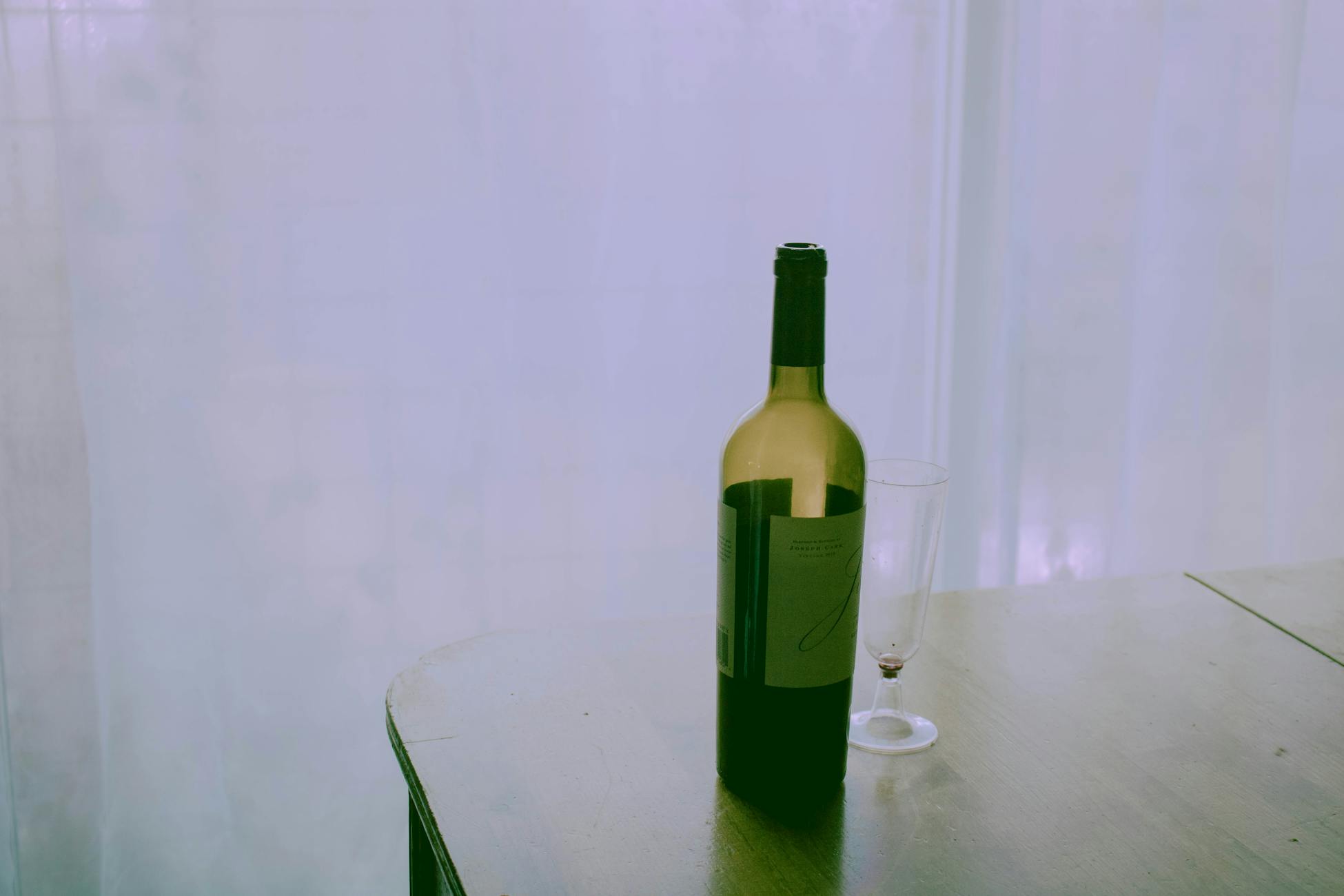
And then they pour a drink.
Not because they’re alcoholics. Not because they’ve given up. But because that glass of wine or whiskey is the only thing left in their day that still has a shape — a beginning, a middle, and an end — when everything else has become an undifferentiated blur of hours they need to survive.
I’ve been thinking about this a lot lately, partly because of conversations I’ve had with readers, and partly because of what I studied during my psychology degree at Deakin University. We’re quick to pathologize solitary drinking, and sometimes that concern is warranted. But when it comes to the recently bereaved, I think we’re often looking at the wrong thing entirely.
Grief doesn’t just take a person — it takes the architecture of your day
Here’s the thing most people don’t understand about losing a long-term partner: you don’t just lose the person. You lose every micro-structure they helped create. The morning coffee routine. The evening debrief. The way Saturdays had a different texture than Tuesdays. All of it — gone.
Psychologists call this the loss of temporal scaffolding. Your day used to have shape because another person gave it shape. Their schedule influenced yours. Their needs created tasks. Their presence marked transitions — from morning to afternoon, from work to rest, from day to night.
Research on bereavement from a 2016 study in Death Studies found that one of the most disorienting aspects of spousal loss isn’t the emotional pain itself — it’s the collapse of daily routines and the loss of what the researchers termed “shared temporal meaning.” Without the structure another person provides, days become shapeless. Hours pool together. Time loses its markers.
And that shapelessness, it turns out, is psychologically devastating in ways we underestimate.
When people describe the loneliness of losing a spouse, they often reach for emotional language — “I miss them,” “I feel empty.” But when you press a little deeper, what they’re also describing is structural. “I don’t know what to do with my evenings.” “I don’t know when to eat.” “I don’t know how to end my day.”
This structural collapse is something I’ve seen echoed in the experiences of older adults who drink alone — not in bars, but in quiet living rooms where no one expects them to be sober. The drinking isn’t rebellion. It’s architecture.
The ritual that still works
Think about what a drink actually provides in this context. Not the alcohol — the ritual.
You choose the glass. You pour. You sit. You sip. There’s a first sip and a last sip, and between them, something happens. A transition occurs. The day shifts from “enduring” to “winding down.” The drink becomes a bridge between the amorphous afternoon and the act of going to bed.
It marks time. It creates a boundary. It says: this part of the day is different from the part that came before.
Research published in Addiction (2021) examined drinking behaviors in bereaved individuals and found that increases in alcohol consumption after spousal loss were significantly associated with disrupted daily routines and loss of social role identity — not primarily with depression severity. The drinking wasn’t tracking emotional pain on a direct line. It was tracking the absence of structure.
This distinction matters enormously, because it changes the intervention entirely.
If you assume someone is drinking to numb pain, you offer therapy, support groups, medication for depression. All potentially valuable. But if someone is drinking because their day has no shape and the ritual of a glass at six o’clock is the only thing anchoring them to a recognizable version of evening — then what they actually need is other rituals. Other structures. Other ways to mark the passage of time that don’t involve alcohol.
Why we pathologize structure-seeking
Our culture has a complicated relationship with solitary drinking. We celebrate it when it looks like a sophisticated man with a whiskey and a book. We worry about it when it looks like a widow with a bottle of supermarket wine.
The difference isn’t the behavior. It’s our assumptions about the person.
I remember studying attachment theory during my degree — the work of Cindy Hazan and Phillip Shaver on adult romantic attachment — and being struck by how much of what we call “love” is actually about regulation. A secure partner helps regulate your nervous system. They co-regulate your emotions, your sleep patterns, your eating. When that person disappears, your regulatory system doesn’t just grieve. It malfunctions.
People who’ve lost their primary source of co-regulation often develop behaviors that look like problems but are actually desperate attempts to self-regulate. Solitary drinking is one. Rigid new routines are another. Sleeping at odd hours. Eating the same meal every night. These aren’t pathologies. They’re improvisations.
The person pouring a glass of red at 6pm isn’t choosing alcohol over healing. They’re building a raft out of the only materials they have left.
What a shapeless day actually feels like
Unless you’ve experienced it, it’s hard to convey how disorienting a structureless day is.
During my mid-twenties, I spent months working in a warehouse in Melbourne, shifting TVs. The job itself was draining, but looking back, at least it gave my day bones. Clock in, clock out. Structure, even miserable structure, kept me tethered.
The worst period wasn’t the warehouse. It was the stretch between leaving that job and figuring out what came next — days where I’d wake up with nothing to anchor to. No one expecting me anywhere. No tasks with deadlines. My anxiety didn’t just increase during that period. It metastasized. Without external structure, my mind ate itself alive.
And I was in my twenties, single, with my whole life ahead of me. Imagine being sixty-seven, waking up in a house that still smells faintly like someone who isn’t coming back, with a calendar that has nothing on it. Not tomorrow. Not next week. Not ever.

People who age well tend to maintain specific structures and avoid invisible stressors — but those structures are almost always built on a foundation of social connection. Remove the person at the center, and the entire architecture collapses inward.
The psychology of ritual as regulation
Research from Harvard psychologists Francesca Gino and Michael Norton has shown that rituals — even arbitrary ones — reduce anxiety and increase feelings of control. The mechanism isn’t magical. It’s structural. A ritual says: this step comes first, then this one, then this one. In a world that feels chaotic, that sequence is profoundly soothing.
For a bereaved person, the evening drink provides exactly this. The sequence of pouring, sitting, sipping, finishing — it’s a tiny narrative arc in a day that otherwise has no plot. A beginning, a middle, and an end. A small story you can tell yourself about what the evening was for.
This is why simply telling someone to “stop drinking” without offering replacement rituals is psychologically naive. You’re taking away the last piece of structure in their day and offering nothing in its place except the void they were trying to escape.
What actually helps
If you know someone who’s drinking alone after losing a spouse, here’s what I’d suggest — based on both the research and what I’ve learned about habit and structure over a decade of writing about behavior change:
Don’t start with the drink. Start with the day. Help them build new temporal markers — a morning walk, an afternoon phone call, an evening activity. The drink becomes less necessary when the day has other landmarks.
Offer rituals, not advice. Cook together on Wednesdays. Call every Sunday at five. Show up with a reason for them to mark time. People who rebuild daily structure after a period of upheaval aren’t doing it through willpower. They’re doing it through consistent, embodied routines.
Understand the difference between dependence and structure-seeking. If the drinking is escalating, if it’s causing health problems, if they can’t stop when they want to — that’s a different conversation. But one glass of wine at the same time each evening isn’t necessarily a clinical problem. It might be the only sane response to an insane amount of emptiness.
Respect the intelligence of the behavior. The person isn’t stupid. They’ve identified a problem — the shapelessness of their day — and found a solution that works. Your job isn’t to judge the solution. It’s to offer better ones.
The kindness of noticing what it really is
I think there’s something deeply compassionate about looking at a bereaved person’s solitary drink and seeing — not weakness, not denial, not addiction — but an improvised structure in a life that’s lost all its load-bearing walls.
It doesn’t mean the drinking is good for them. It doesn’t mean we shouldn’t be concerned. But it means we’re starting from the right place: understanding what the behavior is doing before we rush to eliminate it.
Because here’s what I’ve learned, both from studying psychology and from my own stumbling journey through anxiety and reinvention: people are rarely as broken as their behaviors make them look. Most of the time, they’re solving a problem we haven’t bothered to see.
The glass at six o’clock isn’t the problem. The empty hours surrounding it — that’s what needs filling.
And filling them isn’t the bereaved person’s job alone. It’s ours. The friends, the family, the neighbors who could call at five. Who could stop by on Thursday. Who could create one small reason for the day to have a shape that doesn’t depend on a bottle.
That’s not intervention. That’s just presence. And sometimes, presence is the only ritual that actually heals.