No Result
View All Result
  • Login
Thursday, April 9, 2026
FeeOnlyNews.com
  • Home
  • Business
  • Financial Planning
  • Personal Finance
  • Investing
  • Money
  • Economy
  • Markets
  • Stocks
  • Trading
  • Home
  • Business
  • Financial Planning
  • Personal Finance
  • Investing
  • Money
  • Economy
  • Markets
  • Stocks
  • Trading
No Result
View All Result
FeeOnlyNews.com
No Result
View All Result
Home Economy

AI, Technology, and Work – Econlib

by FeeOnlyNews.com
2 months ago
in Economy
Reading Time: 4 mins read
A A
0
AI, Technology, and Work – Econlib
Share on FacebookShare on TwitterShare on LInkedIn


Generative artificial intelligence (AI) is upending professions as diverse as art, cinema, accounting, national defense, and education. Some even argue that AI will render almost all work obsolete. They say its ability to “think” and accomplish tasks previously solely in the realm of human ability will mean that humans will not need to work; the machines will do everything for us. Whether this would be a good thing or a bad thing depends on the story one wants to tell. 

Some claim the loss of work to AI will lead to class warfare, as the poor get poorer and the rich get richer. Others think that, if AI ends work, it necessarily means that scarcity ends as well, and thus there will be no need for money. Others claim AI will destroy all human life long before we get to that point and it’ll be moot. Still others say that AI will obey the laws of economics and we’ll never reach that point (on these last two, see Ole Miss economist Henry Thompson’s working paper “Some Economics of Artificial Super Intelligence”). The question of what will happen if AI eliminates work is interesting, but I want to focus on how AI is likely to affect work and jobs.

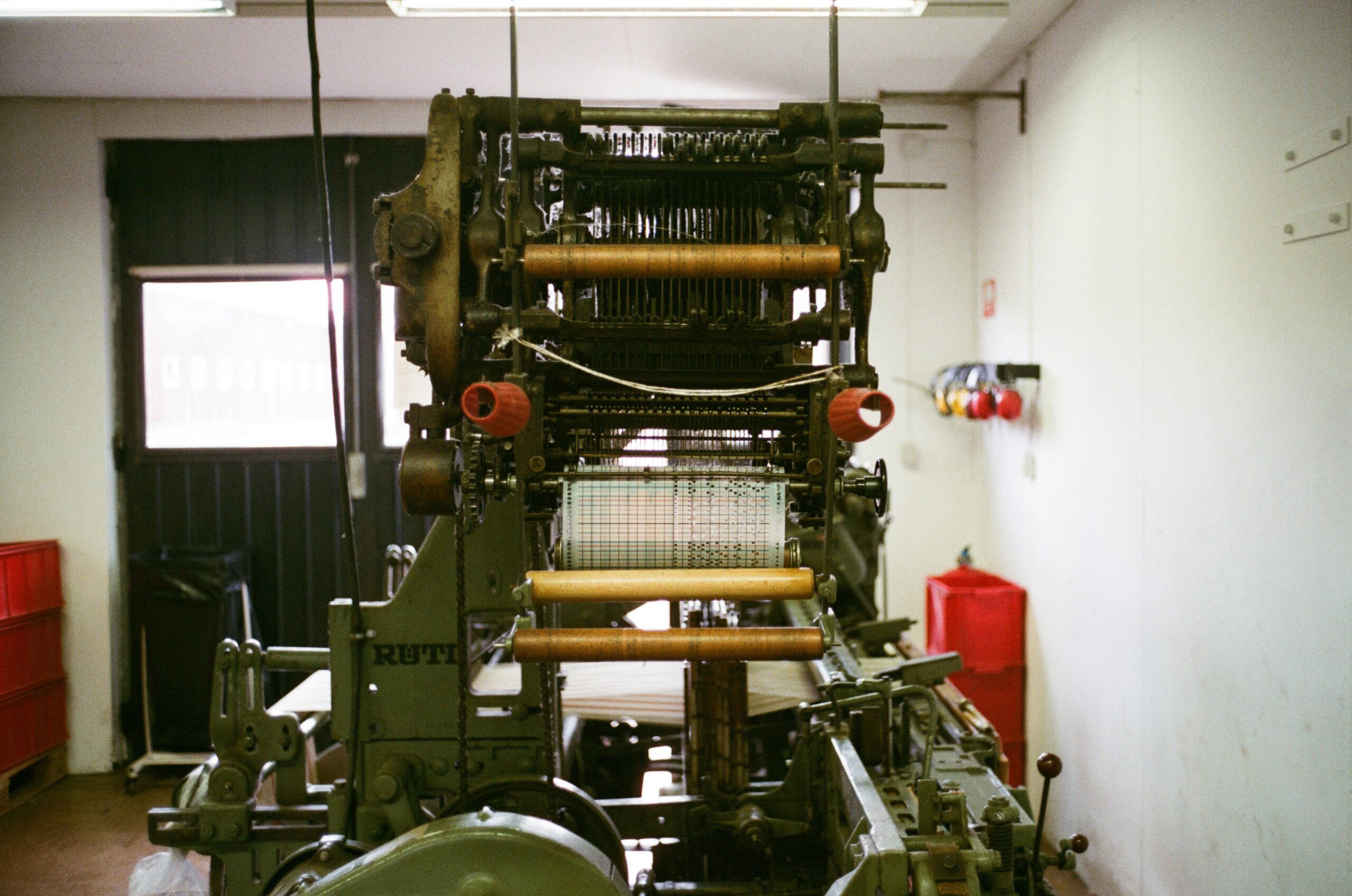
Concerns about the effect of machinery on labor and labor income is hardly new. Many of the concerns about AI echo those of the Luddites, a movement in 19th-century Great Britain against the introduction of weaving machinery into the trade. The Luddites feared that some of the automation entering weaving would lead to cheap, low-quality output and displace skilled workers. They launched a sabotage campaign against the machinery, but ultimately lost the battle. Over the next two centuries, the textile industry became highly automated.

Fast forward to the 20th-century, John Maynard Keynes made a similar (albeit less pessimistic) prediction about how automation would affect work. In his 1930 article “The Economic Possibilities for Our Grandchildren,” Keynes argued that automation would allow us to work for just three hours a day.

Both predictions ended up being wrong. 

Some weavers lost jobs, but the industry was hardly overtaken by slop. Wages actually rose for skilled textile workers. In 1800, the average wage of a textile worker was about 25 shillings a week (£91.68, adjusted for inflation), or approximately £4,767, inflation-adjusted, per year. Currently, the average annual textile wage for a skilled worker is £29,000. 

Why did wages rise? Because automation changed the nature of work. Workers who could not do more than recreate what the machines did, lost their jobs. Those who found ways for the machines to complement their work saw their productivity (and thus wages) increase. A recently-accepted paper in the Journal of Labor Economics by Daron Acemoglou, Hans Koster, and Ceren Ozgen finds these results hold even with modern automation.

What about Keynes’s prediction? According to the Bureau of Labor Statistics, people in 2024 worked on average 42 hours (full-time) or 34.2 hours (all workers) per week. While that is down some from Keynes’s day of approximately 47 hours a week, it’s still a far cry from 15 hours a week. 

In a short paper published last year in Industrial and Organization Psychology, my colleague Dr. Anne-Marie Castille and I explore the reasons for these incorrect predictions. We argue that the reason Keynes and the Luddites were incorrect is that they failed to recognize that automation did not resolve the reason we work: resources (not the least of which is time) are scarce. 

Initially, we spend our time on high marginal value activities. As automation comes along to reduce the amount of time we need to spend on those activities, it frees up time for lower marginal value activities. That is, activities we were not previously engaging in because the cost was too great. What those activities are differ from person to person. And sometimes, new desires are created or discovered. We write:

“Domestic chores used to be very labor-intensive, requiring many labor hours to accomplish. Washing laundry required each item to be hand washed, dried on a clothesline, and brought in when finished. With the invention and proliferation of the washing machine, the time needed to wash laundry dropped precipitously. The labor hours per load of laundry are probably less than 20 mins. Domestic laborers (mainly women) now had much more time on their hands. They could choose to take leisure or choose to spend those hours in other ways. Many women chose to spend these newly liberated hours by joining the workforce.

…

“As people got wealthier, their basic desires of food security, shelter security and companionship were satisfied using fewer resources. Thus, the trade-off we have discussed came about: Does one use the newfound time for leisure or for work so that we may satisfy other desires?”

I argue now that the same pattern will repeat with generative AI. As AI proliferates throughout our society, some jobs will be lost, yes. But new jobs will be discovered. What those jobs are, I do not know. No one knows. Human ingenuity and desire know no bounds. We will discover new ways to satisfy our new desires, and we will continue to work. AI will not solve the underlying motivation for work: scarcity.


*Average weekly hours of all employees, total private, seasonally adjusted, Series ID: CES0500000002.

**See table 2.



Source link

Tags: EconlibTechnologywork
ShareTweetShare
Previous Post

Best CD rates today, February 19, 2026 (lock in up to 4% APY)

Next Post

Stock Futures Ease 0.3% With Real Estate-Heavy Earnings Calendar in Focus

Related Posts

Iran oil shock stirs memories of 1997 Asian Financial Crisis — but here’s why history may not repeat itself

Iran oil shock stirs memories of 1997 Asian Financial Crisis — but here’s why history may not repeat itself

by FeeOnlyNews.com
April 9, 2026
0

A month into the worst oil supply disruption since the 1970s Arab embargo, the economic pain spreading across Asia is...

Europe Begins Energy Rationing As The Crisis Moves Into Daily Life

Europe Begins Energy Rationing As The Crisis Moves Into Daily Life

by FeeOnlyNews.com
April 9, 2026
0

Europe is now removing any doubt about the seriousness of this crisis, because governments do not tell millions of people...

The Iran War Update | Armstrong Economics

The Iran War Update | Armstrong Economics

by FeeOnlyNews.com
April 8, 2026
0

I believe that Benjamin Netanyahu is a highly dangerous psychopath, which is defined as a person characterized by traits such as...

Markets shift back toward potential Fed rate cut this year with Iran ceasefire in place

Markets shift back toward potential Fed rate cut this year with Iran ceasefire in place

by FeeOnlyNews.com
April 8, 2026
0

A trader works, as a screen broadcasts a press conference by U.S. Federal Reserve Chair Jerome Powell following the Fed...

Rothbard, the Mises Institute, and the Battle of Ideas

Rothbard, the Mises Institute, and the Battle of Ideas

by FeeOnlyNews.com
April 8, 2026
0

What is the Mises Institute? The Mises Institute is a non-profit organization that exists to promote teaching and research in...

The Economic Destruction of Trump’s War Goes Far Beyond High Gas Prices

The Economic Destruction of Trump’s War Goes Far Beyond High Gas Prices

by FeeOnlyNews.com
April 8, 2026
0

For the past six weeks, as this US-Israeli war with Iran has played out, the economic impact of the conflict...

Next Post
Trade Deficits and Sound Money

Trade Deficits and Sound Money

The Senate and the Loss of “Mixed Government”

The Senate and the Loss of “Mixed Government”

  • Trending
  • Comments
  • Latest
Judge orders SEC to release data behind B in WhatsApp fines

Judge orders SEC to release data behind $2B in WhatsApp fines

March 10, 2026
The 23 Largest Global Startup Funding Rounds of February 2026 – AlleyWatch

The 23 Largest Global Startup Funding Rounds of February 2026 – AlleyWatch

March 27, 2026
Easter Basket Ideas for Kids

Easter Basket Ideas for Kids

March 23, 2026
3 Grocery Chains That Give Seniors a “Gas Bonus” for Every  Spent

3 Grocery Chains That Give Seniors a “Gas Bonus” for Every $50 Spent

March 15, 2026
Royal Caribbean, Bank of America Launching New Credit Cards

Royal Caribbean, Bank of America Launching New Credit Cards

March 31, 2026
CVS Deals Under  This Week

CVS Deals Under $1 This Week

March 30, 2026
Palantir Tumbles 7% on Anthropic Competition Fears: Is the AI Platform King Losing Its Crown?

Palantir Tumbles 7% on Anthropic Competition Fears: Is the AI Platform King Losing Its Crown?

0
Want Guaranteed Rents? These Are the Best College Towns to Invest In Right Now

Want Guaranteed Rents? These Are the Best College Towns to Invest In Right Now

0
Soltis acquires Bellevue accounting firm GDM

Soltis acquires Bellevue accounting firm GDM

0
Netflix: Knackt die Content-Maschine jetzt den 100-Dollar-Deckel?

Netflix: Knackt die Content-Maschine jetzt den 100-Dollar-Deckel?

0
Nimesh Chandan backs private banks, cyclicals as valuations turn attractive

Nimesh Chandan backs private banks, cyclicals as valuations turn attractive

0
Spade Raises M to Turn Messy Transaction Data into a Strategic Asset for Banks and Fintechs – AlleyWatch

Spade Raises $40M to Turn Messy Transaction Data into a Strategic Asset for Banks and Fintechs – AlleyWatch

0
Palantir Tumbles 7% on Anthropic Competition Fears: Is the AI Platform King Losing Its Crown?

Palantir Tumbles 7% on Anthropic Competition Fears: Is the AI Platform King Losing Its Crown?

April 9, 2026
Mortgage Rates Today, Thursday, April 9: Slightly Higher

Mortgage Rates Today, Thursday, April 9: Slightly Higher

April 9, 2026
Crypto Prediction Markets Continue To Be Under Siege — Are Traders Now Fair Game For Prosecutors?

Crypto Prediction Markets Continue To Be Under Siege — Are Traders Now Fair Game For Prosecutors?

April 9, 2026
Spade Raises M to Turn Messy Transaction Data into a Strategic Asset for Banks and Fintechs – AlleyWatch

Spade Raises $40M to Turn Messy Transaction Data into a Strategic Asset for Banks and Fintechs – AlleyWatch

April 9, 2026
Netflix: Knackt die Content-Maschine jetzt den 100-Dollar-Deckel?

Netflix: Knackt die Content-Maschine jetzt den 100-Dollar-Deckel?

April 9, 2026
First, Iran and Hormuz, second, China and Taiwan? The dangerous implications of a tollbooth on the open sea

First, Iran and Hormuz, second, China and Taiwan? The dangerous implications of a tollbooth on the open sea

April 9, 2026
FeeOnlyNews.com

Get the latest news and follow the coverage of Business & Financial News, Stock Market Updates, Analysis, and more from the trusted sources.

CATEGORIES

  • Business
  • Cryptocurrency
  • Economy
  • Financial Planning
  • Investing
  • Market Analysis
  • Markets
  • Money
  • Personal Finance
  • Startups
  • Stock Market
  • Trading

LATEST UPDATES

  • Palantir Tumbles 7% on Anthropic Competition Fears: Is the AI Platform King Losing Its Crown?
  • Mortgage Rates Today, Thursday, April 9: Slightly Higher
  • Crypto Prediction Markets Continue To Be Under Siege — Are Traders Now Fair Game For Prosecutors?
  • Our Great Privacy Policy
  • Terms of Use, Legal Notices & Disclaimers
  • About Us
  • Contact Us

Copyright © 2022-2024 All Rights Reserved
See articles for original source and related links to external sites.

Welcome Back!

Sign In with Facebook
Sign In with Google
Sign In with Linked In
OR

Login to your account below

Forgotten Password?

Retrieve your password

Please enter your username or email address to reset your password.

Log In
No Result
View All Result
  • Home
  • Business
  • Financial Planning
  • Personal Finance
  • Investing
  • Money
  • Economy
  • Markets
  • Stocks
  • Trading

Copyright © 2022-2024 All Rights Reserved
See articles for original source and related links to external sites.