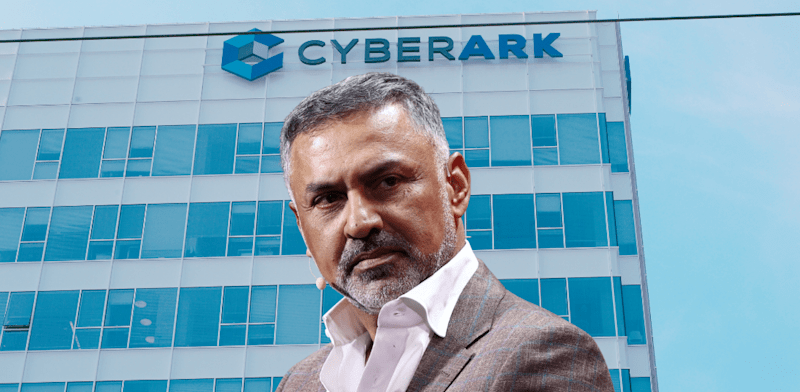
The day after the second largest ever acquisition in Israel’s tech industry was completed, many employees at CyberArk (Nasdaq: CYBR) headquarters in Israel, based in Petah Tikva’s Azorim Park, opened their emails to discover that the $25 billion acquisition by Palo Alto Networks (Nasdaq: PANW) had cost them their jobs.
To mark completion of the acquisition, all employees received emails about their future role in the merged company. An estimated 10% of CyberArk’s 1,000 employees in Israel and 700 employees worldwide were notified that their positions would be canceled. The email came directly from Palo Alto, in a generic and heartless style, and with no clear address within CyberArk to whom to contact. This is according to employees.
The move, perceived by many employees as alienating and impersonal, raises questions about the human cost of huge tech deals as well as the cultural distance between Israeli companies and US tech giants. For many employees who dedicated years to building the company, this is not only the end of an employment chapter but also a farewell to an organizational culture they described as family-like and Israeli.
Generous severance packages
What makes the move problematic in the eyes of many in Israel is not only its scale and timing, but mainly the manner in which it was carried out. The emails were sent to employees directly from Palo Alto, and not from CyberArk itself. Employees told “Globes” that some managers did not even know before the layoffs which of the employees under them would receive a layoff notice, and some received notice of a new manager being appointed.
CyberArk employees said that on the first day of the merger, instead of a welcome email, they received an email with the date of termination of their employment. Many of them received three to 12 months’ notice of the effective date of the cancellation of their position.
This method, of providing up to a year’s notice of the termination of employment, is different from that generally used in mergers and acquisitions. Although there is a clear end date, in practice employees must continue to work as usual, transfer knowledge to Palo Alto’s systems and teams, and maintain operational continuity.
However, sources tell “Globes” that to prevent premature departures, the company is offering an increased bonus to those who stay until the end of the period set for them. Additional evidence from the field speaks of severance packages of four to five salaries.
RELATED ARTICLES
Palo Alto Networks to list on TASE
Palo Alto CEO: CyberArk gives us AI identity security
Palo Alto Networks confirms $25b CyberArk acquisition
From a business perspective, the method makes sense. Palo Alto needs the know-how gained by CyberArk employees to conduct a smooth integration of systems, processes, and technologies. Employees, for their part, are given a relatively long time to find a new job and generous compensation. However, in terms of personal experience and organizational culture, the feeling is different. Employees describe a feeling of alienation – being forced to continue working as usual knowing that the company has already decided that they have no future there, and that it is now their job to train their replacement.
According to CyberArk employees, the layoffs have been clearly focused on support departments and head office positions. Thus, employees describe a cut of about 50% of internal IT staff, and a substantial impact on the finance, human resources, marketing and sales departments. Employees told “Globes” that there have been no layoffs in R&D departments, but only from support departments.
Employees also describe a profound cultural change that is taking place in the company, “From the moment of the merger, you feel how the Israeli reality meets the US reality,” one employee said. The pain is especially intense when it comes to long-time employees. “They laid off long-time employees, people who had worked for 10-15 years,” Globes was told – people who built the company, who saw it grow from a startup to a global cybersecurity giant worth billions of dollars.
According to employees, CyberArk has always been perceived as a company with a distinctly Israeli character, warm, family-like and with a strong sense of belonging. They spoke of an organizational culture that encourages personal closeness and mutual care, of managers who know employees personally and of a sense of “home”. Now, the transition to the culture of a large US corporation is perceived as breaking something fundamental in the company’s character. The feeling described is detached and impersonal.
Main engine of growth
Just a day before the wave of layoffs began, Palo Alto announced it will be listing for dual trading on the Tel Aviv Stock Exchange (TASE), while continuing to trade on Nasdaq. The company chose to adopt the CYBR ticker, which was used by CyberArk, in a move intended, it said, to attract Israeli investors and stress the importance of the Israeli center for its operations. Palo Alto CEO Nikesh Arora has emphasized in public statements that the company sees CyberArk’s identity security technology as a “key growth engine” and intends to continue investing in it and the R&D teams behind it.
But while Palo Alto declares its commitment to Israel and CyberArk’s technology, it is beginning its joint journey with the Israeli company with cutbacks that leave a bitter taste at the Petah Tikva headquarters. It should be stressed that, according to employees, the compensation packages are considered relatively generous by tech standards; but there is great concern among those laid off about the future. A human resources employee said that although she received “4 salaries in advance” as compensation. “Still, in today’s market, I don’t think I’ll be able to find a job in the coming year,” she lamented.
This feeling may reflect the reality of the tech market in 2026. A market where hiring is slower than in the past, companies are more cautious about expanding teams, and competition for staff, human resources, and management positions is fierce.
The combination of up to a year’s notice and a challenging market situation creates a particularly complex reality: employees are required to maintain high professionalism and motivation, both to receive the full bonus and to avoid damaging their professional reputation, while they must devote major time and energy to searching for a new job, updating their resume, interviewing for jobs, and building a new network of contacts. The challenge is to be a “good” employee until the final day, to receive the full financial reward, with the clear knowledge that they have no future in the organization.
No response from Palo Alto Networks has been forthcoming.
Published by Globes, Israel business news – en.globes.co.il – on February 17, 2026.
© Copyright of Globes Publisher Itonut (1983) Ltd., 2026.