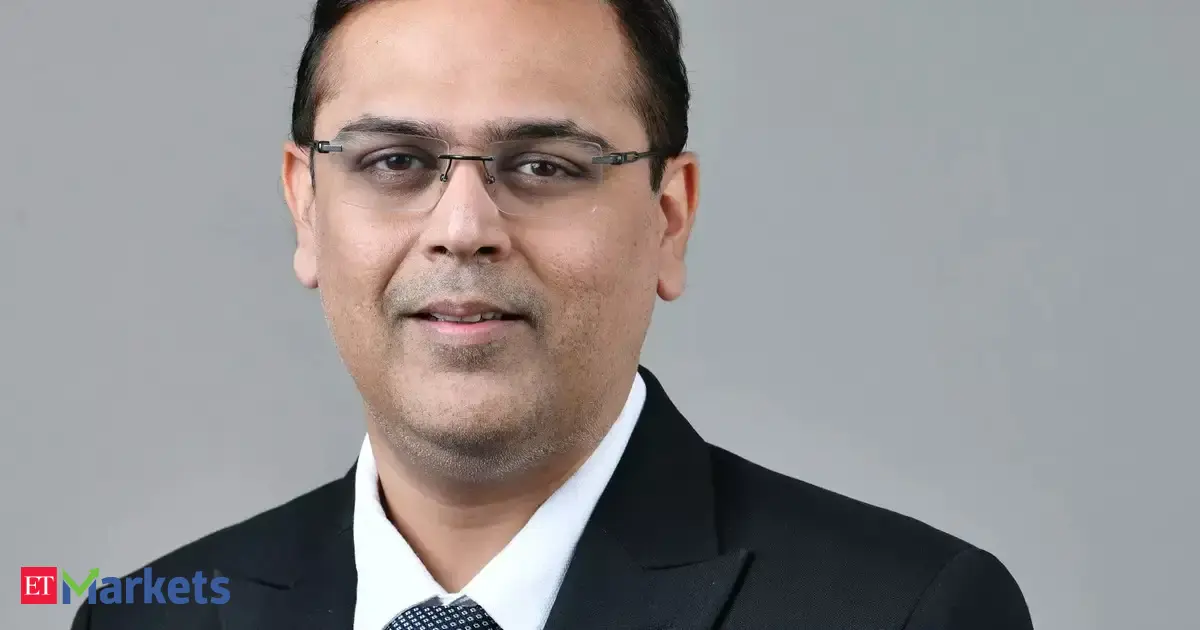
In this edition of ETMarkets Smart Talk, Devang Shah, Head of Fixed Income at Axis Mutual Fund, argues that the easy money from duration plays is largely behind us, making the short end of the yield curve far more compelling at this stage.
With 1–2 year AAA corporate bond yields available above 7% and a low probability of further rate hikes, Shah believes accrual-oriented strategies in the short to medium segment offer a better risk-reward balance than aggressive long-duration bets.
Euro zone bond yields reached their lowest point since early December, extending a six-day decline as markets anticipate key economic data. German 10-year yields eased, marking their longest winning streak since late November. Traders are closely monitoring upcoming inflation and PMI figures, which could influence European Central Bank monetary policy expectations.
He also shares his outlook on the 10-year G-Sec, potential Bloomberg index-driven inflows, and how retail investors should position their debt portfolios in 2026. Edited ExcerptsQ) Did RBI policy outcome at this point in time largely meet expectations soon after the Budget?A) By and large, the RBI policy outcome was in line with market expectations. The central bank had already taken several measures in December and January, so the absence of rate cuts or additional liquidity measures did not come as a surprise.
That said, some sections of the market were expecting incremental liquidity support, and its absence led to a modest rise in yields of around 8–10 basis points.Q) Do you believe India is entering a structurally stronger macro phase compared to the past few years?A) Over the last two to three years, and particularly over the past 12 months, there has been a clear and coordinated thrust on both capex and consumption growth.Policymakers have worked in sync through GST measures, RBI monetary actions, credit impulse, liquidity infusion, and rate cuts to address growth uncertainty arising from tariffs.
With the trade deal coming through, we believe growth is well supported, and FY27 growth could be around 7%, indicating a structurally stronger macro backdrop.Q) If we are entering a growth phase which means there is a possibility of rise in inflation. If growth accelerates meaningfully in the second half, could that change the RBI’s rate trajectory?A) RBI typically evaluates three key parameters—inflation, growth, and the external sector—while deciding its rate trajectory. With growth support from the trade deal and reduced vulnerability for the rupee, inflation will remain the key variable to watch.
At this stage, based on high frequency indicators, it is too early to see a meaningful uptick in inflation, and unless there is significant commodity led inflation, we believe RBI is likely to remain on pause for most of calendar year 2026.
Q) How meaningful could potential inclusion in Bloomberg indices be for Indian bonds?A) Once Indian bonds are included in the Bloomberg Global Aggregate Index, we estimate potential foreign inflows of around $20–25 billion. This is meaningful and could translate into a 10–15 basis points rally in government bond yields.
Q) Given lower inflation and strong growth, what is your recommended duration strategy for investors today?A) We believe a large part of the rate cycle is behind us and do not anticipate further rate cuts. RBI has also been proactive in managing liquidity.
Yields at the short end of the curve have moved up, with 1–2-year AAA assets available above 7% in an environment where the probability of rate hikes is very low. In this backdrop, we prefer the short end of the curve, with an emphasis on accrual oriented strategies.Q) Do you think that there is room for a potential tactical entry for long bond investing this year? What conditions would signal that opportunity?A) At this point, as we are at the end of the rate cut cycle, we advise investors to stay positioned at the short end of the curve. However, if government bonds sell off meaningfully and the 10 year G Sec moves towards 7%, or long bonds trade in the 7.60–7.70 range, that could present a tactical entry opportunity.
Until then, given the large government borrowing programme starting April, a cautious stance remains appropriate.
Q) How should retail investors approach long-duration funds in this environment?A) Given our base case of no further rate cuts and ample liquidity, we continue to prefer the short to medium term segment of the curve. Retail investors should consider remaining invested in short to medium duration funds rather than taking aggressive duration calls at this stage.Q) Would you prefer sovereign bonds, SDLs, or corporate bonds in the current phase?A) In the current phase, our preference is towards corporate bonds up to 2–3 years and SDLs in the 8–12-year segment. The large SDL supply announced has led to a meaningful widening of spreads, which offers an attractive risk reward opportunity for medium term investors.
Q) How does the higher borrowing number influence your outlook for the 10-year G-Sec?A) While RBI is likely to remain supportive through liquidity management and periodic OMOs, the supply pipeline is quite large.
Given that we are at the end of the rate cycle, we expect the 10 year G Sec to trade in the 6.60–6.80% range till March 2026. Beyond that, if growth strengthens and inflation begins to trend higher, the 10 year yield could move into the 6.80–7% band.
(Disclaimer: Recommendations, suggestions, views, and opinions given by experts are their own. These do not represent the views of the Economic Times)