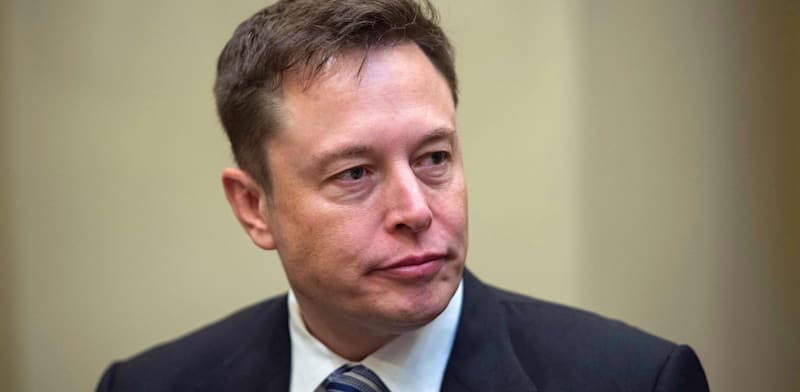
Next month, Tesla chairman Elon Musk is due in Israel to deliver the keynote speech at the Smart Transportation conference. Tesla is now not only a dominant player in the electric vehicle market, but also a trendsetter in the global tech industry. In a country like Israel, which is a major global tech hub, the visit and the announcements that will accompany will be of great importance worldwide. Musk will also likely use the visit for business and political meetings regarding the other companies in his group, from X (formerly Twitter) to satellite company SpaceX.
Although in recent years, global investors have learned to treat some of Musk’s future plans with skepticism, he still has tens of millions of followers in the tech world and capital markets and is listened to by US politicians and regulators.
Tesla has not released any details about Musk’s visit to Israel. It is likely that Israeli ministries are already working on rolling out the red carpet for the distinguished guest and preparing statements on regulatory issues and more.
Tesla is changing direction
At an investor conference held in late January to present Tesla’s annual report, Musk said, “We are moving toward a future based on autonomy.” Just days earlier, the company had announced that it was discontinuing production of two of its most iconic models, the Model S, which was its first mass-produced car, and the unique Model X minivan.
For analysts this was clear evidence that Tesla is changing direction, from a car manufacturer to a tech company. Piper Sandler wrote, “The company is burning the boats, pinning its future on autonomous cars and robots.” Another analyst wrote, “Forget the Tesla we knew, the Tesla of yesterday is gone.”
Tesla was a pioneer in the electric vehicle market, and it used the advantage to establish a leading position in the fields of technology and manufacturing. Even today, its brand is very strong, but competitors, mainly from China, are rapidly closing the gap in technology and quality and are constantly introducing models that Tesla has no response for in terms of variety and price.
Tesla’s temporary solution has been to introduce significantly discounted models of the Y and 3, with less accessories. But in the absence of popular models or with plug-in drives, as every Chinese car has today, Tesla faces constant erosion in sales and revenue.
But Tesla’s biggest current problem is that it now has to invest a lot of resources in the logistical tasks of the “old” car industry, such as supplying spare parts and repairs for its 8.5 million vehicles worldwide. This is an activity that is light years away from the “innovative and fast” model on which the company was founded, and it is far from capturing the imagination of investors. In contrast, the autonomous vehicle has been and remains a magnet for investors.
RELATED ARTICLES
Elon Musk’s Starlink launches Israel Internet services
Elon Musk’s SpaceX set to launch Israel’s Dror satellite
Netanyahu meets Musk was pure public relations
The road passes through Israel
Tesla has had the most advanced technology for years, allowing cars to travel without driver intervention, but with supervision, in certain defined driving conditions. But this still does not remove the three major obstacles that have hindered the commercial introduction of autonomous vehicles over the past ten years: regulation, the price of hardware/software, and the business model.
Regulation, which would allow driverless cars, is directly tied to public opinion in countries where such vehicles are moving. The public in the world, and certainly in Israel, does not have much patience for future technologies, and no regulator wants to be associated with a high-profile fatal accident involving a driverless vehicle that has been approved to drive on the roads.
Therefore, even early tests of autonomous vehicles, such as those that the Ministry of Transport aims to allow Tesla to do in Israel, are carried out under close supervision. The new update to the “Procedure of the Professional Committee for Conducting Experiments on Public Roads,” published by the ministry this year, includes requirements such as a test driver in the vehicle, a requirement for continuous remote monitoring of the vehicles and control in emergencies, cybersecurity protection, and more.
The regulation tries to close the legal loopholes and insurance requirements for autonomous vehicles, and costs manufacturers a lot of money.
The second issue is the cost. The current cost of hardware and software for autonomous vehicle “kits,” which allow driving from destination to destination without the need for supervision by a human driver in the car is tens of thousands of dollars. Even if prices fall in the coming years, perhaps due to the Chinese, this is a price that is not affordable for most car buyers. Tesla has recently begun trying to make the FSD system, which until now was offered for purchase as an option for NIS 36,000, accessible through a monthly subscription. But this system still has limitations that prevent it from achieving full autonomy. Therefore, most of the activity by players in the “driverless vehicle” field focus on cars that will produce income for their owners, mainly so-called robotaxis. Such taxis are already operating in China, the US, and elsewhere, but no company operating in the field, including Tesla itself, and Israeli company Mobileye, which has been a pioneer in the field, has yet to present the future buyers of such taxis with an attractive business model with a payback period. And if the regulator also requires the presence of a “supervising driver” in the vehicle and/or an expensive remote-control system, the business model will be very difficult to achieve, if at all. Therefore, trials for developing autonomous vehicles are merely “cultivating sentiment among investors.”
Robots and the Israel angle
Musk, and not only him, is currently betting on the humanoid robot market. Musk believes that Tesla’s first robot, “Optimus”, will be a major revenue and profit center for Tesla in the near future with marketing starting in late 2027 and “production of one million units per year by the end of the decade.”
Ostensibly, this field has nothing to do with the car industry, but the supply chains of the autonomous vehicle sector and the robotics sector have a lot in common. This includes the development of batteries with fast charging systems, peripheral sensors to prevent the robot from harming its environment, such as laser sensors (lidars) and 4D radar, fast processors, and more.
Israel still provides a fertile “ecosystem” for such systems, and it is likely that at least some of the players in the field would be very happy to spread the risks from the automotive industry to the robotics industry. Just like Mobileye did recently, when it acquired Mentee, which develops humanoid robots. Therefore, it is quite possible that Musk’s agenda during his visit to Israel will also include a meeting with Israeli companies that have gained a reputation in the field.
Published by Globes, Israel business news – en.globes.co.il – on February 11, 2026.
© Copyright of Globes Publisher Itonut (1983) Ltd., 2026.