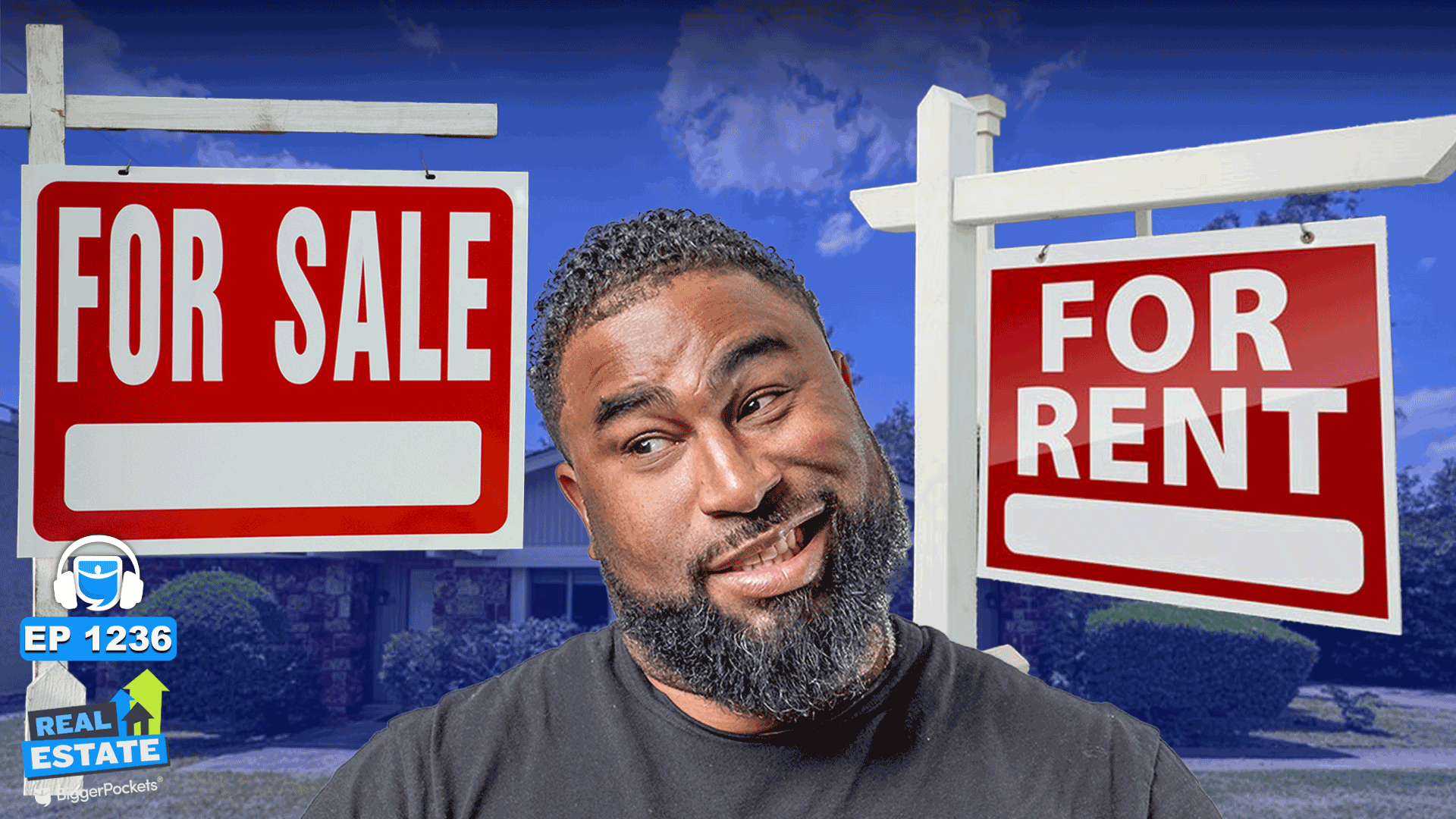
Renting vs. buying a house. Everyone has the debate completely wrong, and it’s costing Americans their financial freedom.
“Live in Los Angeles? Guess you have to rent. Live in the Midwest? Guess you should buy.”
What if there was a way to grow your wealth no matter where you live, how much home prices are, or what’s going on in the housing market? What if you could get richer while renting? What if your simple, affordable house could propel you toward financial freedom? What if you could make hundreds of thousands of dollars, tax-free, by buying the home everyone overlooks?
Today, we’re showing you how to do all of them. We’ll give you three scenarios to buy, rent, or do a combination of both, and get wealthier in the process. Plus, Dave shares his “cheat code” investment strategy that gets him cheaper homes that he’ll love living in and makes him substantially wealthier in the process.
It’s not buy vs. rent. It’s about building your wealth no matter your choice.
Dave:… To rent or to buy. You might think it’s an obvious choice, but it actually isn’t. Both Henry and I own dozens of rental units with millions in equity between us, but I spent five of the last six years renting a property, not living in a home I owned, and my net worth still grew a lot during that time. Most people would probably not expect that. You got closer to financial freedom while paying thousands in rent every month. The problem is that every online calculator, every podcast or YouTube video is telling you it’s a rent versus buy decision. That isn’t the case. Today, Henry and I are giving you three scenarios where you can rent, buy, or do a combination of both and grow your wealth in each scenario. So if renting makes more sense in your market, you can rent and still build wealth.If buying a home is more affordable, you can ensure it’ll pay off when you move out. And finally, we’ll share the cheap code strategy that some of the smartest real estate investors use to make hundreds of thousands of dollars just buying a regular affordable home to live in. This decision could change the track of your financial future and you could be significantly wealthier because of it.What’s up everyone? I’m Dave Meyer, Chief Investment Officer here at BiggerPockets. My co-host, of course, is Henry Washington. He’s here too. And we’re going to jump right into this conversation about whether it’s better to buy or rent or if that’s really even a decision that you need to make at all. So Henry, if you read the news right now, apparently just buying a home is just a terrible idea. That’s what everyone seems to be saying right now. Are you buying it?
Henry:No, absolutely not. Buying a home is not a terrible idea, but I will admit that it doesn’t make sense for everyone to buy a home, and it doesn’t make sense for everyone in every market to buy a home. I do believe there are situations where it does make more sense to rent than buy, but I am a firm believer in no matter which you do buy or rent, you should be doing it with thinking about how to invest what you’re saving by not doing one or the other tactics.
Dave:Yeah. All those articles you see, it’s every day in Bankrate or NerdWallet or anywhere that’s saying it’s cheaper now to rent than it is to buy. That’s a very simplistic and specific scenario. That’s just basically like if you’re a regular person and you’re choosing whether to buy your dream house or rent an equivalent property, that’s actually true. It’s probably better for most people to rent in that scenario. In fact, there’s only one city in the entire country where it’s better to buy than rent right now. Can you guess what it is?
Henry:Somewhere in West Virginia?
Dave:Very close geographically. It’s Pittsburgh is the only place right now where it’s actually better. But we’re investors, so we’re not thinking about it this way, like, should I buy my dream home or an equivalent property? We’re going to break down now how you can strategically think about your primary residence and ways that you can use it to grow your portfolio, whether this is your first property, whether you’re looking to do an owner-occupied strategy or not, and you’re just trying to buy rental properties and grow a bigger portfolio. We have strategies for everyone to leverage the choices they make about where they’re physically going to live to help grow your portfolio. So for investors who are trying to maximize the use of their residence where they’re living, what are the different scenarios they should be thinking through?
Henry:Yeah, it really comes down to about three scenarios with some forms of variation, depending on the scenario. We have the option to rent your primary residence, we have the option to purchase your primary residence, or we have the option to own or occupy your primary residence as an investment vehicle. In other words, some form of house hacking. And when we say house hacking, we don’t always mean just buy a duplex, rent one side and living the other. House hacking to us just means finding a way to monetize your primary residence.
Dave:Okay. So we’re talking about whether investors should rent, just straight up buy their primary or do an owner occupied. I think people are probably going to get mad about this. I actually think there are uses for all three. I think that renting makes sense sometimes. Grant Cardone’s going to be mad, but I think buying just your primary residence makes sense sometimes. I think owner occupied makes sense sometimes. So let’s just break these things down. I think rent’s going to make people the maddest, but do you agree that there are reasons why even real estate investors, even experienced real estate investors should consider renting a property?
Henry:I absolutely do. And I say this as someone who owns my primary residence and hasn’t rented in years. And for me, it comes down to what’s the cost to rent each month versus buy each month? And that’s going to vary depending on your market. We’d be foolish to say that there aren’t markets where it costs substantially less to rent a like- kind property. And so if you’re going to end up buying a house that’s going to cost you 4,000 a month in a mortgage payment, and in that same market, you can rent a house that’s going to cost you 2,000 to 2,500 a month for the same kind of property. To me, especially as somebody who wants to take their additional income to invest in real estate, it would make a whole lot more sense for me to rent that property, save myself two grand a month and put that two grand a month aside so that I can buy rental properties where it does make sense for me to buy rental properties.
Dave:The thing that sort of drives me nuts about either it’s people on social media or even these reputable websites saying it’s cheaper to rent or buy, they only look at the out of pocket cash. They say like, “Okay, my monthly mortgage payment is 2,000, my rent is 1,800, therefore it’s better to rent.” That is not how I would evaluate that because as you know in real estate, there are a lot of other ways that you’re making money. You have to think about the amortization on your mortgage payment, the potential for appreciation, which no one really knows, but over time the average is about 3%, so that really matters. And when you’re leveraged, that really helps a lot. And also tax benefits, right? You have to also think about the fact that your mortgage interest is deductible off of your taxes. And so just think about it that way, but it is the right question to ask.When you incorporate all those things, if you actually do the math right and you see that renting is going to help you save money each and every month, you should do that. If you’re trying to maximize and not thinking about lifestyle, you should absolutely do
Henry:That. Yeah. What we’re saying when you rent versus you buy is I’m saving monthly income and yes, I’m giving up the equity and appreciation, but I’m taking that additional income and then investing somewhere else where it makes more sense financially, whether that’s in my backyard in a different neighborhood or whether that’s in a whole nother state, then you are getting the benefits of real estate because you’re investing in a property somewhere else where you can take advantage of those benefits in a more financially beneficial way than you spending substantially more each month and then that hindering your ability to go buy property somewhere else.
Dave:So what do you do then with the money? If you’re saving money every month, do you invest out of state? Do you buy a property in state or what do you do with the money you’re saving?
Henry:If you are investing in real estate because you want to build up cashflow over the next five years to help replace your income for your job, yeah, you probably need to be looking at markets where you can get cashflow, where there’s a more favorable rent to price ratio, where you can buy a property and rent that property out and it pays for itself and then pays you some cashflow. There are tons of markets all over the country where you can find real estate that gives you those benefits. And I think it’s just up to us as investors to figure out where that makes sense for us based on our goals, but you should be looking to implement that money in a place that’s going to help you meet your real estate goals.
Dave:Yeah. I think this is particularly important for everyone who’s listening out there. If you live in an expensive market in California, Washington, the Northeast, wherever, somewhere that it’s super expensive, this is a good strategy. It makes a lot of sense. I talk to a lot of people here in Seattle about this all the time because there’s a lot of people who have some money in tech or whatever and they’re like, “It doesn’t really make sense to house hack even here in Seattle. What should I do? ” I’m like, “Go rent a super nice apartment for three or $4,000 a month. That’s what it costs in Seattle.” But a mortgage payment here is $6,000 a month. So go spend three, 3,500 bucks and take that money. You’re saving two grand a month. You could buy a duplex a year with that savings in the Midwest. You do that for five years, you know, 10 units in another place.That’s personally what I would recommend for the majority of people. Yeah,
Henry:I can’t disagree with you because there are markets where even if you were to buy a duplex and house hack, remember a duplex is going to cost you typically more than a single family is. And so if you go and buy the duplex, even if you rent out the other unit, sometimes what’s left on your mortgage is still more than it would cost for you to go rent by yourself.
Dave:It is. I was doing the math because I’m a giant dork. I made this huge calculator a couple of years ago that measures this. And honestly, I’ve used it every year of my life. It’s free on BiggerPockets. If you want to go to biggerpockets.com/resources, it’s just a house hacking calculator. It shows you whether it’s better to house hack, to buy, or to rent. So you should definitely check that out. But in a city like Seattle, renting is better. Just mathematically, it makes more sense. I get there are personal decisions. I have made all three of these decisions. I’ve bought my primary, I’ve house hacked, I’m doing a live and flip now, I’ve rented and bought in other states, but I’m just telling you, if you want to follow the math in an expensive market, this makes a lot of sense. There is one other scenario for renting instead of buying that I think people overlook, and it’s if you don’t know how long you’re going to live in a specific place.That’s fair. I’ve lived in a ton of places and I have rented. I rented. When I was in Europe, I rented for five years. I would’ve made a lot more money if I didn’t, but I just didn’t know how long I was going to live in any of those places. And there’s transaction costs. In the US, it’s six to 8% essentially to go and sell. So even if you say, “Hey, I have this primary residence. It’s a great location. It’s going to build a ton of equity. I’m getting at a great price, but I might only live there for three years, probably better to rent, honestly, because it usually takes three or four years of appreciation growth, even good appreciation growth to overcome just the cost of selling.” And so I think that’s something you really need to think about. A lot of times this decision really comes down to like, are you going to live there for three or four years?Four or five years, you’re probably good buy the house. But if you’re going to live there for less than five years, it’s kind of a toss-up.
Henry:Absolutely that matters because we’re not in the market we were in 2021 where appreciation was going through the roof in a short frame of time. You’re not going to be able to take advantage of some of the ancillary benefits of real estate in a less than five-year period. And so again, you got to pay attention to that monthly cost. If I’m in a place where it’s very, very expensive, I think in any of those scenarios, it makes more sense to rent.
Dave:Totally. I live in Seattle. I should, if I was just doing this straight on math, I should be renting right now. I don’t want to even tell you what my markets cost is. It is way more than I could rent an equivalent house for. But what I did choose to do was to buy a primary in a way that I do think is actually a reasonable way to offset. It might not be the most optimal, but it is actually working for my lifestyle. And I do want to talk about when you should buy your primary residence, but we do have to take a quick break. We’ll be right back.
Henry:All right. We are back with the BiggerPockets Podcast and we’re talking about when it makes sense to rent your primary residence versus when it makes sense to buy your primary residence. And we just covered scenarios where both Dave and I agree, we think it might make a lot more sense to rent your primary residence instead of buy. But now let’s transition, Dave. In what scenarios do you think it makes sense for someone to buy their primary residence instead of renting?
Dave:I think when you have somewhere close to breakeven on this calculation, like rent or buy, it doesn’t have to be exactly, but when you’re relatively close. So that’s number one. It has to be relatively close. And then I think there’s probably two different criteria I would think about. One is lifestyle decisions. That’s part of it, right? You can’t ignore this. If you would prefer to own your own home, that makes a lot of sense. But I think for me, the real criteria is, could I rent out that primary when I move out of it and make it a good rental property? Because as we were just talking about before the break, you have to hold onto it for four or five years. And if you think, “Hey, I might move out after two or three years,” that’s fine if it’s going to cash flow as a rental.Just as an example, I guess it was like 10 years ago now, I was house hacking and I kind of just wanted to own my own home and I wound up finding a property that was in the path of progress. I got a great deal on it and we wound up buying it and it did increase my monthly burn because I was househacking in a place I got for super cheap and I wound up paying out of pocket for my mortgage every month, but it was worth it to me because it was a great place for me and my wife to live. And now I still own that as a rental. We moved out of that property six years ago and it’s still a cash flowing rental property in a great neighborhood. I bought it at 450. It’s probably worth 800 now. So it’s been a great investment for me and we lived there for five years really comfortably.So it worked out as a really good investment.
Henry:Yeah. I think if you live in a market where your rents or your mortgage payment for the same type of property are about the same or even skewed where your mortgage payment would be less than what it is to rent, you absolutely should buy. This is a scenario you should buy your property in because you’ve now put yourself into a position where you’re not losing money by buying instead of renting. You’re going to spend the same amount or pretty close to the same amount either way. And so now what I’m thinking about as a real estate investor making this rent or buy situation is if it’s going to cost me the same to rent or to buy, that means I have the same money to play with each month to put towards investing in real estate. So I should buy because now I not only have to spend the same amount each month, but I get the ancillary benefits, I get the tax breaks, I get the appreciation over time.And then I can think about scenarios like you just talked about. When I move out, I can now keep this property as a rental property and then I get the benefit of debt paydown that I’m not actually paying down the debt for that a tenant is. I think this is a scenario where you should consider buying over renting for sure.
Dave:There’s a key caveat here though. In my example, and I think this is probably true for most people, I didn’t go out and buy my dream home. I mean, if you asked Jane, it was whatever the opposite of dream home is, that’s what it was for her. Nightmare home? Got it. A nightmare. Yeah. We used to play a game just gunshots or fireworks. Often, honestly, total toss up. I’m not saying you have to do that, but I viewed it as an investment. I wasn’t saying like, “This is the house we’re going to live in for the rest of our lives.” I was in my late 20s and I was like, “This is not where we’re going to hopefully raise a family one day.” Where I bought in the path of progress and in a place where I felt like I could really have a good investment.I think the area where Robert Kiyosaki or Grant Cardone are right, because they are owed, just if you don’t know, two big, famous real estate names who are very adamant that your primary residence isn’t an investment. Robert Kiyosaki even calls it a liability, but where their sentiment at least is right is like if you’re going to go out earlier in your investing career and buy your dream home, often that is not the best use of your money. You could probably either be renting and buying something else or you could be buying more of a starter home, maybe something with sweat equity in it where you could go do that.
Henry:And I think that this is the caveat that we wanted to make sure that we hammer home with people. We’re thinking about this decision to rent or buy as real estate investors at heart, right? And that’s how we’re talking to you as the audience. If you’re a real estate investor and you’re trying to decide rent or buy and you live in a market where it’s about the same price, we’re saying buying is the right choice in that scenario, but be smart about the buy. If you’re first getting into your home ownership journey, maybe this is your first home purchase to live in, maybe it’s your second home purchase to live in, chances are you’re not picking that home as your forever home yet. You probably just aren’t in that stage of your home ownership journey yet.So buy something that will make sense as a rental property down the road, because if that’s your goal is to build a portfolio of rental property of cash flowing assets, utilize your owner-occupied loans to buy something that can be added to your portfolio in the future versus you buying something so expensive that you can’t add it to your rental portfolio and you end up having to sell it. And I’m not saying that makes it a bad financial decision because if you keep it long enough, it’ll appreciate. But being able to buy something that can double as an investment property is A, a safe investment, and B, allows you to kind of kill two birds with one stone. You have a safe, comfortable, primary residence, but now you have something that you’ve added to your portfolio. And we all know the key to real estate is the longer you own it, the more financially beneficial it becomes.So you might as well buy that rental property now.
Dave:I guess the advice here is if you want to buy your primary residence for lifestyle decisions or for financial decisions, underwrite it like a rental property. Go use the BiggerPockets calculator, treat it like you are going and buying a single family rental and just see where it comes out. If it’s going to be really net negative, that’s probably not the best financial decision. You might be better off doing an owner-occupied strategy or doing the rent and buy strategy. But if it comes close or you’re like, “I’m going to live here two years, rents are probably going to go up and we’ll be cashflowing when I move out, ” that’s a totally good decision.
Henry:Now, I want to ask you another question about this because I can already see the comments coming on this video is if we’re saying buy versus rent in this scenario, even when it’s close to the same, what about the maintenance issues that you have to pay for as an owner that you wouldn’t have to pay for as a renter? How do you factor that into your decision if you’re in a place where renting and buying technically costs about the same each month?
Dave:Well, I’ll give you the real answer and I’ll also give you my hot take that’s going to piss a lot of people off right now. My hot take is when I was living in Amsterdam and renting, it was so nice. I loved being a renter. I had great landlords. Every time something broke, I just called someone else and then just went about my day. I didn’t have to go call nine contractors to go fix something, sit at home all day, maybe they’d show up or maybe they wouldn’t. So I actually, I think there’s part of that. But I do think it’s just a matter of underwriting, right? You have to treat it similar to a rental property where you’re assuming there’s maintenance because every home I’ve ever bought and lived in, the maintenance has been higher than I expected. And I actually think you should maybe even budget a little bit more than you would for a rental property because your personal standards are going to be higher.If you are living with a spouse or you have kids, even if you wouldn’t make that upgrade, that repair for a rental grade apartment, it’s your home.You’re going to want to do it. And so you just really make sure that you’re budgeting for that.
Henry:Boom. That’s exactly my thought. I think that’s a valid concern. If it costs the same to rent or to buy in a market, just consider the additional maintenance in that decision. That way you can buy understanding that, yes, it’s going to cost me $2,000 a month to pay a mortgage here. It would also cost me $2,000 a month to rent a property here. Let’s call it $2,300 a month because I’m going to factor in the additional maintenance burden that I will take on as the owner of this property versus just calling somebody as a renter. And in that scenario, I think a few hundred dollars you should still own.
Dave:All right. Well, we have one more scenario which is owner occupy that’s either house hacking or a live-in flip, which I think is a much better option for people than they even realize. We’re going to get into both of those right after this quick break. We’ll be right back. Welcome back to the BiggerPockets Podcast. Henry and I are here talking about the best ways to think about where you live, your personal residence, to maximize growing your portfolio. We’ve talked about when and how you should consider renting. Next, we talked about buying a primary residential living in it, but then there’s sort of a combination strategy, which is owner-occupied. You’ve probably heard us on the show talk about house hacking plenty of times. This is when you either buy a small multifamily, you live in one unit, rent out the others, or you could do the co-living approach where you buy a single family home, live in a single bedroom, and then rent out the other bedrooms.But in addition to house hacking, you can also do something called a live-in flip. Henry, what’s your feeling generally about owner-occupied strategies?
Henry:I love them so much. I love them so much. Nothing more to say. Just love them. Same. So what we’re talking about is monetizing your primary residence, right? What ways can you offset the mortgage payment? And that helps you have more money to save for investing or whatever else you want to do with your additional income. But I love that strategy. And technically, I do it today because we talked about I bought a single family with an ADU. We rented the ADU and then the money we were saving from a mortgage payment from before, we just put into a savings account until we had enough for a down payment, and then we ended up buying the home that we’re in now. The other thing that we don’t typically talk about with this strategy is, yes, I lived in a two family, I rented one of the units that offset my mortgage, but then I moved out.And when I moved out, I now was able to rent the unit I was living in. And so now that created a situation where I have cashflow from that property because rents have gone up over time as well. And so we were making enough to almost cover the full mortgage by renting out the ADU, but now we rent out the main house and that creates a lot of cashflow. And I take that additional cash flow and it pays for about half of the mortgage at my dream house now. So technically my house isn’t an investment property because I’m not monetizing the house that I’m living in, but I am taking the cashflow from my house hack to cover half of my mortgage. So technically it’s an owner-occupied investment strategy, just kind of continuation of that.
Dave:I think house hacking for most people, I’m going to give a caveat, unless you’re living in a very expensive market like we were talking about, is the best way to go about it. Just on paper, lifestyle decisions aside, it just makes so much sense. You get the benefits of rental properties, you get the amortization, you get the tax benefits, you get the benefits of primary residence, you get owner-occupied financing. There’s just so much good stuff to like about this. And I’m going to be honest, we’ve talked about this on the show before. People say that it’s some big sacrifice from a lifestyle perspective. I just don’t buy it. It’s not. Maybe the co-living thing is, that’s not for everyone.
Henry:That’s fair. For sure. That’s very true.
Dave:But if you could go out and buy a side-by-side duplex, right? You got your own yard, you got your own driveway. Frankly, if you want to grow your portfolio, that’s a very small sacrifice, in my opinion, for the benefits that you get from house hacking. So I just think for most people, where there’s good properties to do it, because that’s another caveat. There are some parts of the country where you just can’t find good small multifamilies, but if you’re in a place where you can find good small multifamilies and you’re willing to do this, you should probably just go do it. Anywhere in the Midwest, this is just a no-brainer.
Henry:Yeah. That’s a slight uncomfortability for the option to build amazing wealth. I’m fine with that. And also, you’re the landlord, so you have some say in who lives next to you.It’s not like you have absolutely no control over that situation. So small sacrifice to me. And if you live in a place similar to the scenario we talked about where it’s the same price to rent and buy, buying with owner-occupied strategy in mind just kind of doubles the benefit of you buying that property. Because if you say, “Okay, well, I can rent and buy. Well, let me go look at what it costs to buy a duplex, a one to four family.” And then house hack, you’re just multiplying the impact of that buy decision. Or like we talked about, buying something that will make sense as a rental property later or buying something that will make sense as a multifamily later, because in a lot of places in the country, you can build ADUs. And so maybe you buy a single family home on a piece of land that you know has enough space and has the potential for approvals for an ADU, and you can add an ADU to that property down the road and increase your potential.
Dave:Last thing I want to add on house hacking is that you do not need to cash flow on house hacking. That is great if you can pull it off. It is hard to do realistically in this market, but think about it, how much money you’re saving for that next purchase. I know I gave that example of buying my own primary for the first time in 2016. I had been house hacking. I wasn’t cash flowing even back then in 2016 in Denver. I think I was basically living for free. It would’ve cost me 1,400 bucks a month to live in that apartment. I did that for two years. That’s my down payment on the next house. I wasn’t cash flowing, but I saved so much money that I could go buy the next house, still own that place as a rental property. I got great financing on it that I still have 10 years later and I still have the property 10 years later.So just think about it as a stepping stone. I think when you meet people at meetups, Henry, I think the people who’ve grown the fastest, in my opinion, for average people who aren’t starting with a ton of capital are people who house hack four to five times in a row.That is the most, I think, proven way to get a good portfolio when you’re just starting middle class regular person.
Henry:100%. They either house hacked a few times in a row or they leveraged their first primary residence as a rental property after they moved out because that allowed them to have so much equity built up that they could take out a line of credit on that equity and use that to fund their investment career. It gave them a boost and a headstart. Absolutely.
Dave:So there’s one more we got to talk about, another owner-occupied strategy, which is the live-in flip, which I am in the … I don’t know if I can say I’m in the middle of doing this. I bought a house with the intention of
Henry:Living- Intent. You have
Dave:Intent. I intended to do it. I moved in in June of 2025. It is now January of 2026.
Henry:Give us a percent. Percent done.
Dave:Zero. Haven’t swung a hammer. Nothing has happened in here. But honestly, part of that was intentional. My wife and I don’t really know how long we’re going to live here. So we were like, “We’re going to live here for three or four months, figure out what we want to actually do to the property.” We now have a plan and I actually, we have contractors line up to start in March, so keep you posted. But I will just sort of explain the concept here. It’s a strategy that mixes the idea of house hacking and house flipping basically at the same time. The idea is you buy a property, you actually move into it and live in it, but fix it up while you’re living there. And you can add value in the same way that you do in a flip, but there are some benefits overflipping, at least in my opinion, that are really, really important for people to know.First and foremost, you get owner-occupants financing. As Henry can probably tell you, I’ve only been a part of really two or three flips in my life, but man, that financing is expensive. You’re paying a lot of points, you’re paying 12% on a hard money loan. I am living in a potential flip right now and I have a 5.25% mortgage rate. So I’m pretty happy with that. That’s why I can take the time to figure out what I’m going to do. Number two is it reduces your time pressure. To get the max benefit of a live-in flip, you should live in it for a minimum of two years because in the US tax code, you live in your primary residence for two or more years, all the capital gains that you get, those are tax-free. So if I do a renovation on this house, I sell it, I move out.Unlike a flip where Henry pays normal income tax on that-
Henry:Short-term capital
Dave:Gains. Short-term capital gains, I’m paying nothing on that up to $500,000, which if it’s over more than 500 grand, I’m pretty happy to pay that tax because I just made a lot of equity. So I think that takes sort of the time pressure off of it and it allows you to take advantage of the financing. So personally, I can’t speak from experience. I’m doing it for the first time right now, but on paper, I just love the idea of a live and flip. I will say that I’m going to do the baby move and I think we’re going to move out of our … We’re doing a first phase where we’re not moving out, but when we do the big part where a lot of the systems, the windows, those things are getting replaced, I probably will get near BB for a couple of weeks.So there are ways to mitigate that. You don’t have to live in a construction zone 100% of the time. I think
Henry:This is Great strategy if you’re in a position where it makes sense to do this. Is it a strategy you can scale big? No, absolutely not. But it is definitely a strategy where you can make a lot of money in a reasonably short period of time. I mean, you’re talking about being able to walk away with 100 to 200, sometimes $300,000 tax-free in your pocket. There are investors who literally do this as their primary resident strategy. They do a live-in flip. They do it about three times and by the third live-in flip, they’re in this amazing dream home and they were able to just carry over these profits into their dream home so that they’re owning their dream home almost free and clear because they’ve just moved the profits forward into bigger and bigger owner-occupied live-in flips. I think it’s a fantastically undervalued strategy.
Dave:100%. If you know Mindy Jensen from the BiggerPockets Money Show, she does it. This is basically all she does is just do live and flip, live in flip, live and flip. And Mindy’s doing pretty well. So I think it’s worked very well for her. And I will just say, I think this is a really good option for people in expensive markets. In Seattle, I was doing an analysis. I didn’t want to rent just for lifestyle decisions, but this was the second best option for me for financially on paper, how to leverage my primary residence into a good investment. I think this is true in other expensive markets in California, in the Northeast.This is something that could just have huge financial benefits in almost any market. So I think this is something you should definitely consider doing. All right. I think we went through all of our scenarios, Henry.Any last parting words of wisdom here?
Henry:Yes. I think the caveat we’re trying to lay out here is no matter what you’re thinking about buying or renting, be thinking about it from an investor’s perspective and pick the choice that allows you to reach your investment goals sooner than later. And if we’re smart about whether we rent or buy in order to take any additional income that we make to grow our investment business, I think it’s going to put you in a better financially sound position sooner than later.
Dave:Just don’t listen to dogma. Anyone says it’s always better to rent or buy. It’s always better to buy or rent. Just do the math. You can do it like there are calculators in BiggerPockets. I told you about the spreadsheet I made. You can download it for free. Go check that out, do the math for yourself, and you can make a really good decision. Henry and I, I think have both shown that you can get huge benefits. It can be a launchpad to your investing career if you think about this in the right way, and pretty much anyone can do it. So go check it out.
Henry:Amen.
Dave:All right. Well, Henry, always fun hanging out. Are you scared of the comments?
Henry:I mean, I think they’re going to be some spicy ones for sure, but that’s a good thing.
Dave:Bring it on. We want to hear what you think about this episode. Thank you all so much for listening. We’ll see you next time.
Help us reach new listeners on iTunes by leaving us a rating and review! It takes just 30 seconds and instructions can be found here. Thanks! We really appreciate it!
Interested in learning more about today’s sponsors or becoming a BiggerPockets partner yourself? Email [email protected].