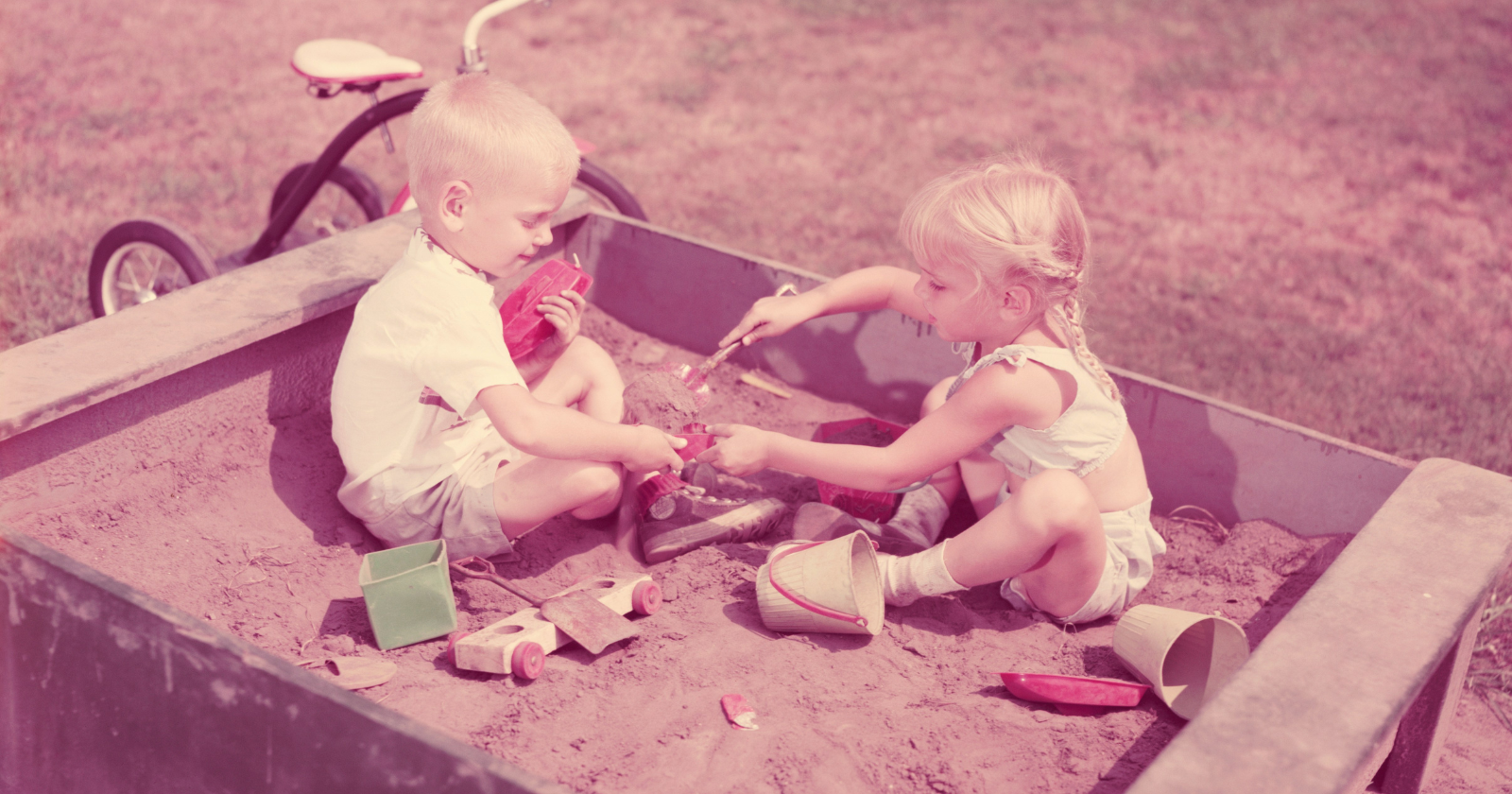
Growing up in a working-class neighborhood outside Manchester in the 1970s, summer evenings had a predictable rhythm. Around 4 PM, my mum would practically shove me out the door with a jam sandwich and strict instructions not to come back until the streetlights flickered on.
Those long summer days stretched endlessly, and we filled them with games that required nothing more than imagination, a few friends, and whatever we could scavenge from our surroundings.
Last week at the pub, my mates and I got into one of our usual debates. This time it was about whether kids today have it better or worse than we did. One friend insisted that modern children are missing out on something essential by spending so much time indoors. It got me thinking about all those games we played until our parents called us in for tea.
The truth is, most of today’s children have never even heard of the games that defined our childhoods. These weren’t video games or organized sports with uniforms and trophies. They were scrappy, sometimes slightly dangerous, always competitive affairs that taught us more about life than we realized at the time.
1. British Bulldog
If there was ever a game that would give modern health and safety officers nightmares, it was British Bulldog. One kid stood in the middle of a field or playground while everyone else lined up at one end. The goal? Run to the other side without getting caught. If the “bulldog” grabbed you and held on long enough to shout “British Bulldog 1-2-3,” you joined them in the middle.
By the end, you’d have a writhing mass of kids trying to tackle the last few runners. Scraped knees were badges of honor. Torn shirts were inevitable. And somehow, we all survived without a single adult supervisor in sight.
I remember being the smallest kid in our group, which meant I was usually one of the first caught. But it taught me something valuable about strategy and timing that no amount of organized sports could have provided.
2. Knock Down Ginger
Some called it Knock and Run, others called it Ding Dong Ditch, but we knew it as Knock Down Ginger. The premise was simple and admittedly annoying for adults: knock on someone’s door and run away before they answered.
Looking back, I can see why adults hated it. But for us kids, it was a masterclass in risk assessment and group dynamics. Who would actually do the knocking? Where was the best hiding spot? Which houses should we absolutely avoid?
The game taught us about consequences too. Get caught by old Mr. Thompson from number 42, and you’d get an earful that would make your ears burn for days.
3. Kerby
All you needed was a football and a street with kerbs on both sides. Players stood on opposite sides of the road, trying to hit the other player’s kerb with the ball. Hit it and the ball bounced back? You got to take a step forward. First one to the middle of the road won.
Simple? Yes. But it required precision, patience, and an uncanny ability to judge angles. Plus, you had to pause the game every time a car came through, which in our quiet street was about once every twenty minutes.
4. Forty Forty
Think of it as hide and seek’s more sophisticated cousin. One person was “it” and had to guard a base (usually a lamppost or tree) while counting to forty. Everyone else scattered to hide. But here’s the twist: you didn’t just have to avoid being found. You had to race back to base and shout “Forty forty home” before the seeker spotted you and beat you there.
The strategy involved was incredible. Do you hide close for a quick sprint back? Or far away where you’re less likely to be found? And if you’re seeking, do you venture far from base risking someone sneaking in behind you?
5. Stick and hoop
This one was already considered old-fashioned when we played it, something our parents had passed down. You’d find an old bicycle wheel or any large hoop and guide it along with a stick, seeing who could keep it rolling the longest or navigate the trickiest course.
It sounds ridiculous now, doesn’t it? But mastering that simple coordination between stick and hoop took hours of practice. It was meditative in a way, just you, the hoop, and the rhythm of keeping it upright and moving.
6. Red Rover
Two teams lined up opposite each other, holding hands to form human chains. One team would call out “Red Rover, Red Rover, send [someone’s name] right over!” That person had to run full speed at the other team’s line, trying to break through their linked hands.
Break through? You got to take someone back to your team. Fail? You joined their team. The game ended when one team had everyone.
The negotiations about who to call over were intense strategic discussions. Do you call the biggest, strongest kid hoping they won’t break through? Or the smallest, ensuring they won’t but losing a weak link from your own chain?
7. Tin can copper
Similar to Forty Forty, but with an added element. The seeker had to guard a tin can placed on a designated spot. While they counted and searched for hidden players, anyone could sprint in and kick the can, forcing the seeker to retrieve it and start counting again while everyone rehid.
The beauty was in the chaos. Just when the seeker thought they had everyone cornered, someone would dart in from nowhere and boot that can into next week.
8. Conkers
Every autumn, we’d gather horse chestnuts, drill holes through them, and thread them on strings. Then came the battles. Players took turns swinging their conker at their opponent’s, trying to smash it to pieces.
There were elaborate scoring systems (a conker that destroyed another became a “one-er,” destroy a one-er and you became a “two-er”), and endless debates about illegal hardening techniques. Some kids would soak their conkers in vinegar or bake them in the oven, leading to fierce playground disputes about fairness.
9. Block
The simplest game on this list, but perhaps the most territorial. Groups of kids would claim a section of pavement or playground as their “block.” The goal was to pull or push kids from other groups into your block, converting them to your team.
It could go on for hours, with alliances forming and breaking, betrayals and last-minute rescues. By the time those streetlights came on, you’d have run miles without realizing it.
The bottom line
These games weren’t just ways to pass time. They were our first lessons in negotiation, strategy, and social dynamics. We learned to assess risk, handle disappointment, and celebrate victories without adult intervention or participation trophies.
I’m not saying everything was better back then. I quite enjoy not having to worry about my kids getting hit by cars while playing Kerby in the street. But something valuable was embedded in those long, unsupervised hours of play.
When I watch my friends’ kids today, glued to screens or shuttled between organized activities, I wonder what they’re missing. Not the games themselves, but the freedom to create their own fun, make their own rules, and resolve their own disputes.
Maybe that’s just nostalgia talking. But next time you see kids actually playing outside, making up their own games with their own rules, give them some space. They’re learning lessons that no app or organized sport can teach.