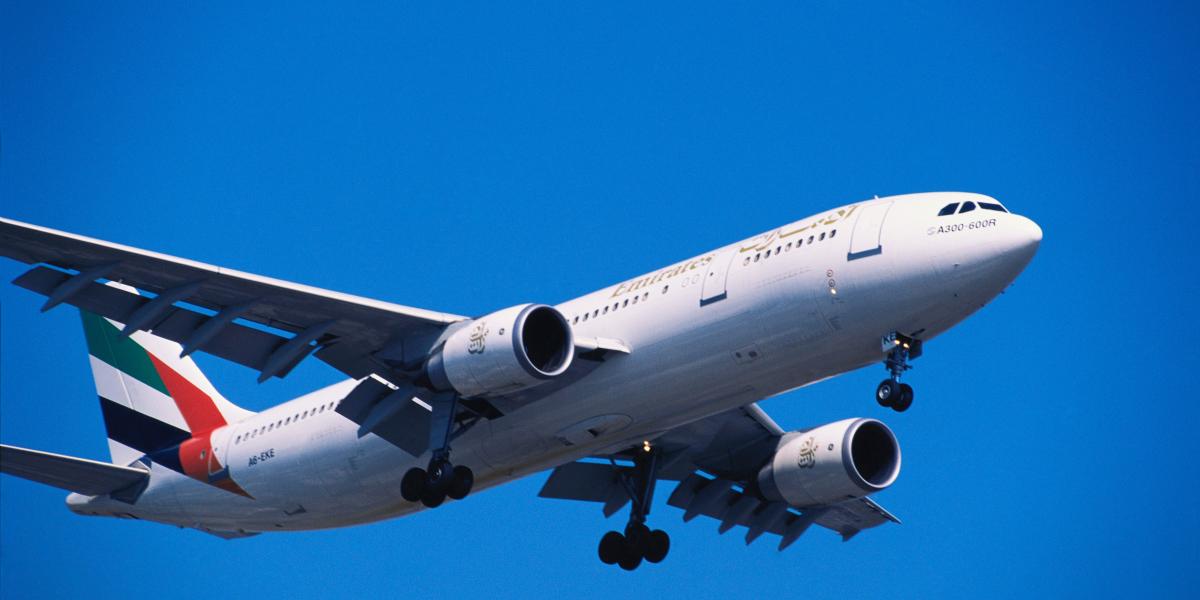
India recently witnessed one of the worst aviation disruptions in years. Thousands of passengers were stranded across airports, entire flight schedules collapsed, and social media was filled with videos of frustrated travelers sleeping on floors. The chaos was not just an operational failure, it was the outcome of a deeper conflict between the regulator and the airlines, triggered by the new DGCA guidelines, especially the rollout of FDTL Phase 2 for cabin crew scheduling.
The guidelines were implemented without adequate transition time, without sector-wise consultation, and without understanding the operational realities of an already stretched aviation ecosystem. This combination created a perfect storm of cancellations, delays, and consumer suffering. Additionally, The GoI has granted NOCs to three new airlines namely Shankh Air, Al Hind Air, and FlyExpress. While Shankh Air received approval earlier, Al Hind Air and FlyExpress were cleared this week to boost competition and reduce dominance in India’s domestic aviation sector.
DGCA’s intention behind tightening flight duty norms was safety, especially after the June 2025 Air India accident where 240 people lost their lives. The political pressure to show firm regulatory action was immense. However, the regulator responded with speed when it should have responded with precision. Airlines were mandated to increase rest periods, redesign rosters, reorganize crew bases, and adjust flight patterns overnight. Any such major scheduling reform needs at least 60 to 90 days of soft rollout. Instead, airlines had barely weeks of lead time. For an industry already short of trained staff, this was an unrealistic expectation. The crisis was not caused by a single factor but by the way DGCA forced a sensitive safety reform into a rigid deadline.
Why Indigo-Led Airlines Were Right in Raising Concerns
Popular narrative says Indigo and other airlines used cancellations as a pressure tactic. But the full picture is more complex. Airlines had been warning DGCA for months about the practical challenges of implementing the new duty norms. The concerns were not about profits. They were about system capacity. India has one of the fastest-growing aviation markets but also one of the most under-resourced ecosystems in terms of trained pilots, crew, maintenance personnel, and night-parking infrastructure. This brings us to the UC Berkeley Model of Regulatory Capture. The model explains how regulators sometimes design policies to demonstrate authority rather than ensure efficiency. In such cases, regulators move towards rule-making that looks strict on paper but ignores ground realities. The Indian aviation regulator faces enormous political pressure every time an accident occurs. To avoid criticism, regulators sometimes push blanket rules without industry partnership.
DGCA could have followed a collaborative model used in Europe and the Middle East where regulators and airlines together design phased duty-time transitions. Instead, the guidelines were enforced unilaterally. Indigo and other airlines were right to say that, without adequate rest facilities, standby crew, and stable rosters, this policy would destabilize operations. And that is exactly what happened. Raising the concern was right. The method of raising it may have been harsh, but the substance of the objection was genuine.
The Myth of Indigo and Air India Monopoly
Another narrative pushed by television anchors and social media influencers is that Indigo and Air India act like monopolies. This argument collapses the moment you look at data. Indigo has around 60 percent domestic market share, but market share alone does not confirm monopoly power. Airlines in India do not earn monopoly level profits. In fact, most of them barely survive.
Indigo’s Net Profit Margin fluctuates between 8 to 10 percent. It was even negative in FY21, FY22, and FY23 because aviation is a capital-intensive industry with thin margins. Air India is loss-making and survives because of government support and the Tata Group’s long-term interest. If there was a real monopoly, these companies would be printing money. Instead, they struggle to maintain margins.
History also shows that when airlines have tried to increase fares, competition brings them down immediately. India has seen more than 20 airlines shut down, including Jet Airways, Kingfisher, Go First, and many smaller ones. No sector with such high mortality can be called a monopoly. The truth is that aviation is not a monopoly-driven industry. It is a regulation-driven industry. And regulation decides everything from route allocation to airport slots to fuel pricing. The monopoly narrative is useful for political sound bites, but not for economic analysis. The reality is the opposite. The market is too competitive and too tightly regulated at the same time. This contradiction keeps the sector weak and prevents long term investment.
Why India Still Does Not Have a Free Market in Aviation
India’s aviation, oil, and telecom sectors are not truly laissez-faire because the government creates most of the restrictions, not the companies. All three sectors are heavily regulated, license-controlled, and have high entry barriers. Aviation is not a free market because airlines need DGCA licences, safety audits, route permissions, airport slots, and they face high ATF taxes, fare caps, and strict aircraft import and leasing rules. Oil and fuel are also far from laissez-faire because petrol and diesel prices depend on taxes, political pressures, and government-controlled pricing formulas, while OMCs are mostly state-owned. Telecom is also not a free market because spectrum is sold through high-cost government auctions, AGR rules create heavy dues, and strong licensing and regulatory controls limit competition, leaving only three major operators. All these distortions exist because of state intervention, not corporate behavior. Companies would prefer a freer market because lower barriers and fewer controls mean more competition and better margins.
To make aviation genuinely laissez-faire, the government must shift from controlling to only regulating safety. This requires auctioning airport slots transparently, removing fare caps, and allowing full dynamic pricing. ATF should be moved under GST with a lower uniform tax rate so operating costs drop. Aircraft leasing should be encouraged in India through free-market IFSC hubs. Airlines should be allowed to choose routes freely, without forced operations under schemes like UDAN, while remote routes should be subsidized separately. DGCA should restrict itself to safety standards instead of operational micromanagement. Entry barriers should be lowered by speeding up licence approval and removing minimum fleet requirements so more players can enter. Foreign airlines should be allowed 100 percent ownership in Indian carriers. Airport monopolies should be broken by allowing multiple operators for competitive airport charges and services. True laissez-faire aviation will only happen when prices, routes, competition, and operations are driven by the market instead of government control.
The Consumer Dilemma and the Image of Indian Aviation
At the same time, airlines cannot escape responsibility. Passengers who pay high fares expect dignity and order. India’s air travelers are mostly from urban, educated, and often affluent backgrounds. For them, an airport is not a bus stand. It represents the face of India’s industrial ambition. When thousands of passengers sleep on airport floors because of cancellations and disorganized queues, it harms not only the consumer but also the global perception of India’s infrastructure.
While some inconvenience during regulatory conflict is inevitable, the way some airlines managed the crisis was unacceptable. Cancellations without timely notification, inadequate staff at counters, and unclear communication became a bigger problem than the policy itself. Airlines must remember that consumer sovereignty is central to a healthy market. A free market does not give license to degrade customer experience. Customers are the foundation of the aviation economy. They cannot be treated as collateral damage in disputes.
At the same time, the form of protest seen at airports where crowds assembled and shouted at staff was equally undesirable. Airports should not resemble railway stations or bus depots. India has spent billions to modernize its aviation infrastructure. That premium image should not be compromised. Both sides must understand limits and responsibilities.
A Swift Regional Aviation Model for India
India’s domestic aviation system today highlights a deep structural problem where government failure, restricted infrastructure, and regulatory distortions dominate instead of a genuinely free market, which is why short domestic routes like Delhi to Patna often cost more than long international flights like Delhi to Paris. The basic economic logic is simple: when demand is high and supply limited, prices rise. Delhi to Patna has massive demand from daily travelers and business passengers, but airport capacity and flight slots remain extremely restricted. Patna, Lucknow, Varanasi, and many Tier 2 cities suffer from limited runways, few gates, weak night operations, and outdated terminals, which forces airlines to increase fares because the infrastructure shortage creates artificial scarcity. In contrast, international routes have far more competition, more airports, and lower taxes on aviation fuel, which makes long-haul flights cheaper than domestic ones. This is not a market failure but a governance failure in creating airports, expanding capacity, and allowing airlines to operate freely.
A true free market would have brought down fares naturally, but government bottlenecks have blocked laissez faire outcomes. Even with new airports opening, the bigger issue remains connectivity. For example, having many airports does not automatically make travel easy because most Tier 2 cities are not connected directly. A person from Lucknow still cannot fly to Jodhpur without going through Delhi, making the entire system inefficient. In many cases, taking a car is faster and cheaper than taking a flight with forced layovers. This exposes the hub dependency model of India where Delhi, Mumbai, and Bangalore dominate domestic routing. High taxes on domestic aviation fuel further increase short haul ticket prices, making them disproportionately expensive. The real economic alternative lies in creating a regional swift aviation model based on small airports, low capital cost, small aircraft, and fast layovers. This model exists successfully in the United States, Norway, Canada, Australia, and parts of Europe, where 20 to 50 seat turboprop aircraft operate short hops between small cities and connect them to larger hubs with 15 to 20 minute turnarounds. Such systems ensure that small towns stay connected, routes stay profitable, and travel remains efficient. India can replicate this by building minimalistic, small airports, using single ATC towers, shorter runways, and adopting efficient turboprop aircraft like ATR or Dornier for regional hops such as Kanpur to Delhi and then onward to Jodhpur or Jaipur. This would reduce operational costs, increase occupancy levels, and lower ticket prices.
It would also open the aviation sector to small new entrants because starting such an airline requires far lower investment than operating large jets out of large airports. This naturally increases competition, improves efficiency, and reduces the dominance of a few big airlines. The government’s role should be limited to safety regulation and basic infrastructure while letting the market decide routes, prices, and frequency. India’s current hub system creates inefficiency, high cost, and dependency on political and bureaucratic networks, but a decentralized, regional model encourages free market outcomes and gives passengers real choices. If implemented correctly, India can transform its aviation sector from an over-regulated, bottleneck-driven system into a dynamic, competitive, and capitalist regional network where fares drop, connectivity improves, and new players freely enter the market.
India’s aviation disruptions result from rigid DGCA regulations, short transition periods, and limited infrastructure—not monopolistic airlines. IndiGo and Air India operate in a competitive, low-margin environment. A decentralized regional aviation model with small airports, turboprops, and phased reforms can enhance efficiency, reduce fares, improve connectivity, and protect both safety and passenger experience.











-1024x683.jpg "El-Sayed Wins Dem Nomination in Michigan")