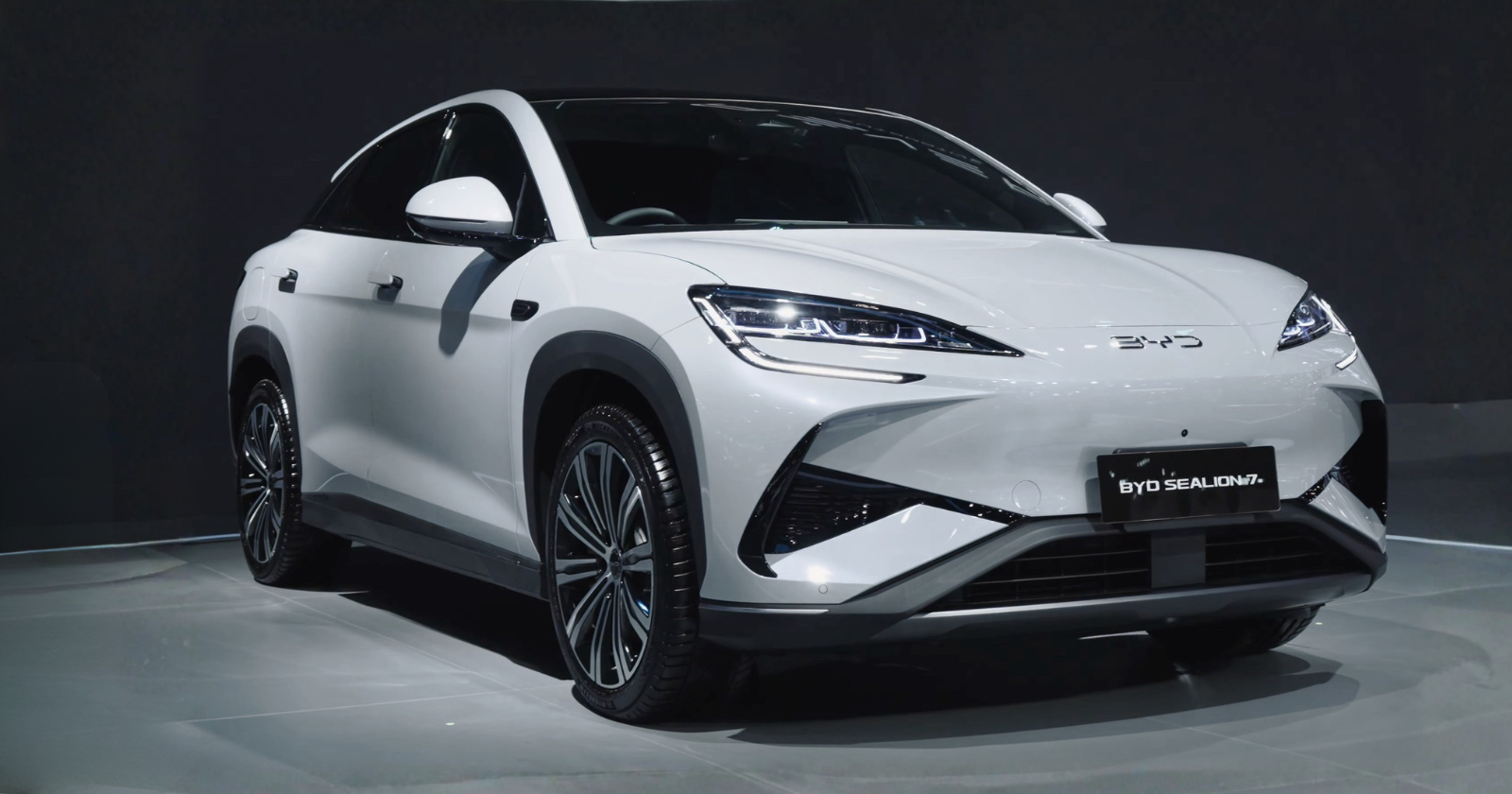
The global electric vehicle market has witnessed a dramatic shift in power. Chinese automaker BYD has officially dethroned Tesla as the world’s leading electric vehicle seller, marking a stunning reversal of fortune that few could have predicted just over a decade ago.
The milestone underscores how rapidly the automotive industry landscape has transformed and how Chinese manufacturers have emerged as dominant forces in the transition to electric mobility. BYD sold 2.26 million battery-powered vehicles in 2025, representing a nearly 28% increase from the previous year.
Meanwhile, Tesla delivered 1.64 million vehicles globally, an 8% decline from 2024 and the company’s second consecutive annual drop. The gap between the two manufacturers has widened considerably, with BYD now outselling Tesla by more than 600,000 units annually.
The fourth quarter proved particularly challenging for Tesla, with deliveries falling 16% year-over-year to approximately 418,000 vehicles. This sharp decline came after a brief surge in the third quarter, when American buyers rushed to purchase vehicles before a federal tax credit expired. The temporary boost masked deeper problems that became evident once the incentive disappeared.
What makes BYD’s achievement even more remarkable is that the company accomplishes this dominance without selling a single passenger vehicle in the United States, where Tesla generates nearly half its revenue. Chinese electric vehicles face 100% tariffs in the American market, effectively blocking BYD from competing on Tesla’s home turf. Despite this massive handicap, BYD has built its empire through aggressive expansion in China, Europe, and emerging markets.
From ridicule to respect
The transformation of BYD from automotive punchline to industry leader represents one of the most dramatic corporate turnarounds in recent memory. In a now-infamous 2011 Bloomberg interview, Elon Musk burst into laughter when asked about BYD as a potential competitor. “Have you seen their car?” Musk asked dismissively, adding that he didn’t think BYD had “a great product” and that the technology wasn’t “very strong.”
Musk’s assessment has proven spectacularly wrong. The company he once mocked has systematically addressed every weakness he identified, investing heavily in battery technology, design, and manufacturing efficiency. BYD now operates as a fully vertically integrated operation, controlling everything from raw material mining to semiconductor production, giving it cost advantages and supply chain resilience that traditional automakers struggle to match.
Founded in 1995 by chemist Wang Chuanfu as a battery manufacturer, BYD began by supplying lithium-ion batteries to mobile phone giants like Motorola and Nokia. The company didn’t enter the automotive business until 2003, when it acquired a small automaker called Xi’an Qinchuan Automobile. Its first electric vehicle, the F3DM, launched in 2008, the same year Warren Buffett’s Berkshire Hathaway invested in the company over Musk’s derision.
Tesla’s mounting challenges
Tesla’s decline stems from multiple factors beyond simple competition. The company faces growing backlash related to Elon Musk’s controversial political activities, which have alienated many environmentally conscious consumers who were Tesla’s core customer base. After Musk contributed $288 million to Trump-aligned political committees during the 2024 election cycle and later led the Department of Government Efficiency, protests erupted outside Tesla showrooms across Europe and the United States.
European sales have collapsed particularly dramatically. In France, Tesla registrations plummeted 37% in 2025 compared to the previous year. Across the entire continent, registrations fell 39% over the first eleven months of the year, according to the European automobile manufacturers’ association. The brand that once symbolized environmental progress and cutting-edge technology has become associated with political controversy, fundamentally changing its appeal to potential buyers.
Meanwhile, BYD has successfully penetrated European markets despite facing additional 17% tariffs imposed by the European Union following an anti-subsidy investigation. Even with these import costs, BYD vehicles remain competitively priced. The BYD Dolphin starts at around €35,500 in Europe, compared to roughly €41,000 for a standard Tesla Model 3. Larger BYD models like the Seal typically range from €42,700 to €48,200, often matching or undercutting equivalent Tesla prices.
Competition within China has intensified as well, with domestic rivals like Geely, Leapmotor, and newcomer Xiaomi gradually eroding BYD’s market share. From a peak of 35% in 2023, BYD’s domestic market share fell to 29% in the first eleven months of 2025, according to the China Passenger Car Association. BYD CEO Wang Chuanfu acknowledged at a December investor meeting that the company faces challenges from erosion of its technological lead and insufficient product differentiation.
What BYD’s ascension reveals goes beyond a simple corporate rivalry between two manufacturers. It demonstrates how China has fundamentally reshaped the global automotive industry through massive government support, strategic investment in battery technology, and willingness to compete aggressively on price. Chinese automakers took the top five spots in a recent industry assessment of zero-emission vehicle class coverage, and five of the top six positions for EV sales share. The shift represents a complete reversal from just fifteen years ago, when Western manufacturers dominated the automotive landscape and Chinese vehicles were dismissed as inferior copies.
The implications extend far beyond market share statistics. Tesla’s struggles raise questions about whether first-mover advantage in emerging technologies provides lasting competitive protection, or whether manufacturing scale and cost efficiency ultimately determine winners. BYD’s success suggests that vertical integration and control over supply chains may matter more than brand prestige in commoditizing industries. As electric vehicles transition from aspirational luxury goods to mainstream transportation, the company that can produce reliable vehicles at affordable prices gains the advantage.
For consumers, the changing dynamics offer both benefits and concerns. Increased competition drives down prices and accelerates innovation, making electric vehicles accessible to more buyers. However, the concentration of production in China raises questions about supply chain resilience, geopolitical dependencies, and the effectiveness of Western industrial policy. The European Union’s tariffs on Chinese EVs represent an attempt to protect domestic manufacturers, yet BYD’s continued success despite these barriers suggests that protectionism alone cannot offset competitive disadvantages in manufacturing costs and scale.















-1024x683.jpg "Strait Outta Hormuz: Getting the Iran Oil Story Straight")