No Result
View All Result
  • Login
Tuesday, February 17, 2026
FeeOnlyNews.com
  • Home
  • Business
  • Financial Planning
  • Personal Finance
  • Investing
  • Money
  • Economy
  • Markets
  • Stocks
  • Trading
  • Home
  • Business
  • Financial Planning
  • Personal Finance
  • Investing
  • Money
  • Economy
  • Markets
  • Stocks
  • Trading
No Result
View All Result
FeeOnlyNews.com
No Result
View All Result
Home Business

How Warren Buffett’s Geico fell behind Progressive in the auto-insurance race

by FeeOnlyNews.com
2 months ago
in Business
Reading Time: 4 mins read
A A
0
How Warren Buffett’s Geico fell behind Progressive in the auto-insurance race
Share on FacebookShare on TwitterShare on LInkedIn


Warren Buffett’s failure to capitalize on the economy’s digital shift over the last two decades has hurt his otherwise enviable track record as an investor. His blind spot regarding tech didn’t stop at the stock market: It bled into how he ran Berkshire Hathaway’s operating companies as well. Across many of his wholly owned businesses, Buffett neglected technological upgrades, and Berkshire’s business value has suffered as a result.

It’s important to understand this because the majority of Berkshire Hathaway’s assets are invested not in publicly traded securities, but in operating subsidiaries like Burlington Northern Santa Fe Railroad, Berkshire Hathaway Energy, and Geico. While it’s true that Buffett invested aggressively in wind energy, that was largely because of government tax incentives. In the main, he preferred to milk his operating subsidiaries for cash rather than reinvest in them for the digital age. Exhibit A is Geico, which thanks to a lack of IT investment has fallen behind Progressive as the nation’s leading for-profit auto insurer.

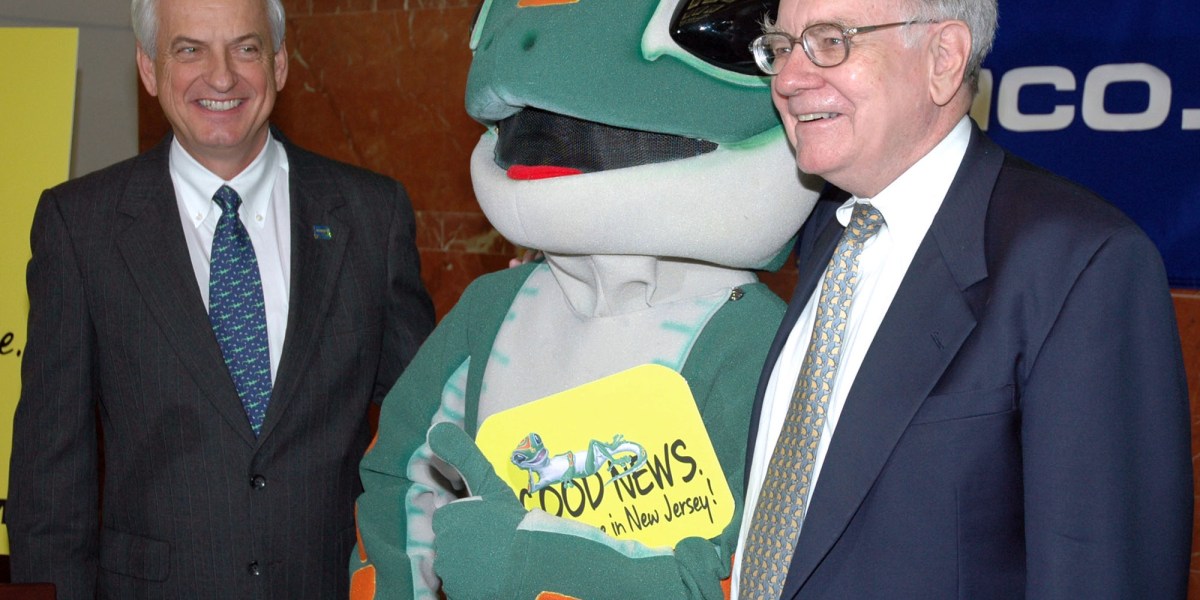
Buffett has called Geico his favorite child, and for good reason. Since it began in the 1930s, the auto insurer has used a direct-sales model to keep operating costs the lowest in the industry. In a commodity business like insurance, that’s a major competitive advantage. In the 1990s, after he bought all of Geico, Buffett found a second moat when he began to brand Geico as a trusted, even beloved American company. The gecko, the caveman, the camel who celebrated hump day—all these were marketing masterstrokes, ones directly derived from Buffett’s deep understanding of the mass brand-mass media industrial complex. The mascots also highlight how, while Buffett was comfortable investing in marketing, he was deeply uncomfortable with, and therefore didn’t understand, investing in tech.

When Buffett took control of Geico in 1996, he octupled its marketing budget. This wiped out almost all of Geico’s profits from a GAAP accounting standpoint, but Buffett was confident that increasing advertising outlays today would lead to more profitable customers tomorrow. And so it was: Under Buffett’s leadership, Geico’s market share grew from under 3% in 1996 to 12% in 2020, and it went from the No. 7 auto insurer to the #2 auto insurer, behind only State Farm.

So far, so good—but while Geico was investing in marketing, its rival Progressive was investing in technology. Founded only a year after Geico, Progressive began to upgrade its IT systems as early as the late 1970s. In the 1980s, it bought its agents computers and sent them floppy discs so they could better match price with risk. In 1996, Progressive became the first auto insurer to allow consumers to buy insurance online, and it continually streamlined its backend systems so that it could accurately quote new business. Today, Progressive brags that it has tens of billions of price points and that its tech stack allows the company to adjust its rates much faster than its competition—nearly once every business day. “We are a tech company that happens to sell insurance,” is one of Progressive’s internal mantras.

Driving the company’s tech investment was an insight that was perhaps even more astute than Buffett’s marketing insight. Thanks to its no-agent, no-commission model, Geico enjoyed a six-percentage-point cost advantage vs. Progressive in its operating costs. Because half of its business is through insurance agents, Progressive is unlikely ever to catch up here. But Progressive CEO Peter Lewis, who led the company from 1965 to 2000, understood that an auto insurer’s biggest cost center is the claims it must pay policyholders—four to five times bigger, in fact, than its administrative and advertising costs. If Progressive could manage these “loss costs” better than the competition, Lewis reasoned, then it could become the de facto low-cost auto insurer. 

The key to managing loss costs was technology in all its glorious variety. Back-end systems at headquarters that could parse price and risk for each driver were important, but so were front line innovations like Snapshot, a shoebox-sized device that in the 1990s Progressive began installing into the cars of willing customers. Snapshot, now an app on your mobile phone, tracks a customer’s driving behavior; more than one in three Progressive customers buying insurance directly from the company opts in for “usage-based” premiums. Thanks to Snapshot and other innovations, Progressive simply knows more about its drivers than any other insurer, and this creates a virtuous circle in which the company knows which to reward with discounts, which to punish with surcharges, and which to purge altogether. 

Thus, while Progressive’s operating costs have historically been six points worse than Geico, its loss costs have been 11 points better, which means that Geico’s low-cost moat has been breached by tech. In contrast to Progressive’s streamlined system, Geico has more than 600 legacy IT systems. It didn’t start working on a Snapshot-like product until 2019, twenty years after Progressive began. 

Buffett liked to say that when the tide goes out, you see who’s swimming naked, and COVID was the perfect storm to reveal how little Geico had paid attention to its digital wardrobe. During COVID, people suddenly stopped driving, and then, when the pandemic ended, they drove more than ever and more recklessly than ever. At the same time, the worst inflation in forty years hit all sectors of the economy, including auto-repair shops. Such rapidly changing conditions favored insurers with robust tracking tools, like Progressive, and punished insurers without them, like Geico. Since 2020, Progressive has almost doubled its personal auto policy count—but Geico has lost nearly 15% of its personal insurance base. Progressive, not Geico, is now the nation’s number two auto insurer.

It turns out that while the branding of the gecko was important, it wasn’t nearly as powerful as employing sophisticated digital tools. Geico is a good example of what happens when a company, even a powerful one, fails to reinvest in its future. Rather than a virtuous cycle—tech investment leading to better pricing and better products, which drives more profits, which can then be reinvested to drive the cycle on—Geico seems caught in the same vicious cycle that afflicts General Motors, Macy’s and other legacy companies. 



Source link

Tags: autoinsuranceBuffettsfellGeicoProgressiveRaceWarren
ShareTweetShare
Previous Post

Gasoline prices in Israel to fall sharply Wednesday night

Next Post

Do You Think Beam Therapeutics (BEAM) is an Undervalued Stock?

Related Posts

Fed rate cuts: Inflation, jobs reports make cuts under Powell unlikely

Fed rate cuts: Inflation, jobs reports make cuts under Powell unlikely

by FeeOnlyNews.com
February 17, 2026
0

One could argue that last week’s surprisingly robust jobs report has made Jerome Powell’s job harder, as it defies the...

Karmiel home sold for NIS 5m

Karmiel home sold for NIS 5m

by FeeOnlyNews.com
February 17, 2026
0

A detached house in Karmiel has been sold for NIS 5 million. The house was built in 1980 and...

Cognizant scales agentic AI operations through Google Cloud alliance

Cognizant scales agentic AI operations through Google Cloud alliance

by FeeOnlyNews.com
February 17, 2026
0

Cognizant has announced the expansion of its partnership with Google Cloud, focusing on the large-scale operationalisation of agentic AI within...

Infosys-Anthropic tie-up signals AI growth opportunities, not market disruption: Sumit Pokharna

Infosys-Anthropic tie-up signals AI growth opportunities, not market disruption: Sumit Pokharna

by FeeOnlyNews.com
February 17, 2026
0

The recent collaboration between Infosys and US-based AI startup Anthropic has sparked excitement on the Street, but industry experts urge...

AI could spark a new age of learning—but only if governments, tech firms and educators work together

AI could spark a new age of learning—but only if governments, tech firms and educators work together

by FeeOnlyNews.com
February 17, 2026
0

The way we teach students, from classroom structures to teaching methods and standardized instruction, has not changed much over human...

700 CyberArk employees to lose jobs after b exit

700 CyberArk employees to lose jobs after $25b exit

by FeeOnlyNews.com
February 17, 2026
0

The day after the second largest ever acquisition in Israel’s tech industry was completed, many employees at CyberArk (Nasdaq:...

Next Post
Do You Think Beam Therapeutics (BEAM) is an Undervalued Stock?

Do You Think Beam Therapeutics (BEAM) is an Undervalued Stock?

Top 10 Blogs of 2025: Insights on Market Cycles and Financial History

Top 10 Blogs of 2025: Insights on Market Cycles and Financial History

  • Trending
  • Comments
  • Latest
Super Bowl ads go for silliness, tears and nostalgia as Americans reel from ‘collective trauma’ of recent upheaval — ‘Everybody is stressed out’

Super Bowl ads go for silliness, tears and nostalgia as Americans reel from ‘collective trauma’ of recent upheaval — ‘Everybody is stressed out’

February 8, 2026
York IE Adds OpenView Veteran Tom Holahan as General Partner for New Early Growth Fund

York IE Adds OpenView Veteran Tom Holahan as General Partner for New Early Growth Fund

February 11, 2026
The Weekly Notable Startup Funding Report: 2/9/26 – AlleyWatch

The Weekly Notable Startup Funding Report: 2/9/26 – AlleyWatch

February 9, 2026
Self-driving startup Waabi raises up to  billion, partners with Uber to deploy 25,000 robotaxis

Self-driving startup Waabi raises up to $1 billion, partners with Uber to deploy 25,000 robotaxis

January 28, 2026
Student Beans made him a millionaire, a heart condition made this millennial founder rethink life

Student Beans made him a millionaire, a heart condition made this millennial founder rethink life

December 11, 2025
Huntington Bank gives Ameriprise institutional unit B boost

Huntington Bank gives Ameriprise institutional unit $28B boost

February 6, 2026
Fed rate cuts: Inflation, jobs reports make cuts under Powell unlikely

Fed rate cuts: Inflation, jobs reports make cuts under Powell unlikely

0
Learning the Bitter Lesson in 2026

Learning the Bitter Lesson in 2026

0
Brown & Brown appoints Dorothea Henderson as chief information technology officer

Brown & Brown appoints Dorothea Henderson as chief information technology officer

0
Karmiel home sold for NIS 5m

Karmiel home sold for NIS 5m

0
Binance Disappears from Google Play in Philippines After Years of SEC Warnings

Binance Disappears from Google Play in Philippines After Years of SEC Warnings

0
Cognizant scales agentic AI operations through Google Cloud alliance

Cognizant scales agentic AI operations through Google Cloud alliance

0
Fed rate cuts: Inflation, jobs reports make cuts under Powell unlikely

Fed rate cuts: Inflation, jobs reports make cuts under Powell unlikely

February 17, 2026
Learning the Bitter Lesson in 2026

Learning the Bitter Lesson in 2026

February 17, 2026
Karmiel home sold for NIS 5m

Karmiel home sold for NIS 5m

February 17, 2026
Binance Disappears from Google Play in Philippines After Years of SEC Warnings

Binance Disappears from Google Play in Philippines After Years of SEC Warnings

February 17, 2026
Cognizant scales agentic AI operations through Google Cloud alliance

Cognizant scales agentic AI operations through Google Cloud alliance

February 17, 2026
Infosys-Anthropic tie-up signals AI growth opportunities, not market disruption: Sumit Pokharna

Infosys-Anthropic tie-up signals AI growth opportunities, not market disruption: Sumit Pokharna

February 17, 2026
FeeOnlyNews.com

Get the latest news and follow the coverage of Business & Financial News, Stock Market Updates, Analysis, and more from the trusted sources.

CATEGORIES

  • Business
  • Cryptocurrency
  • Economy
  • Financial Planning
  • Investing
  • Market Analysis
  • Markets
  • Money
  • Personal Finance
  • Startups
  • Stock Market
  • Trading

LATEST UPDATES

  • Fed rate cuts: Inflation, jobs reports make cuts under Powell unlikely
  • Learning the Bitter Lesson in 2026
  • Karmiel home sold for NIS 5m
  • Our Great Privacy Policy
  • Terms of Use, Legal Notices & Disclaimers
  • About Us
  • Contact Us

Copyright © 2022-2024 All Rights Reserved
See articles for original source and related links to external sites.

Welcome Back!

Sign In with Facebook
Sign In with Google
Sign In with Linked In
OR

Login to your account below

Forgotten Password?

Retrieve your password

Please enter your username or email address to reset your password.

Log In
No Result
View All Result
  • Home
  • Business
  • Financial Planning
  • Personal Finance
  • Investing
  • Money
  • Economy
  • Markets
  • Stocks
  • Trading

Copyright © 2022-2024 All Rights Reserved
See articles for original source and related links to external sites.