The ads come as Canadian banking is going through generational shifts, including a wave of smaller players being bought up, the emergence of tech-based players as potential threats to the establishment, and a federal government that has made both big promises and moves to create more competition.
While it’s not clear how it will all play out, change is clearly underway in Canadian banking.
“This is dramatically different from what we’ve seen before,” said Adriana Vega, executive director of Fintechs Canada. Vega welcomed the fact that not only had the government made strong overtures in the fall budget to bolster competition, but it soon after started delivering with an implementation bill that included key details on moving open banking forward.
Open finance could reshape Canada’s financial landscape
The system, also called consumer-driven banking, has been hailed by many on the challenger side as the best way to shake up the sector. By giving consumers control of their financial data, open banking breaks down the silos between financial firms. It makes it easier to centrally manage multiple accounts, shop around and add on products from newer players, and switch accounts over entirely.
Not only has the government already moved forward with legislation to make it a reality, it also explicitly said that fostering competition was part of the mandate. “That was a big ask for industry,” said Vega.
And while Canada is late to the table on open banking, the government is looking to make up for lost time by including a wide range of financial products such as investments and mortgages in the mandate.
The best online banks and credit unions in Canada
“This really isn’t open banking; it’s open finance,” said Steve Boms, executive director of the Financial Data and Technology Association. “It’s not just about Canada catching up to the rest of the world, it’s now about Canada actually going farther than many other countries.”
While Boms remembers first talking with former finance minister Bill Morneau about open banking in 2016, he senses it could now become reality as the macropolitical winds align. “There’s such a determined effort to make the Canadian economy more independent, more competitive, both globally and within Canada, that it just feels like this time is different, and there’s a real desire to get this done.”

X
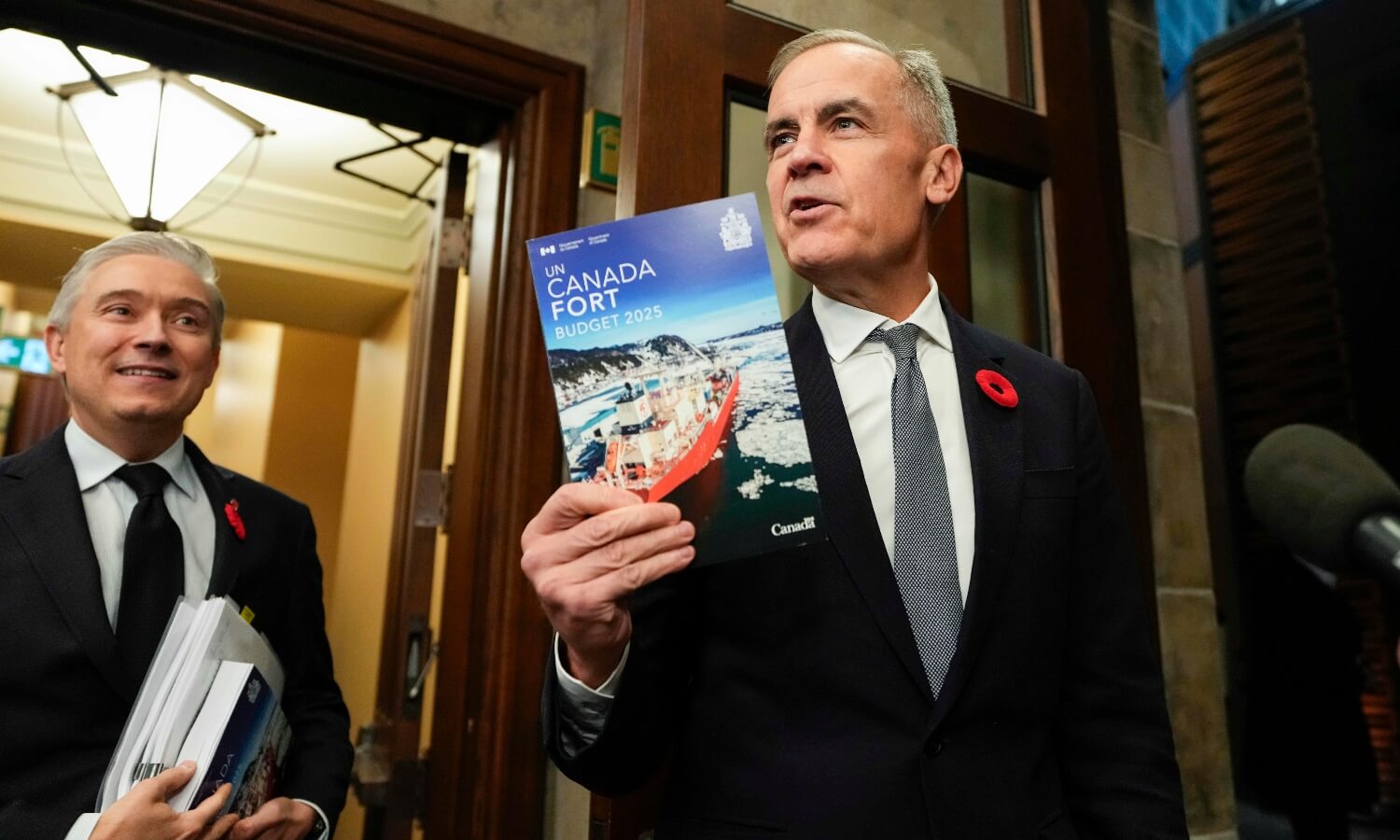
The changes are being led by Prime Minister Mark Carney, who would already be well aware of the benefits of open banking as he was governor of the Bank of England when the country’s program went live all the way back in 2018. “He had a front-row seat,” said Andrew Spence, who wrote a book in which he argues the banks gouge customers after working in the industry, and who now works as a consultant.
The changes also align with evidence from the OECD that open banking and fintech access to the system have been the best routes to effective competition, he said. “The budget signalled for the first time some significant political commitment to introducing competition into the sector,” said Spence.
Consolidation shifts focus to consumer empowerment
The new avenues of competition, however, come as other trends risk reducing choice. A wave of consolidation in recent years has seen RBC buy HSBC Canada, while National Bank has acquired Canadian Western Bank, and, as of early December, is in the process of getting Laurentian Bank’s retail portfolio.
It doesn’t necessarily mean less competition though, said Claire Celerier, Canada Research Chair in household finance at the University of Toronto’s Rotman School of Management. “There is no evidence of an ideal number of institutions to have competition … you could have a very competitive market with only four banks,” she said.
The biggest factors are how informed consumers are, and how empowered they are, said Celerier. “If fees are totally transparent, and if people can switch banks very easily, it can be extremely powerful.” The government has at least made promises on both.
The government said in the budget it will move to ban charges for switching investment and registered accounts, which currently often costs $150 a pop, while it has committed more vaguely to work with banks to make switching accounts easier.
The feds also tasked the Financial Consumer Agency of Canada with looking into the structure, level, and transparency of fees charged by Canadian banks, and said they would explore improving the transparency of cross-border transfer fees.
The promises to make switching accounts easier also comes as recent developments could deliver new choices.