
Global supply chains move over $15T in goods annually, yet the retail industry operates on razor-thin margins while drowning in disconnected, siloed data that creates massive inefficiencies and waste. When retailers and CPG brands lack real-time visibility into sales, inventory, and supply chain performance, the results cascade throughout the system: out-of-stocks cost the industry billions in lost sales, overstock leads to food waste on an epic scale, and manual data processes consume resources that could drive strategic growth. Crisp addresses these challenges through its vertical AI platform that cleanses, models, and interprets retail data from 40+ retailers and distributors, enabling brands to reduce out-of-stocks, optimize inventory, and make data-driven decisions in real-time. The platform’s newly launched AI Agent Studio orchestrates supply chain insights and prompts automated actions that improve retail performance, powered by deep data foundations that transform disconnected information into competitive advantage.
AlleyWatch sat down with Crisp CEO and Founder Are Traasdahl to learn more about the business, its future plans, recent funding round that brings total funding to $127M, and much, much more…
Who were your investors and how much did you raise?
Most recently, Crisp closed a Series B1 round of $26M. The round was led by Paine Schwartz Partners, with participation from Blue Cloud Ventures, FirstMark Capital, Cox, DNX, Prologis, and Wellington Management.
Tell us about the product or service that Crisp offers.
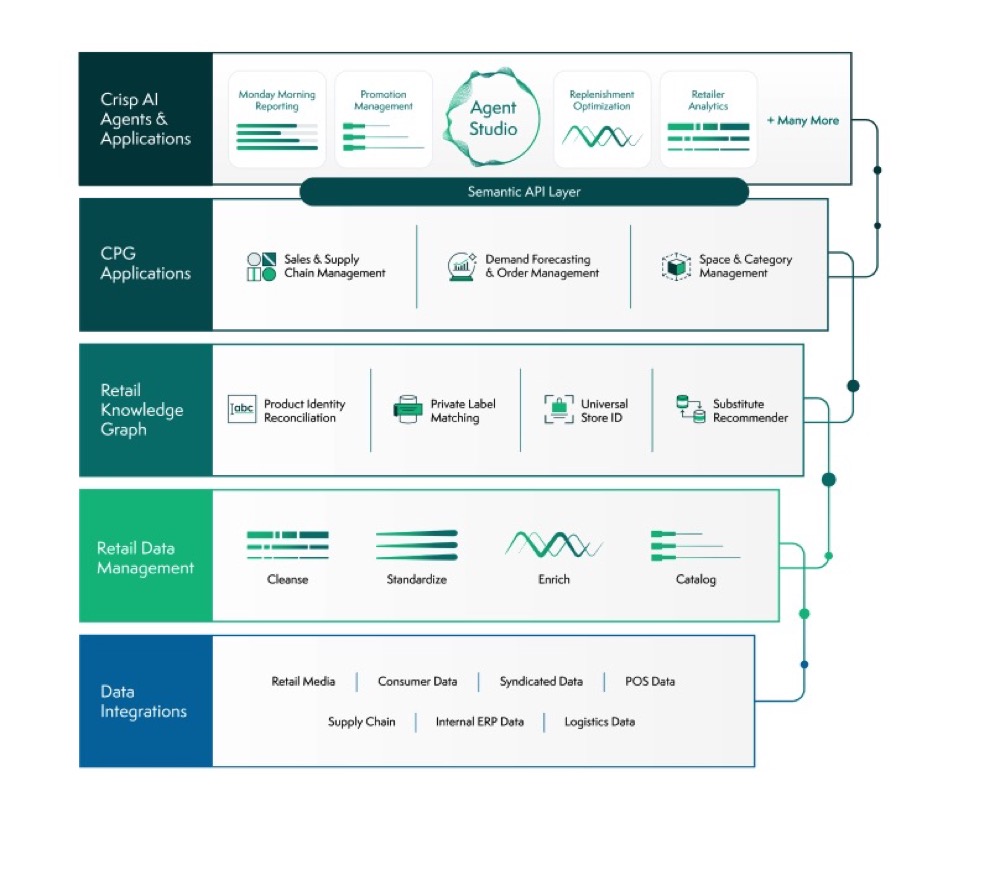
Crisp provides a vertical artificial intelligence platform that empowers CPG companies to reduce waste and increase profitability through real-time data, insights, and action. The Crisp platform leverages AI to facilitate the integration, access, and exchange of real-time POS and supply chain data across CPG brands, retailers and distributors. This enables faster decision-making and unlocks greater visibility and collaboration across supply chains to help brands and retailers optimize their retail sales and supply chain infrastructure.
What inspired the start of Crisp?
I have been building companies for over 20 years. Before Crisp, I founded Tapad, which helped lead the programmatic transformation in the advertising industry. After selling Tapad, I spent a year traveling the world with my family, visiting over thirty countries. Crisp was born out of a passion for reducing food waste. While I was traveling, I witnessed firsthand the disparities of the food supply chain. After hundreds of hours of research and meetings with experts in the industry, I concluded that much of the waste was due to slow-moving, inaccurate, or unusable data that causes overstock or understock on a massive scale. Transforming the retail industry requires leveraging real-time data, communication, and collaboration across the supply chain. This remains our vision today at Crisp: to turn global commerce data into actions that create a lasting advantage for our customers.
How is Crisp different?
We are on a mission to help the retail industry reach near-zero waste. We are uniquely positioned to help brands leverage real-time POS and supply chain data to identify and predict trends in supply and demand, mitigate supply chain disruptions, and move products that are potentially at risk of spoilage. Crisp ingests, normalizes, analyses and distributes data regardless of source or destination. Our collaborative commerce approach as a vertical AI platform is helping the retail industry make zero-waste supply chains a reality.Leveraging a deep data foundation and extensive retail industry expertise, the Crisp AI platform is designed to automate industry-specific tasks, including reducing out-of-stocks, maximizing e-commerce revenue, and optimizing assortment and space planning. This uniquely integrated, vertical AI-driven approach turns commerce data into actions that create a competitive advantage for our customers.
What market does Crisp target and how big is it?
Crisp focuses on the global retail industry, where over $15T in goods flow through global supply chains annually.AI is often described as something a single company should leverage, but verticalized AI agents that specialize in retail can streamline manual tasks and facilitate collaboration across multiple companies so that humans can spend time on what drives the business: being strategic. In 2025, we launched the Crisp AI Agent Studio and AI Blueprints. We are excited to continue to lead in AI innovations for the retail industry and plan to announce additional AI-based solutions in 2026.
What’s your business model?
Crisp is a SaaS business. We charge based on PODs (points of distribution) that equal the average monthly number of products (SKUs) multiplied by the number of stores.
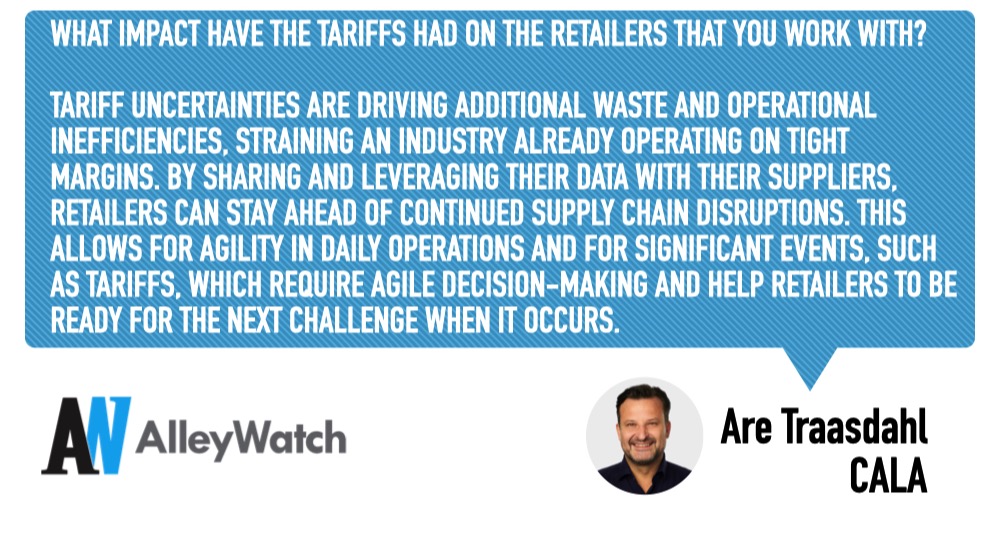
What impact have the tariffs had on the retailers that you work with?Tariff uncertainties are driving additional waste and operational inefficiencies, straining an industry already operating on tight margins. By sharing and leveraging their data with their suppliers, retailers can stay ahead of continued supply chain disruptions. This allows for agility in daily operations and for significant events, such as tariffs, which require agile decision-making and help retailers to be ready for the next challenge when it occurs.
What was the funding process like?
We have a very supportive group of new and long-term investors that believe in the significant opportunity and mission of Crisp and we are grateful to see continued participation across existing funders, such as FirstMark, Blue Cloud Ventures, Wellington Management, Cox, DNX, and Prologis and receive the support of new strategic investors including Paine Schwartz Partners, who led this most recent round.What factors about your business led your investors to write the check?
Investors are interested in Crisp because we are demonstrating measurable changes in one of the world’s most important industries through advanced technology. Crisp represents a compelling opportunity to invest in a scaling, high-ROI vertical AI data platform operating at the intersection of commerce, supply chain, and sustainability.
What are the milestones you plan to achieve in the next six months?
The new funding will support the company’s aggressive growth efforts, including expanding value to CPG and retail channels through new platform features and functionality, expansion of new data partnerships, investment in the Crisp AI Agent flagship product, and growing through strategic hires globally.
With a plethora of commuting options in the city, how do you typically get to work each day?
No two days are the same for me, but my favorite commute is a short walk. Many days are spent traveling to meet with our customers in Northwest Arkansas, Minneapolis and most recently in the UK following Crisp’s acquisition of two companies there.

You are seconds away from signing up for the hottest list in NYC Tech!
Sign up today













-1024x683.jpg "Strait Outta Hormuz: Getting the Iran Oil Story Straight")