No Result
View All Result
  • Login
Thursday, May 28, 2026
FeeOnlyNews.com
  • Home
  • Business
  • Financial Planning
  • Personal Finance
  • Investing
  • Money
  • Economy
  • Markets
  • Stocks
  • Trading
  • Home
  • Business
  • Financial Planning
  • Personal Finance
  • Investing
  • Money
  • Economy
  • Markets
  • Stocks
  • Trading
No Result
View All Result
FeeOnlyNews.com
No Result
View All Result
Home Economy

Does a Decline in “Aggregate Demand” Cause a Recession?

by FeeOnlyNews.com
6 months ago
in Economy
Reading Time: 4 mins read
A A
0
Does a Decline in “Aggregate Demand” Cause a Recession?
Share on FacebookShare on TwitterShare on LInkedIn


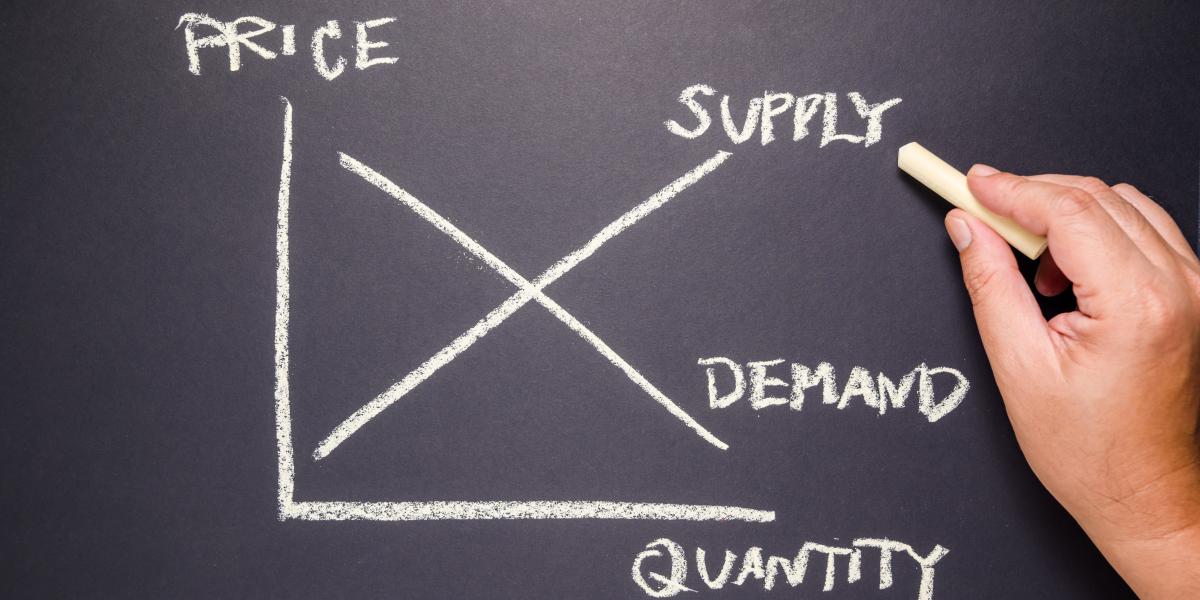
It is widely held that what causes recessions is a decline in the demand for goods and services. If the private sector fails to strengthen its demand, then the government should step in by raising its demand for goods and services. However, any individual’s ability to demand is constrained by their ability to produce goods valued by others. The more valued goods individuals produce, the more goods they can demand. According to James Mill,

When goods are carried to market what is wanted is somebody to buy. But to buy, one must have the wherewithal to pay. It is obviously therefore the collective means of payment which exist in the whole nation constitute the entire market of the nation. But wherein consist the collective means of payment of the whole nation? Do they not consist in its annual produce, in the annual revenue of the general mass of inhabitants? But if a nation’s power of purchasing is exactly measured by its annual produce, as it undoubtedly is; the more you increase the annual produce, the more by that very act you extend the national market, the power of purchasing and the actual purchases of the nation…. Thus, it appears that the demand of a nation is always equal to the produce of a nation. This indeed must be so; for what is the demand of a nation? The demand of a nation is exactly its power of purchasing. But what is its power of purchasing? The extent undoubtedly of its annual produce. The extent of its demand therefore and the extent of its supply are always exactly commensurate.

Can Government Grow an Economy?

The whole idea that the government can grow an economy originates from the view that an increase in government spending increases the economy’s output by a multiple of the initial government increase. The popularizer of the magical power of the multiplier, John Maynard Keynes, wrote,

If the Treasury were to fill old bottles with banknotes, bury them at suitable depths in disused coal mines which are then filled up to the surface with town rubbish, and leave it to private enterprise on well-tried principles of laissez-faire to dig the notes up again (the right to do so being obtained, of course by tendering for leases of the note-bearing territory), there need be no more unemployment and with the help of the repercussions, the real income of the community, and its capital wealth also, would probably become a good deal greater than it actually is.

Let us examine the effect of an increase in the government’s demand on the economy’s process of wealth formation. As government spends, it must tax, borrow, or print, and what it spends on bids up prices and gathers resources away from the private economy. It forces an exchange of something for nothing. As one can see, not only does the increase in the enforcer’s outlays—who does not produce any useful goods—not raise overall output by a positive multiple but, on the contrary, this weakens the process of wealth generation in general.

Through taxation, the government forces producers to part with their products for government services and this in turn weakens the production of wealth. Moreover, according to Mises,

…there is need to emphasize the truism that a government can spend or invest only what it takes away from its citizens and that its additional spending and investment curtails the citizens’ spending and investment to the full extent of its quantity.

The dependence of demand on the production of goods cannot be removed by means of government spending. On the contrary, loose fiscal policy will only impoverish wealth generators and weaken their ability to produce goods and services—it will weaken the demand.

Therefore, what is required to revive the economy is not strengthening aggregate demand through government spending, but curbing government spending. This will enable wealth generators to revive the economy by allowing them to move ahead with the business of wealth generation. By strengthening the economy’s ability to produce goods and services we are, in fact, strengthening aggregate demand. According to David Ricardo,

No man produces but with a view to consume or sell, and he never sells but with an intention to purchase some other commodity, which may be immediately useful to him, or which may contribute to future production. By producing, then, he necessarily becomes either the consumer of his own goods, or the purchaser and consumer of the goods of some other person.

What Causes Recessions?

For most commentators, the occurrence of a recession is a result of an unexpected event such as a shock that pushes the economy away from a trajectory of stable economic growth. Shocks weaken the economy.

On the other hand, as a rule, a recession is the product of inflationary monetary policies, especially directed by a government and central bank. Usually this takes place in response to a tighter stance of the central bank following a period of expansionary monetary policy. Various business activities, especially in the capital goods sector, that sprang up on the back of the previous monetary and credit inflation and low interest rates come under pressure. These activities cannot continue to support themselves because they survive because of the increase in money supply and artificially low interest rates. The inflationary increase in money and credit sets an exchange of nothing for something, which distorts the structure of production.

Once a central bank tightens its monetary stance (since it cannot simply inflate forever) there is a consequent decline in the growth rate of money supply and increase in the monetary interest rate. This undermines various non-productive activities and brings about a recession. Since non-productive activities cannot support themselves, being unprofitable, these activities begin to deteriorate (i.e., retrenchment, unemployment, liquidation of assets, wasted resources, incomplete projects, etc.). Obviously, then, aggressive fiscal and monetary policies, which caused the problem, can only weaken the prospects for an economic recovery.

Summary and Conclusion

During an economic crisis, what is required is for the government to do as little as possible. With less tampering, prices and production can be readjusted to come into line with market realities and more wealth remains with wealth generators, which allows them to facilitate an expansion of wealth. With a larger pool of wealth, it will be much easier to absorb various unemployed resources and eliminate the crisis. Aggressive fiscal and monetary policies are likely to hurt the process of wealth generation thereby making things much worse.


Source link

Tags: Aggregatedeclinedemandrecession
ShareTweetShare
Previous Post

Best money market account rates today, November 17, 2025 (Earn up to 4.26% APY)

Next Post

NDA’s landslide Bihar triumph adds strong boost to Indian equities’ rebound narrative, says Motilal Oswal

Related Posts

Justice Clarence Thomas Is Right about Progressivism

Justice Clarence Thomas Is Right about Progressivism

by FeeOnlyNews.com
May 28, 2026
0

In a recent speech at the University of Texas Law School, Justice Clarence Thomas attacked the political doctrines of progressivism,...

Electile Dysfunction—Why Can’t the Democrats Get Their Polls Up?

Electile Dysfunction—Why Can’t the Democrats Get Their Polls Up?

by FeeOnlyNews.com
May 28, 2026
0

Yves here. Even though the object of study is the feckless Democrats, the collapse of Labour in the UK suggests...

Canada Moves To Destroy Encryption – Demands Backdoor Access To ALL Available Data

Canada Moves To Destroy Encryption – Demands Backdoor Access To ALL Available Data

by FeeOnlyNews.com
May 28, 2026
0

Canada is walking into extremely dangerous territory and most people do not understand the implications because governments always package surveillance...

Energy inflation has been more persistent than expected: Fed’s Goolsbee

Energy inflation has been more persistent than expected: Fed’s Goolsbee

by FeeOnlyNews.com
May 27, 2026
0

Austan Goolsbee, president of the Federal Reserve Bank of Chicago, speaks during the 29th annual Milken Institute Global Conference at...

Trump-Endorsed Paxton Crushes Bush Era Relic Cornyn

Trump-Endorsed Paxton Crushes Bush Era Relic Cornyn

by FeeOnlyNews.com
May 27, 2026
0

Primary runoff elections in Texas show that the two most dangerous threats to incumbent politicians are Donald Trump and AIPAC....

The Public Goods Circular Argument

The Public Goods Circular Argument

by FeeOnlyNews.com
May 27, 2026
0

In our modern, Western world, many justify the state and its policies because of the presupposition that the state—and the...

Next Post
NDA’s landslide Bihar triumph adds strong boost to Indian equities’ rebound narrative, says Motilal Oswal

NDA’s landslide Bihar triumph adds strong boost to Indian equities’ rebound narrative, says Motilal Oswal

Sofinnova Partners closes €650M flagship fund to double down on early-stage biotech and medtech

Sofinnova Partners closes €650M flagship fund to double down on early-stage biotech and medtech

  • Trending
  • Comments
  • Latest
10 States Offering Free or Low‑Cost College Courses for Residents Over 60

10 States Offering Free or Low‑Cost College Courses for Residents Over 60

May 13, 2026
The New Medicare Coding Change Confusing Pharmacies Across Multiple States

The New Medicare Coding Change Confusing Pharmacies Across Multiple States

May 11, 2026
Week 14: A Peek Into This Past Week + What I’m Reading, Listening to, and Watching!

Week 14: A Peek Into This Past Week + What I’m Reading, Listening to, and Watching!

April 6, 2026
Memorial Day 2026: Take Advantage of Food Freebies, Deals

Memorial Day 2026: Take Advantage of Food Freebies, Deals

May 23, 2026
Latam Insights: Coinbase Co-Founder Eyes Venezuela as Grupo Salinas Embraces Stablecoins

Latam Insights: Coinbase Co-Founder Eyes Venezuela as Grupo Salinas Embraces Stablecoins

May 17, 2026
The 18 Largest US Funding Rounds of April 2026 – AlleyWatch

The 18 Largest US Funding Rounds of April 2026 – AlleyWatch

May 15, 2026
6 Income Numbers That Decide Whether You’re Lower, Middle, or Upper Class in 2026

6 Income Numbers That Decide Whether You’re Lower, Middle, or Upper Class in 2026

0
Elbit Systems Ltd. (ESLT): Among The Best Performing Defense Stocks So Far in 2026

Elbit Systems Ltd. (ESLT): Among The Best Performing Defense Stocks So Far in 2026

0
Justice Clarence Thomas Is Right about Progressivism

Justice Clarence Thomas Is Right about Progressivism

0
Dolly Khanna’s portfolio sees steady gains in CY26; 5 stocks rise up to 25% – Portfolio Moves

Dolly Khanna’s portfolio sees steady gains in CY26; 5 stocks rise up to 25% – Portfolio Moves

0
Traders are skeptical of Iran timeline for Strait of Hormuz reopening

Traders are skeptical of Iran timeline for Strait of Hormuz reopening

0
The Future of Bitcoin Mining Is Bigger Than Bitcoin

The Future of Bitcoin Mining Is Bigger Than Bitcoin

0
Justice Clarence Thomas Is Right about Progressivism

Justice Clarence Thomas Is Right about Progressivism

May 28, 2026
6 Income Numbers That Decide Whether You’re Lower, Middle, or Upper Class in 2026

6 Income Numbers That Decide Whether You’re Lower, Middle, or Upper Class in 2026

May 28, 2026
The Future of Bitcoin Mining Is Bigger Than Bitcoin

The Future of Bitcoin Mining Is Bigger Than Bitcoin

May 28, 2026
The boardroom wants answers on AI. Are you ready?

The boardroom wants answers on AI. Are you ready?

May 28, 2026
8 Lagging Stocks Flashing Rebound Signals Near Their 200-Day Moving Averages

8 Lagging Stocks Flashing Rebound Signals Near Their 200-Day Moving Averages

May 28, 2026
Dolly Khanna’s portfolio sees steady gains in CY26; 5 stocks rise up to 25% – Portfolio Moves

Dolly Khanna’s portfolio sees steady gains in CY26; 5 stocks rise up to 25% – Portfolio Moves

May 28, 2026
FeeOnlyNews.com

Get the latest news and follow the coverage of Business & Financial News, Stock Market Updates, Analysis, and more from the trusted sources.

CATEGORIES

  • Business
  • Cryptocurrency
  • Economy
  • Financial Planning
  • Investing
  • Market Analysis
  • Markets
  • Money
  • Personal Finance
  • Startups
  • Stock Market
  • Trading

LATEST UPDATES

  • Justice Clarence Thomas Is Right about Progressivism
  • 6 Income Numbers That Decide Whether You’re Lower, Middle, or Upper Class in 2026
  • The Future of Bitcoin Mining Is Bigger Than Bitcoin
  • Our Great Privacy Policy
  • Terms of Use, Legal Notices & Disclaimers
  • About Us
  • Contact Us

Copyright © 2022-2024 All Rights Reserved
See articles for original source and related links to external sites.

Welcome Back!

Sign In with Facebook
Sign In with Google
Sign In with Linked In
OR

Login to your account below

Forgotten Password?

Retrieve your password

Please enter your username or email address to reset your password.

Log In
No Result
View All Result
  • Home
  • Business
  • Financial Planning
  • Personal Finance
  • Investing
  • Money
  • Economy
  • Markets
  • Stocks
  • Trading

Copyright © 2022-2024 All Rights Reserved
See articles for original source and related links to external sites.