There is a certain genius in simplicity and clarity. Conceptual and written clarity is one of the aspects of the writing of Mises and Rothbard that I have appreciated most, even while discussing complex concepts. In teaching economics to laymen, simple examples and illustrations that both correspond with reality (not disanalogies) and communicate concepts with clarity are essential. These examples can be historical, current, or even imaginary.
Imagination and stories are important, even essential, in economics. Imaginary constructions and counterfactuals allow economists—operating in a changing world of human decision-making, non-repeatable historical conditions, the impossibility of a control group against which to test theories—to apply theories and see if they are sound and consistent. Mises wrote,
The use of imaginary constructions to which nothing corresponds in reality is an indispensable tool of thinking. No other method would have contributed anything to the interpretation of reality. But one of the most important problems of science is to avoid the fallacies which ill-considered employment of such constructions can entail.
The value of an imaginary construct is “the aid it gives to thought in deducing the causal laws operating in real markets.” However, Mises delimited conditions for useful of imaginary constructions,
The main formula for designing of imaginary constructions is to abstract from the operation of some conditions present in actual action. Then we are in a position to grasp the hypothetical consequences of the absence of these conditions and to conceive the effects of their existence.
Dr. Jonathan Newman has written and spoken on the importance of the use of stories in economics, himself providing several stories to teach economics to children. For years, economists have employed the story of Robinson Crusoe to deduce economic laws and principles from an economy of one person, then extrapolating what happens if and when other variables are added. Leonard Read’s “I, Pencil” is a story that teaches the complexities of trade, the division of labor, and developed capital structures. Dr. Shawn Ritenour uses a favorite dessert—flourless chocolate cake—to illustrate aspects of Austrian capital theory.
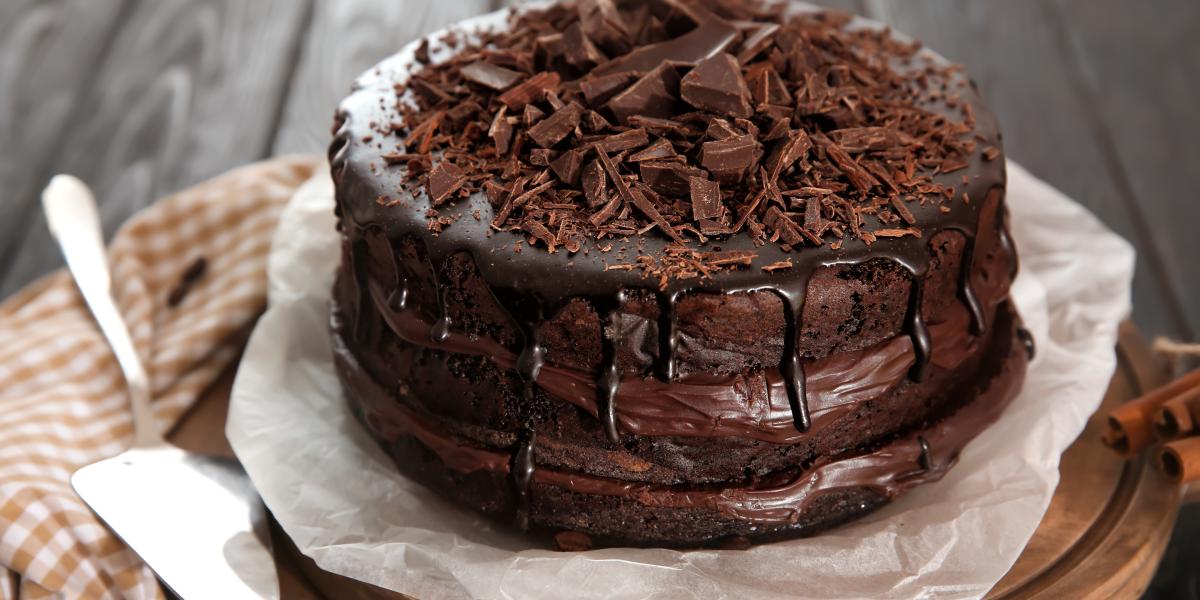
Following these examples, this article seeks to demonstrate, non-exhaustively, the economic principles that can be taught with a simple chocolate cake.
Fundamentals of Human Action
Without realizing it, even producing a chocolate cake requires a nexus of presuppositions. Without these realities presupposed, man would be unable to act, let alone make a chocolate cake. Out of necessity, we take many things for granted in our daily experience, but we ought to appreciate what presuppositions make human action (and making chocolate cake) possible.
For all human action, including making chocolate cake, we have to assume the law of causality. The first line of Menger’s Principles of Economics reads, “All things are subject to the law of cause and effect.” Without causality, it would be impossible to determine the process of making a chocolate cake or anything else. Instead, it would be a world of random chance-chaos with disconnected phenomena. Further, we assume inductively the regularity of nature. Mises wrote,
In a world without causality and regularity of phenomena there would be no field for human reasoning and human action. Such a world would be a chaos in which man would be at a loss to find any orientation and guidance. Man is not even capable of imagining the conditions of such a chaotic universe.
Under such chaotic conditions, how could anything like a recipe—recorded instructions providing a uniform plan of action to achieve certain results with regularity—exist? In fact, Rothbard uses this exact term,
Without such plans or ideas, there would be no action. These plans may be called recipes; they are ideas of recipes that the actor uses to arrive at his goal. A recipe must be present at each stage of each production process from which the actor proceeds to a later stage. The actor must have a recipe for transforming iron into steel, wheat into flour, bread and ham into sandwiches, etc.
Human action—and producing a chocolate cake by extension—presupposes the law of causality, meaningful causal connections between means and ends (causes and effects), induction and the uniformity principle (UP), laws of logic (i.e., non-contradiction, identity), unchanging laws and principles that operate consistently in a changing world of flux, semi-predictability of the world including uncertainty about outcomes of an action, basic reliability of sense perception, basic reliability of memory, the mind-body connection, and the distinction between material factors—physics, biology, and chemistry working according to natural processes—from purposeful human judgement and action. Mises also argued that human action also required “felt uneasiness” (desire to substitute more satisfaction for less), awareness of options for greater satisfaction, and the power to do something to alleviate it. In other words, desire for satisfaction, knowledge of available options, and controls over factors to utilize options. Absent these conditions, neither human action nor creating chocolate cake are possible.
The Division of Labor and the Structure of Production
Like “I, Pencil,” the chocolate cake can be used to demonstrate the unexpected complexity and beauty of both the division of labor and the capital structure. We take simple items, like a chocolate cake or a pencil, for granted, but there is an amazing economic story behind them—illustrating human action, cooperation, production, exchange, spontaneous coordination, etc. From a completed chocolate cake, we can trace the component parts backwards through the structure of production and see the amazing story of the countless human interactions that made it possible. Stories like this are so amazing and fascinating that it has made items that should be viewed as almost miraculous appear to be totally ordinary.
Moving forward through time, in the production of chocolate cake, we can observe how the originary factors of production—land and labor—can be combined through time in order to produce a chocolate cake. The chocolate cake also helps us distinguish between directly serviceable consumer goods (i.e., the finished cake) and indirectly serviceable producer goods or capital goods (i.e., the oven, bowl, whisk, mixer, flour, milk, eggs, sugar, cocoa, etc.). This has been done with the man who constructed a sandwich from scratch (taking about 6 months and $1,500) and another man who attempted to construct a toaster from scratch. The economic story shows how certain things have been moved from impossible to possible.
Economic Calculation, Entrepreneurship, and Profit and Loss
The basis for economic calculation is private property, freedom of exchange, and sound money. In an economy that has moved past barter exchanges and settled on a medium of exchange through the free market process, market prices are generated in monetary terms. These monetary prices enable previously-impossible economic opportunities. These prices translate the subjective, qualitative preferences of many individuals into objective, quantifiable, and flexible information about real-time supply and demand. Crucially, not only do these prices guide consumers, but they also guide producers. Free market prices in producer goods or factors of production enable entrepreneurs to calculate the costs (in monetary prices) of new potential combinations of resources into new consumer goods minus expected future revenue. For example, the costs in prices of the oven, bowl, whisk, mixer, flour, milk, eggs, sugar, cocoa, etc. subtracted from the anticipated future revenue from the sale of the cake(s) (i.e., final sale price of the cake [e.g., $10] – input costs in prices [e.g., milk = $1, etc.] = profit/loss).
Economic calculation enables entrepreneurs to choose between alternative plans of action—“recipes”—because they can now evaluate them in money prices. Entrepreneurs can evaluate production costs of alternative plans in monetary terms, based on the market prices of inputs. Entrepreneurs hope to sell the final good to consumers at a price greater than the total monetary costs—the combined price of all the input costs to produce the good. This would mean a profit. Ultimately, the consumer decides to accept or reject the final good at a given price (so the costs do not determine the price). Based on the responsive decisions of the consumers, the entrepreneurs either realize a profit or a loss. Profits and losses guide production by rewarding certain combinations of the scarce factors of production and punishing others. Without market prices in producer goods, entrepreneurial economic calculation would be impossible.
Now imagine that no one had ever invented cake. An entrepreneur first imagines a new consumer good to produce—chocolate cake! This is the new recipe. Thankfully, this economy already possesses the preconditions for economic calculation—private property, free exchange, and sound money. Our entrepreneur—with his new recipe for never-before-invented chocolate cake—must use scarce factors available to produce the chocolate cake before he offers it to the consumers. All actions have costs—the foregone alternatives of a given action, or whatever is given up when a choice is made. These include time, energy, labor, resources. Using economic calculation, the entrepreneur is able to calculate his monetary costs in money prices. For example, he may purchase flour, milk, sugar, eggs, and other ingredients, as well as the use of tools like an oven and all the tools that come with a kitchen. He may even have costs in money prices by paying for labor.
The entrepreneur can calculate the costs of these various resources in money prices and subtract the total from the future expected revenue, either yielding a profit or a loss. The entrepreneur may also compare and contrast various costs of alternative plans for how to make the cake (e.g, a whisk versus a standing mixer, etc.). Finally, the cake is offered to the consumer who either accepts or rejects the cake. The consumer subjectively may not even like chocolate cake. Additionally, the consumer may like chocolate cake, but there is also a decision to accept or reject the entrepreneur’s offer (or accept or reject the cake depending on the price point). Either way, the entrepreneur either realizes a profit or a loss.
Conclusion
More examples and illustrations could be provided (e.g., market competition, economic miscalculation, etc.), but the point remains that simple items—like chocolate cake—and some imagination can be used effectively to demonstrate economic concepts in an engaging way. Economic realities can be taught through using everyday items to tell a story, which is often a more effective way to reach people than through pure exposition of economic theory.