This is Naked Capitalism fundraising week. 661 donors have already invested in our efforts to combat corruption and predatory conduct, particularly in the financial realm. Please join us and participate via our donation page, which shows how to give via check, credit card, debit card, PayPal, Clover, or Wise. Read about why we’re doing this fundraiser, what we’ve accomplished in the last year, and our current goal, supporting our expanded daily Links
U.S. pressure on Venezuela and Iran continues to increase. What these two countries have in common—oil, gas, and a government opposed to U.S. imperialism—is the key to understanding why. Not because the U.S. needs their oil for consumption, but because it needs it to sustain its financial hegemony.
Trump has recently signaled that land operations against Venezuela are on the table. Of course, officially, they are to combat drug trafficking, but this excuse, as we have previously explained, does not hold up. The goal is regime change. This recent article by the Financial Times is almost an admission.
The piece features Corina Machado saying that thousands of people are joining her “underground movement, and that they are in contact with the Trump administration to orchestrate Maduro’s removal. She goes further to suggest—while evidence points to the contrary—that the army is not behind the president, and that is why he has called on the popular militias.
The calculations about Venezuela, on both sides, are delicate. The Trump administration does not seem eager to intervene militarily in the country, but rather to put enough pressure on it to force regime change. It’s difficult to predict the outcome and, as James Bosworth aptly argues, the online debate is not a reliable place to form an opinion, as it’s extremely polarized.
What seems clear is the regime-change objective: to install a U.S.-friendly government that gives priority access to Venezuela’s vast natural resources, especially oil. Trump claimed, while campaigning, that if he had been president, U.S. companies would already be drilling.
Arguably, the U.S. could achieve this without regime change, as Maduro is more than willing to sell them oil, despite the rhetoric. But that would have meant lifting sanctions on Venezuela’s government and admitting previous mistakes. However, this would have contradicted the Trump administration’s refocus on its “sphere of influence” and renewed interest in making sure Latin American countries understand that the Monroe Doctrine still holds.
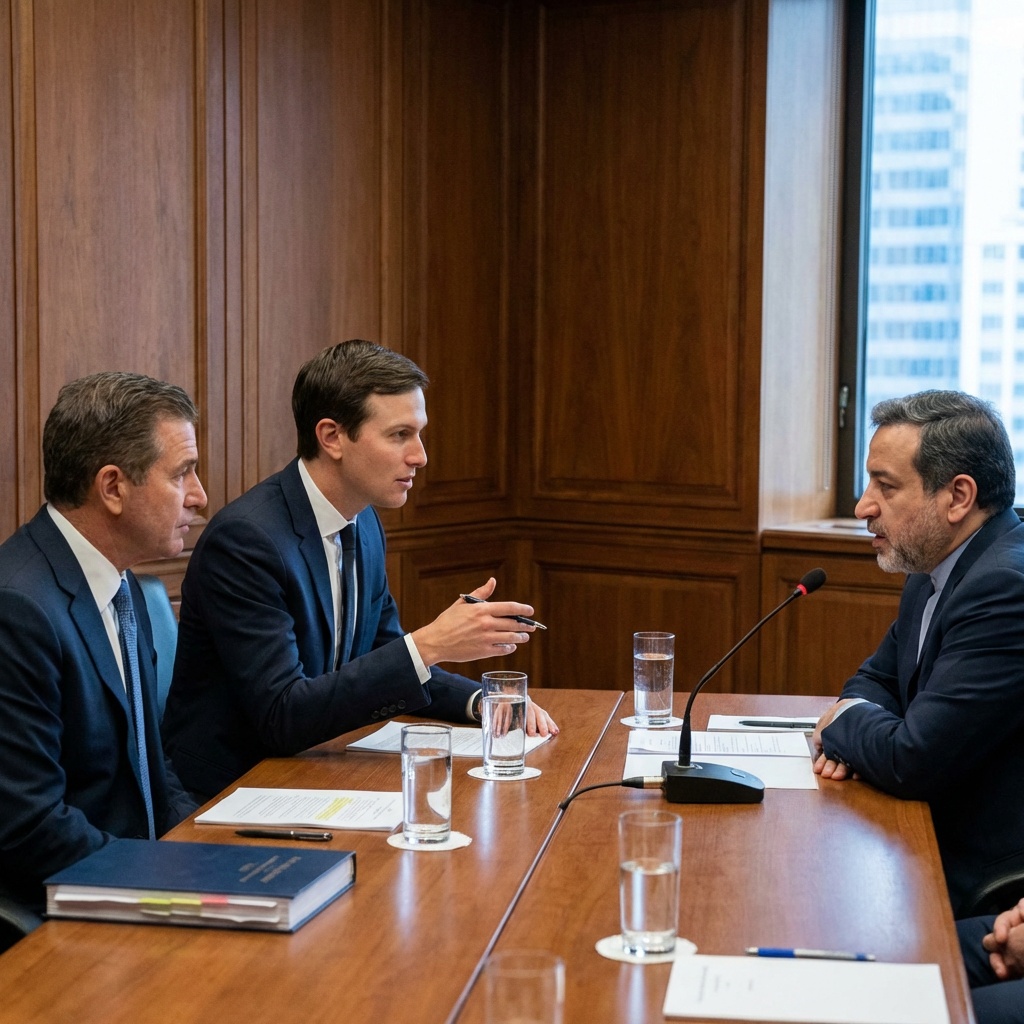
The situation with Iran is similar. The U.S. could achieve its objectives, to a degree, without trying to force regime change. The Iranian government has made it abundantly clear that it is willing to collaborate and negotiate. However, the standing U.S. policy on the Middle East, dictated by Israel’s interests, makes those negotiations destined to fail before they even start.
The Israeli lobby has been at work with the U.S. in building up the case for a new attack on Iran. European nations have activated the snapback mechanism under the JCPOA, reimposing UN sanctions on Iran as the agreement’s initial 10-year term expired. Iran had previously warned that its cooperation with the International Atomic Energy Agency would collapse if snapback occurred, signaling a breakdown in the deal’s framework for monitoring nuclear activities.
This means that diplomacy has stalled. Iran’s Supreme Leader declared negotiations pointless, while President Pezeshkian dismissed talks, citing the United States’ unreasonable demands. Meanwhile, the U.S. has bolstered Israel’s missile defense, reportedly deploying four additional THAAD systems on top of the existing six, according to satellite images.
The significant expansion of air defenses underscores the effectiveness of Iran’s missile arsenal and highlights U.S. and Israeli preparations for potential conflict. Trump’s infamous peace plan for Gaza seems designed to allow Israel room to initiate a new attack.
The plan, to which Hamas has not yet responded at the time of writing, rests on the complete submission of the armed group. It establishes a neoliberal international mandate over Gaza and achieves all of Netanyahu’s war objectives, as he has already boasted. Critically, it does so without placing any economic, legal, or military strains on Israel, which would be free to focus all its attention and resources on Iran.
Iran has the third-largest oil reserves and the second-largest gas reserves. If the U.S. were to control Iran and Venezuela’s oil reserves, it would control the first and third-largest oil reserves in the world, while the second and fourth—Saudi Arabia and Canada—are already under its influence. Having control and influence over the four largest oil reserves would allow the U.S. not only to influence prices and distribution, but to dictate in which currency they are paid. And I believe that is the crucial point.
Alistair Crooke points to this, saying that the U.S. is worried about its debt and that operations in the Middle East, especially Iran, and in Latin America are largely to put vast resources under U.S. control. I agree with the general argument but disagree on the particulars.
I don’t think that the U.S. is generally worried about its debt. Technically, the U.S. could print enough dollars to pay it or choose not to and maintain the fiscal deficit. According to Varoufakis, this deficit, which he calls “The Global Minotaur,” is what fueled U.S. hegemony after Nixon ended Bretton Woods.
But the 2008 financial crisis and the 2014 operation in Ukraine that led to the current war with Russia, to mention two symbolic events among many, have altered the system financially and geopolitically. On the one hand, the crash destroyed confidence in the ability of American deficits to stabilize the world economy; on the other, nations have grown tired of U.S. abuse of the system to maintain its hegemony.
This means that other nations are not so willing to hold U.S. dollars as reserve currencies or to use them for trade. When holding reserves, those reserves are generally parked in the U.S. financial system, which strengthens the financial economy and, therefore, the government and military. And while using dollars for international trade, it also gives the U.S.—which has a never-ending supply—the ability to outdo them. Hence, many, especially Russia and China, have called for and are establishing alternatives to the dollar-denominated system.
This is what worries Trump and his administration, and he has made it explicit. If nations stop holding dollars and stop using them for trade, then U.S. power would decrease exponentially. How does Trump think he can stop that from happening? By making other nations need dollars. And what is it that other nations can’t do without at the moment and can’t produce themselves? Oil.
The Trump administration is conducting a double policy. On the one hand, it is devaluing the dollar so that industry in the U.S. can prosper. If this happens, it could create excess production and unmet consumption, which would allow them to continue issuing dollars without the risk of excess inflation or crisis at home.
Ironically, this is the same policy that Xu Gao, Chief Economist at Bank of China International, has argued for in a long paper titled “Where Are the Errors in Dalio’s Understanding of National Debt?”. He proposes a Modern Monetary Theory approach to understand and deal with the national economy and debt.
This approach works when a government can enforce the use of a currency within a state. But the U.S. uses its currency as the backbone of its hegemony throughout the world, and for that, you need other nations to need dollars.
Therefore, on the other hand, the U.S. is trying to create demand for the dollar abroad. U.S. assets and digital markets are, some would argue, overvalued. Tesla and AI are good examples. Digital technologies can be replicated. Russia and China have essentially developed different versions of the internet, and other countries are trying to build their own digital ecosystems. The U.S. has long lost the industrial capability that once gave it an edge and while it has plenty of resources, none that can’t be found elsewhere.
But what is it that no one can produce, grow or copy and that everyone needs? Oil. If the U.S. were to control or have influence over the four largest oil reserves in the world it could enforce oil prices in dollars. That would assure a constant demand for its currency. For that, it needs Venezuela’s and Iran’s oil.
This would directly affect China, which is the largest oil importer, affecting its flow of cheap oil, and Russia, Beijing’s main seller, which under sanctions would continue to have to sell its oil at discounted prices. Both things would fit the U.S. aim to weaken Russia and contain China.
This argument could also help explain other U.S. foreign policy decisions, for example the bail out to Javier Milei’s Argentina, which has large untapped oil and gas reserves in the region of Vaca Muerta. The bail out is conditional to Milei winning the next legislative elections which would ensure access to these resources.
Now of course, that this will work out for the U.S. is not a given, in fact, achieving regime change in Venezuela and Iran is unlikely and there are many other oil producers—especially Saudi Arabia—which are falling off U.S. influence. However, and taking into account many caveats, competing interests and the agency of other nations, this simple logic seems to explain some of the major moves of U.S. current foreign policy.