No Result
View All Result
  • Login
Wednesday, February 4, 2026
FeeOnlyNews.com
  • Home
  • Business
  • Financial Planning
  • Personal Finance
  • Investing
  • Money
  • Economy
  • Markets
  • Stocks
  • Trading
  • Home
  • Business
  • Financial Planning
  • Personal Finance
  • Investing
  • Money
  • Economy
  • Markets
  • Stocks
  • Trading
No Result
View All Result
FeeOnlyNews.com
No Result
View All Result
Home Economy

Of Tomatoes and Tariffs | Mises Institute

by FeeOnlyNews.com
5 months ago
in Economy
Reading Time: 4 mins read
A A
0
Of Tomatoes and Tariffs | Mises Institute
Share on FacebookShare on TwitterShare on LInkedIn


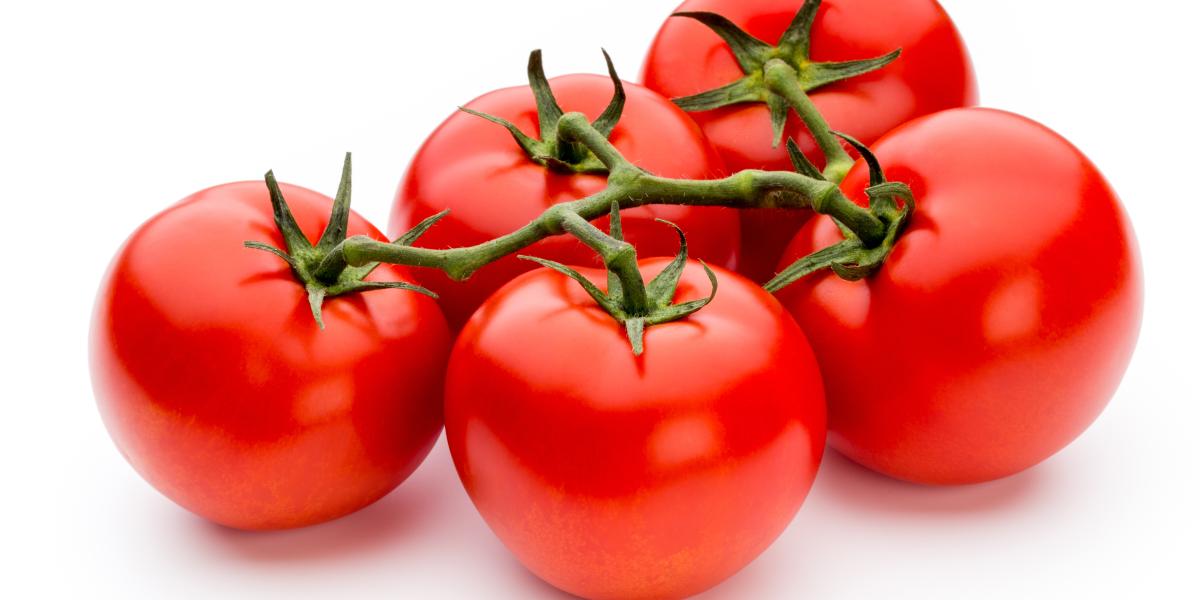
Are tomatoes a fruit or a vegetable? While some may have different answers to this mostly lighthearted question, at one point in time it was taken up by the United States Supreme Court. Despite its seemingly amusing aspects, the story of Nix v. Hedden is one which has implications for those concerned with big government and the challenges of reform, while also providing a unique window into late-nineteenth century American politics. This is especially relevant as tariffs have remained a meaningful topic during the Trump era.

The origin of the Supreme Court’s involvement with tomatoes was tied with tariff laws. While arguments about tariff rates were rooted in American political disputes since the very beginning of the US, the situation was noticeably impacted by the Civil War. The conflict was transformative in a litany of ways, and this included increases in the nation’s tariff rates. After the war, however, efforts to reduce the tariffs beneath their wartime levels were easier said than done. Advocates for lower tariffs and freer trade were often disappointed with the lack of success in adjusting the protectionist system which had continued since the wartime emergency of the 1860s. There was not much cohesive momentum for reform until the 1880s.

As the country was approaching the two-decade mark since the war’s conclusion, the American political and economic situation had changed. The wartime tariff rates remained, which—when coupled with increased prosperity and imports—produced a federal budget surplus, a situation seemingly unfathomable in today’s era of massive deficits and mounting national debt. Some politicians proposed to dispose of the surplus revenue through immense federal spending projects such as the Rivers and Harbors Act. Others, including President Chester A. Arthur, favored a reduction in tariff rates and a more careful approach to government spending. In 1882, Congress created a Tariff Commission whose members were appointed by President Arthur. Their objective was to study the American tariff laws and recommend changes. Owing to the protectionist sympathies of the Republicans at that time, it came as something of a surprise when the Commission advocated a “substantial reduction” of tariff rates in response to the budget surplus. Unfortunately, however, the law which followed was not the broad reform many had hoped for. Nicknamed the “Mongrel Tariff” for its slapdash effects of reducing some rates while raising others, the 1883 law was the key factor leading to the ascension of the tomato debate before the Supreme Court.

The provisions of the “Mongrel Tariff,” which sparked the legal issue, were those concerning fruits and vegetables. It held that “fruits, green, ripe or dried” were “not specially enumerated or provided for in this act,” and were thus admitted duty-free. By contrast, the law stipulated that, “Vegetables, in their natural state, or in salt or brine, not specially enumerated or provided for in this act” were subject to a tariff rate of “ten per centum ad valorem.” This became a problem for produce importer, John Nix, who believed that his tomatoes should not have been subject to the tariff payments, as they were fruits, not vegetables. Nix subsequently launched a legal suit against the New York port collector, seeking back duties which he had paid under protest.

The Nix case ultimately made its way before the United States Supreme Court, where the argument was concerned with semantic definitions of words and intentions of the 1883 law. In a somewhat comedic manner, the primary contention was over what defined a fruit and a vegetable, and in which category tomatoes belonged. Nix’s counsel read from the Webster, Worcester, and Imperial dictionaries in effort to establish that tomatoes fit the botanical criteria of a fruit. Additionally, they called two witnesses who had been in the produce business for thirty years, to answer whether the terms “fruit” and “vegetable” had “any special meaning in trade or commerce, different from those read.” Both witnesses testified to the effect that neither “fruit” nor “vegetables” had any special meaning in trade and commerce different from those in the dictionaries.

The Court—whose unanimous decision was delivered by Justice Horace Gray—held that as the words “fruit” and “vegetables” had not acquired any special meaning for trade or commerce, they must receive their “ordinary meaning.” This meant that, even though Nix’s counsel used dictionaries to argue that tomatoes fit the botanical definition of a fruit, they were not so considered “in the common language of the people.” The Court’s opinion further noted that a previous case had handled a similar issue where the definition of beans was also contested but ultimately decided that, “When the commercial designation of an article fails to give it its proper place in the classification of a tariff law, then resort must be had to its common designation.” Tomatoes were therefore considered vegetables under the auspices of the 1883 tariff law and were subject to the tax where fruits were not.

While the overall importance of the Nix v. Hedden case may not appear so great at first glance, the tariff law confusion which sparked it speaks to the larger issues stemming from government largesse and the difficulties of reform. The 1883 “Mongrel Tariff”—complete with its complex increases of some tariff rates and reductions in others—was seemingly a prime example of the “ratchet effect,” as explained by Robert Higgs. This concept has described how government powers often expand drastically in times of crisis and remain beyond their pre-emergency levels even after the crisis has passed. Despite the efforts of some genuine reformers, this was the case for most of the tariff legislation after the Civil War, as the protectionist arrangement reached new heights during that period of emergency and persisted thereafter, even when the need for federal revenue shrank.

While the trend of protectionism continued throughout the remainder of the nineteenth century and into the early twentieth—with the 1890 McKinley Tariff being the most notable reaffirmation of these policies—it is worth remembering how muddled efforts at tariff revision led to the oddity of tomatoes being the subject of a Supreme Court case. And so, while one side of the tomato debate has the Supreme Court in their corner for answering whether it is a fruit or vegetable, it was thanks to the protectionist policies of the Gilded Age that the question was decided over 120 years ago. The story of Nix v. Hedden is an interesting, if not very appetizing, lesson on how government powers fail to recede after they expand, made relevant today through contemporary talk of tariffs and concerns about “the swamp” in DC.



Source link

Tags: InstituteMisestariffsTomatoes
ShareTweetShare
Previous Post

AI is unleashing more adversaries for cybersecurity companies to defeat

Next Post

Are You Paying “Phantom Interest” Because You Chose the Wrong Payoff Strategy?

Related Posts

A Positive View of Sectional History

A Positive View of Sectional History

by FeeOnlyNews.com
February 4, 2026
0

What is the Mises Institute? The Mises Institute is a non-profit organization that exists to promote teaching and research in...

Turmoil at FEMA Adds to the Revolt Against Kristi Noem

Turmoil at FEMA Adds to the Revolt Against Kristi Noem

by FeeOnlyNews.com
February 4, 2026
0

Yves here. Sadly, the fact that the Dems have (predictably) caved on using a shutdown threat to demand serious ICE...

Washington Launches B Rare Earth Minerals Reserve

Washington Launches $12B Rare Earth Minerals Reserve

by FeeOnlyNews.com
February 4, 2026
0

The Trump administration is moving to create what is being described as a strategic stockpile for rare earths and other...

Ukraine & Trump | Armstrong Economics

Ukraine & Trump | Armstrong Economics

by FeeOnlyNews.com
February 3, 2026
0

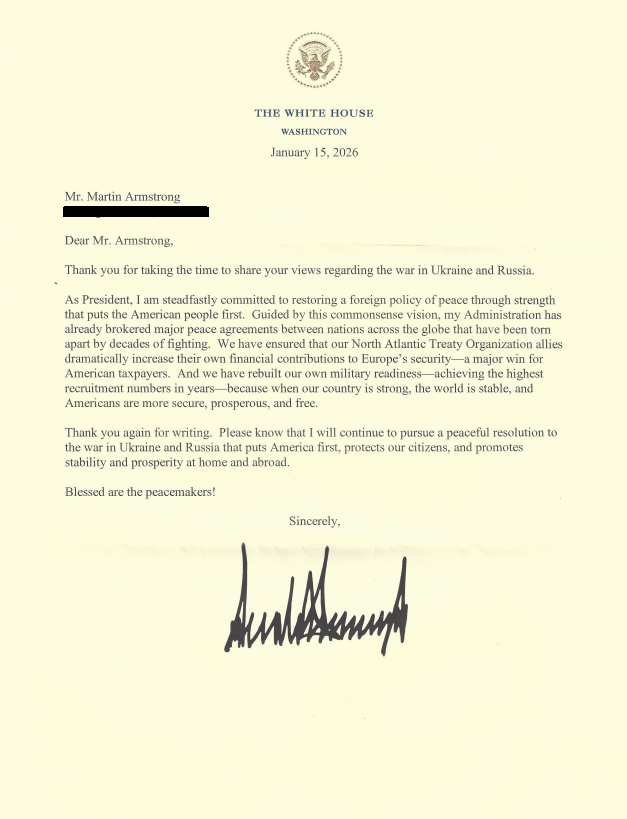
The letter I  received from Trump, dated January 15th, discusses foreign policy, not domestic economics. It also says thank you...

Coffee Break: Armed Madhouse – The Folly of Bombing Iran

Coffee Break: Armed Madhouse – The Folly of Bombing Iran

by FeeOnlyNews.com
February 3, 2026
0

Escalation talk surrounding a potential U.S. bombing campaign against Iran rests on a familiar premise: that sufficient military bombardment can...

US Military Helping DHS Build Massive Network of ‘Concentration Camps,’ Navy Contract Reveals

US Military Helping DHS Build Massive Network of ‘Concentration Camps,’ Navy Contract Reveals

by FeeOnlyNews.com
February 3, 2026
0

Yves here. The fact presented in the headline is bad enough, but the potential expenditures, even more so, since it...

Next Post
Are You Paying “Phantom Interest” Because You Chose the Wrong Payoff Strategy?

Are You Paying “Phantom Interest” Because You Chose the Wrong Payoff Strategy?

15 Tips for Rebalancing Your Investments to Stay on Track

15 Tips for Rebalancing Your Investments to Stay on Track

  • Trending
  • Comments
  • Latest
Self-driving startup Waabi raises up to  billion, partners with Uber to deploy 25,000 robotaxis

Self-driving startup Waabi raises up to $1 billion, partners with Uber to deploy 25,000 robotaxis

January 28, 2026
Student Beans made him a millionaire, a heart condition made this millennial founder rethink life

Student Beans made him a millionaire, a heart condition made this millennial founder rethink life

December 11, 2025
Sellers Are Accepting Even Less

Sellers Are Accepting Even Less

January 23, 2026
Will CRCL Stock Recover by the End of Jan 2026?

Will CRCL Stock Recover by the End of Jan 2026?

January 10, 2026
Episode 242. “Our couples therapist couldn’t fix this. Please help.”

Episode 242. “Our couples therapist couldn’t fix this. Please help.”

January 6, 2026
US SEC Issues Key Crypto Custody Guidelines For Broker-Dealers

US SEC Issues Key Crypto Custody Guidelines For Broker-Dealers

December 19, 2025
A Positive View of Sectional History

A Positive View of Sectional History

0
Why United Rentals’ CTO tried to break his own AI agent before giving it to thousands of employees

Why United Rentals’ CTO tried to break his own AI agent before giving it to thousands of employees

0
Kevin Warsh is the Next Fed Chair—Here’s What Investors Should Expect From Him

Kevin Warsh is the Next Fed Chair—Here’s What Investors Should Expect From Him

0
Kevin Warsh is the Next Fed Chair—Here’s What Investors Should Expect From Him

Kevin Warsh is the Next Fed Chair—Here’s What Investors Should Expect From Him

0
Ethereum’s L2 Scaling Story Gets a Rewrite From Vitalik Buterin

Ethereum’s L2 Scaling Story Gets a Rewrite From Vitalik Buterin

0
Fund buys control of car parts co M PInes for NIS 500m

Fund buys control of car parts co M PInes for NIS 500m

0
A Positive View of Sectional History

A Positive View of Sectional History

February 4, 2026
Why United Rentals’ CTO tried to break his own AI agent before giving it to thousands of employees

Why United Rentals’ CTO tried to break his own AI agent before giving it to thousands of employees

February 4, 2026
8 Prescription Refill Rules That Are Costing Retirees More in 2026

8 Prescription Refill Rules That Are Costing Retirees More in 2026

February 4, 2026
Ethereum’s L2 Scaling Story Gets a Rewrite From Vitalik Buterin

Ethereum’s L2 Scaling Story Gets a Rewrite From Vitalik Buterin

February 4, 2026
Johnson & Johnson’s Getting Back to Double-Digit Growth. Has the Stock Become a Bargain Buy?

Johnson & Johnson’s Getting Back to Double-Digit Growth. Has the Stock Become a Bargain Buy?

February 4, 2026
Fund buys control of car parts co M PInes for NIS 500m

Fund buys control of car parts co M PInes for NIS 500m

February 4, 2026
FeeOnlyNews.com

Get the latest news and follow the coverage of Business & Financial News, Stock Market Updates, Analysis, and more from the trusted sources.

CATEGORIES

  • Business
  • Cryptocurrency
  • Economy
  • Financial Planning
  • Investing
  • Market Analysis
  • Markets
  • Money
  • Personal Finance
  • Startups
  • Stock Market
  • Trading

LATEST UPDATES

  • A Positive View of Sectional History
  • Why United Rentals’ CTO tried to break his own AI agent before giving it to thousands of employees
  • 8 Prescription Refill Rules That Are Costing Retirees More in 2026
  • Our Great Privacy Policy
  • Terms of Use, Legal Notices & Disclaimers
  • About Us
  • Contact Us

Copyright © 2022-2024 All Rights Reserved
See articles for original source and related links to external sites.

Welcome Back!

Sign In with Facebook
Sign In with Google
Sign In with Linked In
OR

Login to your account below

Forgotten Password?

Retrieve your password

Please enter your username or email address to reset your password.

Log In
No Result
View All Result
  • Home
  • Business
  • Financial Planning
  • Personal Finance
  • Investing
  • Money
  • Economy
  • Markets
  • Stocks
  • Trading

Copyright © 2022-2024 All Rights Reserved
See articles for original source and related links to external sites.