No Result
View All Result
  • Login
Saturday, March 21, 2026
FeeOnlyNews.com
  • Home
  • Business
  • Financial Planning
  • Personal Finance
  • Investing
  • Money
  • Economy
  • Markets
  • Stocks
  • Trading
  • Home
  • Business
  • Financial Planning
  • Personal Finance
  • Investing
  • Money
  • Economy
  • Markets
  • Stocks
  • Trading
No Result
View All Result
FeeOnlyNews.com
No Result
View All Result
Home Economy

The Short-Lived German Free Trade Movement

by FeeOnlyNews.com
7 months ago
in Economy
Reading Time: 4 mins read
A A
0
The Short-Lived German Free Trade Movement
Share on FacebookShare on TwitterShare on LInkedIn


In even the most reasonably-informed accounts of classical liberalism, those that eschew the inclusion of the likes of Mill and Rousseau, the spotlight almost invariably falls on Britain and France—on the likes of Adam Smith, Richard Cobden, Frédéric Bastiat, and Benjamin Constant. Yet the German tradition of liberalism—so often overshadowed by the rise of Bismarckian statism, Marxism, and social democracy—played a critical role in shaping the transnational liberal movement of the 19th century. In Raico’s telling, two of the key figures who stand out in this story are John Prince Smith, the English-born but Berlin-based champion of free trade, and Eugene Richter, the sharp-tongued liberal parliamentarian who fought to the bitter end against the tides of socialism and statism in Wilhelmine Germany.

Together, Smith and Richter embody the path not taken in modern German political development. Their example shows that within Germany there was once a vibrant current of classical liberal thought—rooted in free trade, individual liberty, and hostility to state overreach—that, though ultimately defeated, left a legacy that still resonates with the Austro-libertarian school today.

John Prince Smith and the Birth of German Free Trade Liberalism

Ralph Raico’s essay “John Prince Smith and the German Free Trade Movement” restores to memory a man largely forgotten even in his own adopted country. Smith, an English émigré who settled in Berlin in the early 19th century, became the intellectual nucleus of the German free trade school. Like Cobden and Bastiat in Britain and France, Smith argued with passion and precision against tariffs, guild restrictions, and mercantilist privileges that strangled economic life.

Smith’s influence extended beyond the lecture hall. He helped found the Congress of German Economists (Volkswirtschaftlicher Kongress), an institution that spread free trade ideas among Germany’s educated classes. He also inspired younger liberals who would later serve in parliament and fight against protectionist policies. Raico emphasizes that Smith’s achievement lay not only in adapting English classical economics for German audiences but also in embedding it in the broader European liberal tradition. His advocacy tied Germany into the international liberal network of the 1840s and 1850s—a moment when free trade seemed poised to become the governing principle of civilized states.

Eugene Richter and the Liberal Rearguard

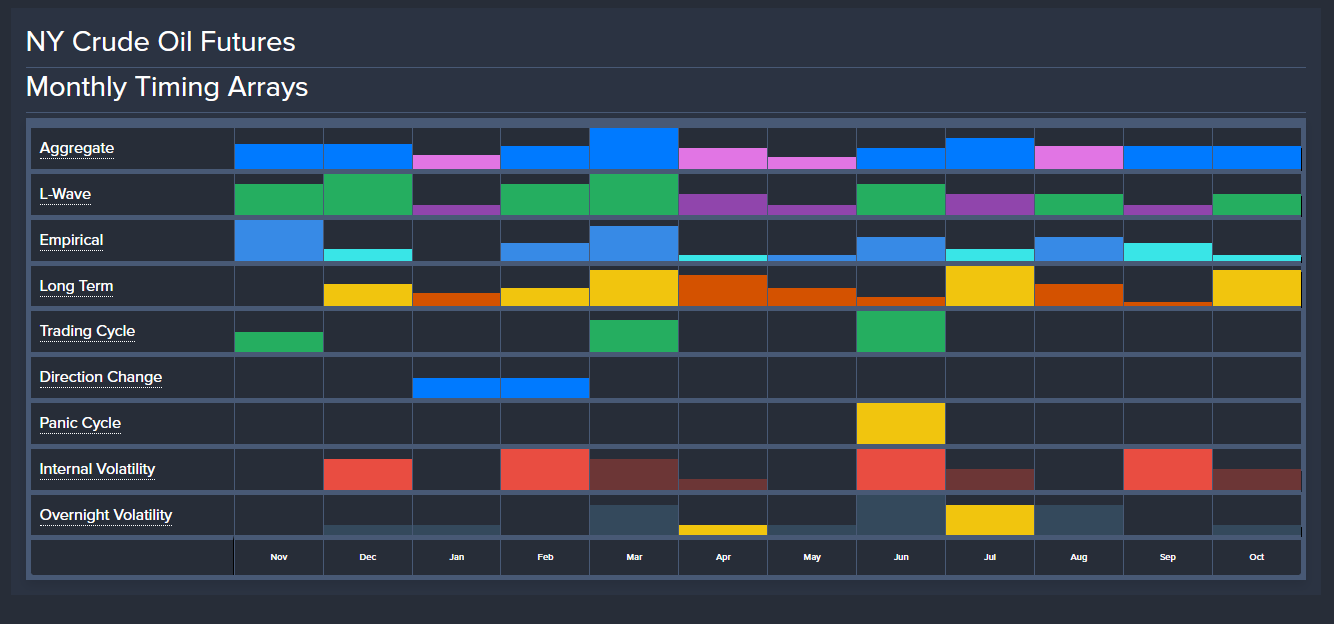
By the late 19th century, however, German liberalism was in retreat. Bismarck’s unification of Germany in 1871—though celebrated by many liberals at the time—paved the way for an aggressive expansion of state power. The so-called “liberal era” of the 1860s gave way to Bismarck’s Realpolitik, protectionist tariffs, and the beginnings of the modern welfare state. It was in this hostile climate that Eugene Richter rose to prominence.

Richter, profiled by Ralph Raico in the penultimate chapter of his Classical Liberalism and the Austrian School, represented perhaps the last great defender of uncompromising liberalism in German politics. Leader of the Progressive People’s Party (Fortschrittspartei) and later the Free-Minded Party, he was relentless in opposing protectionist tariffs, state socialism, colonial adventures, and militarism. His parliamentary speeches, sharp wit, and unflinching adherence to principle earned him both admiration and enmity.

Richter’s 1891 novel Pictures of the Socialistic Future stands as one of the most prescient anti-socialist tracts of the nineteenth century. Anticipating the disasters of central planning decades before they materialized, the book uses satire to depict everyday life under a socialist regime. Shortages, bureaucracy, political repression, and the crushing of individual initiative—all appear in his fictional Germany; a chilling forecast later vindicated by the totalitarian experiments of the 20th century.

The Road Not Taken

Taken together, Smith and Richter represent two moments in German liberalism, representing its hopeful birth and its embattled defense. Smith’s project was optimistic, internationalist, and reformist. He believed in the power of economic truth and the possibility of persuading governments to embrace free trade. Richter, by contrast, was a voice of resistance in an age when liberalism had lost its ascendancy. Where Smith had sought to shape the development of German liberalism, Richter fought to preserve its embers against encroaching collectivism.

What unites them is a consistent emphasis on property rights, economic liberty, and suspicion of the state. Both were animated by the conviction that prosperity and human flourishing depended, not on bureaucratic direction or military conquest, but on the voluntary exchanges of free individuals. This core insight places them firmly within the classical liberal tradition alongside their better-known Anglo-French contemporaries.

The defeat of Smith and Richter’s liberalism in Germany was not inevitable. As Raico and other revisionist historians have argued, there was a genuine alternative path open to German political development in the 19th century. Had the liberal movement triumphed—had free trade, constitutionalism, and limited government become the pillars of German unity—European and world history might have unfolded very differently.

For today’s readers, revisiting Smith and Richter is more than an antiquarian exercise. Their example demonstrates that liberalism was once a transnational movement, not confined to England or America. It also highlights the perennial struggle between those who would limit the state and those who would expand it in the name of progress or security. In the end, Smith’s free trade economics and Richter’s anti-socialist warnings converge into a single message: liberty requires eternal vigilance.



Source link

Tags: FreeGermanMovementshortlivedtrade
ShareTweetShare
Previous Post

Benefits of Comprehensive Two-Wheeler Insurance for Indian Riders

Next Post

3 Days Left to Lock In Your Exhibitor Spot at TechCrunch Disrupt 2025

Related Posts

Who Owns the Bus? | Mises Institute

Who Owns the Bus? | Mises Institute

by FeeOnlyNews.com
March 21, 2026
0

In nearly every city, the same bitter argument repeats itself: riders complain about disorder on trains and buses—open drug use,...

The Global Energy Crisis & The Market Impact Into 2028

The Global Energy Crisis & The Market Impact Into 2028

by FeeOnlyNews.com
March 21, 2026
0

  The advantage of having offices around the world is that this also provides us with boots on the ground...

Trump Backs Down – Will Declare Victory

Trump Backs Down – Will Declare Victory

by FeeOnlyNews.com
March 20, 2026
0

QUESTION: Marty, the word is you have been screaming on Capitol Hill and some are listening to your computer. You...

New Age Of Chaos | Armstrong Economics

New Age Of Chaos | Armstrong Economics

by FeeOnlyNews.com
March 20, 2026
0

QUESTION: Mr. Armstrong; Will you do a comprehensive report on the Middle East. We are done with the academics and...

Market Talk – March 20, 2026

Market Talk – March 20, 2026

by FeeOnlyNews.com
March 20, 2026
0

ASIA: The major Asian stock markets had a mixed day today: • NIKKEI 225 closed • Shanghai decreased 49.50 points...

Elizabeth Warren demands answers on costs, economic impact of ‘illegal and reckless war’

Elizabeth Warren demands answers on costs, economic impact of ‘illegal and reckless war’

by FeeOnlyNews.com
March 20, 2026
0

Senator Elizabeth Warren, a Democrat from Massachusetts and ranking member of Senate Banking, Housing, and Urban Affairs Committee, speaks during...

Next Post
3 Days Left to Lock In Your Exhibitor Spot at TechCrunch Disrupt 2025

3 Days Left to Lock In Your Exhibitor Spot at TechCrunch Disrupt 2025

Execution Highlights On The Broadcom Vision 

Execution Highlights On The Broadcom Vision 

  • Trending
  • Comments
  • Latest
York IE Appoints Chuck Saia to its Strategic Advisory Board

York IE Appoints Chuck Saia to its Strategic Advisory Board

February 18, 2026
Judge orders SEC to release data behind B in WhatsApp fines

Judge orders SEC to release data behind $2B in WhatsApp fines

March 10, 2026
8 Cost-Cutting Moves Retirees Are Sharing Online in February

8 Cost-Cutting Moves Retirees Are Sharing Online in February

February 14, 2026
3 Grocery Chains That Give Seniors a “Gas Bonus” for Every  Spent

3 Grocery Chains That Give Seniors a “Gas Bonus” for Every $50 Spent

March 15, 2026
8 Procedures That Can Be Cheaper Without Insurance

8 Procedures That Can Be Cheaper Without Insurance

February 14, 2026
FPA partners with Snappy Kraken to update PlannerSearch

FPA partners with Snappy Kraken to update PlannerSearch

February 25, 2026
CLARITY Act May Still Delay Despite Stablecoin Yield Deal, Galaxy’s Alex Thorn Warns

CLARITY Act May Still Delay Despite Stablecoin Yield Deal, Galaxy’s Alex Thorn Warns

0
Research suggests adults who find it easier to bond with animals than with people aren’t antisocial — they’re drawn to a form of connection where the terms are visible, the loyalty isn’t conditional, and the relationship doesn’t require them to monitor a constantly shifting set of expectations that human attachment taught them to treat as a second job

Research suggests adults who find it easier to bond with animals than with people aren’t antisocial — they’re drawn to a form of connection where the terms are visible, the loyalty isn’t conditional, and the relationship doesn’t require them to monitor a constantly shifting set of expectations that human attachment taught them to treat as a second job

0
4 Undervalued Stocks Worth Buying to Navigate 2026 Market Volatility

4 Undervalued Stocks Worth Buying to Navigate 2026 Market Volatility

0
Scammers want your retirement—here’s how to protect yourself

Scammers want your retirement—here’s how to protect yourself

0
Iran launches missiles at U.K.-U.S. base 2,500 away in the Indian Ocean

Iran launches missiles at U.K.-U.S. base 2,500 away in the Indian Ocean

0
Buffett defends ‘Giving Pledge’ against Thiel and ‘billionaire backlash’

Buffett defends ‘Giving Pledge’ against Thiel and ‘billionaire backlash’

0
Research suggests adults who find it easier to bond with animals than with people aren’t antisocial — they’re drawn to a form of connection where the terms are visible, the loyalty isn’t conditional, and the relationship doesn’t require them to monitor a constantly shifting set of expectations that human attachment taught them to treat as a second job

Research suggests adults who find it easier to bond with animals than with people aren’t antisocial — they’re drawn to a form of connection where the terms are visible, the loyalty isn’t conditional, and the relationship doesn’t require them to monitor a constantly shifting set of expectations that human attachment taught them to treat as a second job

March 21, 2026
Iran launches missiles at U.K.-U.S. base 2,500 away in the Indian Ocean

Iran launches missiles at U.K.-U.S. base 2,500 away in the Indian Ocean

March 21, 2026
CLARITY Act May Still Delay Despite Stablecoin Yield Deal, Galaxy’s Alex Thorn Warns

CLARITY Act May Still Delay Despite Stablecoin Yield Deal, Galaxy’s Alex Thorn Warns

March 21, 2026
T-Mobile, Verizon, AT&T Go All-In On Discounts As Churn Surge Hits

T-Mobile, Verizon, AT&T Go All-In On Discounts As Churn Surge Hits

March 21, 2026
Verizon – VZ: eine Aktie für risikoscheue Anleger!

Verizon – VZ: eine Aktie für risikoscheue Anleger!

March 21, 2026
Buffett defends ‘Giving Pledge’ against Thiel and ‘billionaire backlash’

Buffett defends ‘Giving Pledge’ against Thiel and ‘billionaire backlash’

March 21, 2026
FeeOnlyNews.com

Get the latest news and follow the coverage of Business & Financial News, Stock Market Updates, Analysis, and more from the trusted sources.

CATEGORIES

  • Business
  • Cryptocurrency
  • Economy
  • Financial Planning
  • Investing
  • Market Analysis
  • Markets
  • Money
  • Personal Finance
  • Startups
  • Stock Market
  • Trading

LATEST UPDATES

  • Research suggests adults who find it easier to bond with animals than with people aren’t antisocial — they’re drawn to a form of connection where the terms are visible, the loyalty isn’t conditional, and the relationship doesn’t require them to monitor a constantly shifting set of expectations that human attachment taught them to treat as a second job
  • Iran launches missiles at U.K.-U.S. base 2,500 away in the Indian Ocean
  • CLARITY Act May Still Delay Despite Stablecoin Yield Deal, Galaxy’s Alex Thorn Warns
  • Our Great Privacy Policy
  • Terms of Use, Legal Notices & Disclaimers
  • About Us
  • Contact Us

Copyright © 2022-2024 All Rights Reserved
See articles for original source and related links to external sites.

Welcome Back!

Sign In with Facebook
Sign In with Google
Sign In with Linked In
OR

Login to your account below

Forgotten Password?

Retrieve your password

Please enter your username or email address to reset your password.

Log In
No Result
View All Result
  • Home
  • Business
  • Financial Planning
  • Personal Finance
  • Investing
  • Money
  • Economy
  • Markets
  • Stocks
  • Trading

Copyright © 2022-2024 All Rights Reserved
See articles for original source and related links to external sites.