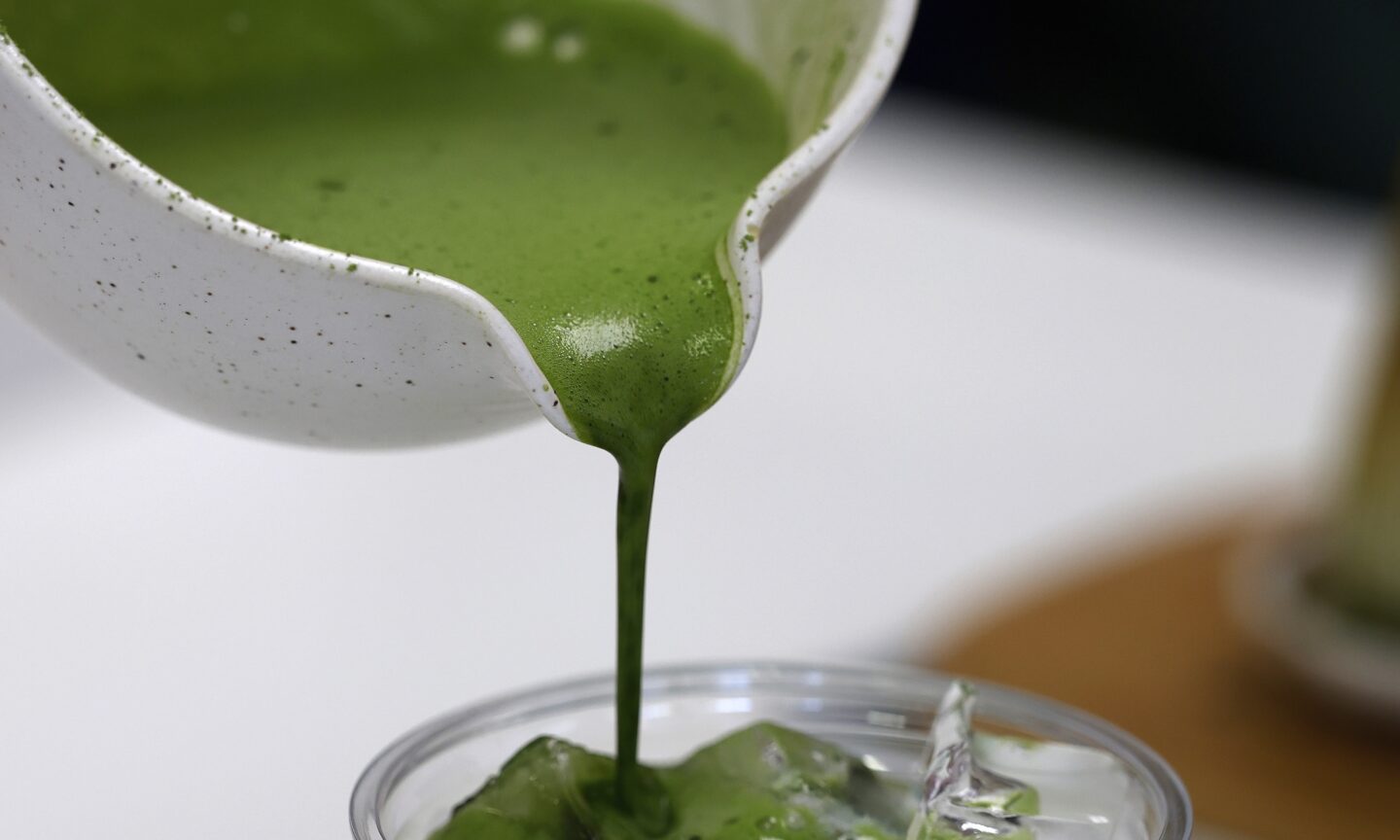
Matcha — a green tea powder deeply rooted in Japanese tea ceremonies — has surged in U.S. popularity in recent years. Its vibrant green color has become a social media staple, flaunted by influencers and wellness-conscious consumers.
Performative as it may seem, matcha is also addictively delicious — at least to some. To others, it just tastes like grass. But as anyone who has developed a habit for the earthy beverage will tell you, it’s also incredibly expensive.
I couldn’t possibly count how much I’ve paid for matcha since I first started drinking it in 2020 and if I could, I’d be embarrassed. In a moment of weakness, I once spent $11.50 on a latte, an unusually high price even for New York City, where I live.
But like any consumables, there’s no price ceiling — especially during a shortage, as with matcha. A limited supply combined with steep new U.S. tariffs could make both your — and my — daily fix that much more expensive.
How much does matcha typically cost?
Matcha represents a small portion of the U.S. tea market, says Peter Goggi, president of the Tea Association of USA, a trade group representing U.S. tea interests.
“The U.S. is very predominantly a black tea–drinking nation, and more than 70% of the tea consumed here is iced tea,” says Goggi. “So we’re a very different market than any other tea-consuming market in the world.”
Goggi says that matcha represents roughly 2.8% of the U.S. tea market by dollars — and even smaller by weight. At the end of the day, matcha is just powdered tencha leaves, which can be served hot or cold with water and as a latte with milk. Even so, the price can vary drastically on the shelf and in cafes depending on the location and type of matcha served.
Chains are no exception. Starbucks’s grande iced matcha latte costs $6.80 at my nearby Starbucks in Brooklyn. My colleagues logged $5.25 in Ann Arbor, Mich.; $5.89 in Tucker, Ga.; $5.95 in Ripon, Calif.; and $6.01 in Seattle. The coffee super giant recently added an upcharge for additional matcha powder.
If you make matcha at home, the price for a tin or bag of powder varies drastically by brand and amount, but also by tea leaf grade, which is used as an unofficial classification in the tea industry. One ounce of matcha can make roughly 14 servings of tea.
Ceremonial: First-harvest tencha leaves grown in shade for up to four weeks before handpicking. It’s then ground into a fine powder with a bright green hue. Ceremonial grade tea can only be sourced in Japan. It’s the most expensive of the three grades. You can purchase, at the lowest end, ceremonial grade for around $30 an ounce, but the highest quality powders can go for up to $6,000 per pound, according to Goggi.
Ready-to-drink: Made with second-harvest tencha leaves. It falls somewhere between culinary grade and ceremonial grade in taste and cost. The powder looks less vibrant than ceremonial grade, but still clearly a vivid green.
Culinary: The lowest cost matcha and is meant to be used in cooking and baking. The tencha leaves used in culinary grade matcha are typically older — third-harvest or more. The color of the powder is usually a dull brownish-green color. A typical bag of the powder can cost anywhere from $10 to $25 per ounce.
Why is there a matcha shortage?
Like most shortages, matcha’s comes down to supply and demand. In this case, demand has boomed, largely due to social media trends and appeal for health-minded consumers, says Goggi. “At this point, the pressure is almost all on matcha,” he adds.
The Global Japanese Tea Association (GJTA) reports that Japanese tea exports have grown from 1% of the country’s total production in the early 2000s to roughly 10% by the end of 2023. And in 2024, half of the 8,798 metric tons of green tea exported from Japan was matcha, according to Japan’s Ministry of Agriculture, Forestry and Fisheries.
In Kyushu, one of Japan’s four main islands, tea exports grew by 24% in 2024, largely due to matcha’s popularity, the GJTA said. The U.S. is its key export market.
Local producers in Japan are overwhelmed, even as suppliers have expanded to other nations including China and India. But ceremonial matcha, by definition, can only be produced in Japan, which puts added pressure on suppliers.
“It’s one of the few teas you can’t just ‘turn on the spout’ and make more of,” says Goggi. “It requires very specific treatment before harvest, and that takes time.”
The seasonality of matcha production makes it more difficult to meet year-round demand. Tencha plants take five years to mature and are picked once a year — in springtime. The highest grade matcha requires a certain amount of shading before it’s picked in order to boost chlorophyll and L-theanine, which affect its color and flavor. After picking, the leaves must be steamed, dried, sorted, slowly ground up using stone mills and packaged.
“Matcha only represents about 7% to 8% of total tea production in Japan, but Japan really owns the market,” says Goggi. “The entire infrastructure of tea production has declined mainly because of the aging of people involved in the tea business. Most of these farms are family-owned tea farms, so there’s a lot of pressure on tea consumption and production in Japan.”
Producing matcha is a labor-intensive process and there aren’t enough workers to meet the demand, says Goggi. The downward trend is largely due to an aging population in agriculture as fewer young workers are opting to enter tea farming.
Like most agriculture, matcha farmers also struggle with the effects of climate change, including high heat which stunts production. Last year was Japan’s hottest year on record and July marked the nation’s highest month on record.
How will tariffs affect the cost of matcha?
President Donald Trump has repeatedly said that his tariffs will boost domestic manufacturing and production. But agricultural imports are different and U.S. production won’t be able to replace Japanese supply.
“[Tea farms in the U.S.] represent 0.02% of what’s consumed in the U.S. — so it’s virtually nothing,” says Goggi. “There’s no way that the U.S. can ever be a large enough tea producer to satisfy domestic demand.”
It’s the same story with other agricultural products, like bananas or coffee. Yes, the U.S. grows some, but nowhere near the scale needed to meet consumer demand. That means that imports remain essential.
The Tax Foundation projects that 75% of all food imports will be impacted by tariffs, and says those tariffs will lead to higher prices for consumers.
Matcha is primarily sourced from Japan, which faces a 15% tariff. Secondary producers face even higher tariffs — India was recently slapped with a 50% tariff, while China currently has a 30% tariff, which could go up if a deal isn’t reached.
Unless distributors or retailers swallow the added cost, matcha prices will likely rise on store shelves, your online cart and at your local cafe. Tariffs, combined with Japan’s production limits, could push prices even higher.
“Ultimately, the price of tea will have to absorb these tariffs,” says Goggi. “And that happens on the shelf — consumers will pick it up.”
(Photo by Justin Sullivan/Getty Images News via Getty Images)