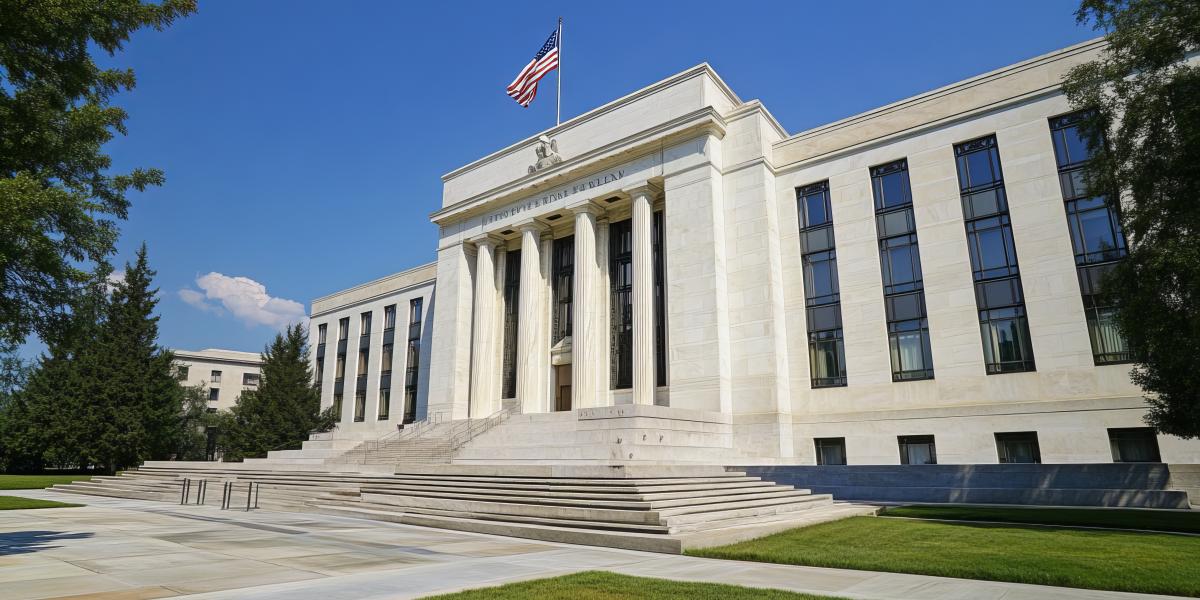
Central banks have become the dominating force in financial markets.
Easing and tightening decisions move all assets from bonds to private equity. Their role is supposed to be to control inflation, provide price stability, and ensure normal market functions. However, there is little evidence of any success in achieving their goals. The era of central bank dominance has been characterised by boom-and-bust cycles, financial crises, policy incentives to increase government spending and debt, and persistent inflation. Recently developed economies’ central banks have taken an increasingly interventionist role.
The creation and proliferation of central banks over the past century promised greater financial stability. Nevertheless, as history and current events continually show, central banks have not prevented financial crises. The frequency and severity of these crises have fluctuated but have not declined since central banks became the leading figure in financial market regulation and monetary interventions. Instead, central banking has introduced new fragilities and changed the nature, but not the recurrence, of financial turmoil.
Empirical evidence dispels the myth that central banks ended the era of frequent financial crises. Regardless of central bank oversight, a credit boom preceded one in three banking crises. Who created those credit booms? Central banks, through the manipulation of interest rates. According to Laeven and Valencia’s comprehensive database, there were 147 banking crises between 1970 and 2011 alone, in an era of near-universal central bank dominance. Financial crises remain a persistent global phenomenon, occurring in cycles that coincide with episodes of credit expansion. Central banks have often prolonged boom periods with low rates and elevated asset purchases and created abrupt bust moments after making mistakes about inflation and credit risks.
According to Reinhart and Rogoff’s work, the rate of crises has not dramatically changed with central banking. Instead, the forms of crises evolved. Twin crises (banking and currency) remain common, and the severity, measured in output loss or fiscal costs, has often increased, especially as financial institutions and governments grew intertwined with monetary authorities.
The Great Financial Crisis of 2008, the Eurozone sovereign debt crisis, and the 2021–2022 inflationary burst rank among the events with the highest costs in history, contradicting the view that central banks have neutralised the risk or costliness of crises.
Central banks act as “lenders of last resort” and regulators. However, with each subsequent crisis, the solution is always the same: larger and more aggressive asset purchase programmes and negative real rates. This means that central banks have gradually moved from lenders of last resort to lenders of first resort, a role that has amplified vulnerabilities. Due to the globalisation of modern central banking and financial innovations, crises tend to be larger in scale and more complex, impacting most nations. The profound involvement of central banks in markets means their policies, such as emergency liquidity or asset purchases, mask systemic risks, leading to delayed but more dramatic failures.
In many advanced economies, recent waves of crises were triggered by debt accumulation and market distortions engineered by central banks, often under the guise of maintaining stability. The IMF and World Bank both note that about half of debt accumulation episodes in emerging markets since 1970 involved financial crises, and episodes associated with crises are marked by higher debt growth, weaker economic outcomes, and depleted reserves—regardless of central banking.
Major crises in recent decades have highlighted that central banks do not prevent systemic disruption. Often, their interventions have only delayed the reckoning but made underlying imbalances, particularly government debt, worse. Central banks do not prevent financial crises. They reshape them, often making their consequences more far-reaching, while shifting the costs onto the public through inflation and debt monetisation.
The Growing Priority: Supporting Government Over Managing Inflation
As I argued recently, central banks are increasingly prioritising government debt distribution over combating inflation. Central banks have one priority: keeping the government debt bubble alive. Central banks constantly inject liquidity to stabilise sovereign issuers rather than uphold price stability. In 2025 alone, global debt maturities will reach nearly $2.78 trillion, and central banks are expected to continue easing monetary policies, even as inflation proves persistent.
Central banks use their enormous power to disguise the insolvency of sovereign issuers and make their debt pricier, which leads to the subsequent excessive risk-taking and asset price inflation. Furthermore, the idea that low rates and asset purchases are tools that help governments reduce their fiscal imbalances and conduct budget prudence is negated by reality. Artificially low rates and asset purchases justify persistent deficits and high debt.
Central banks are enabling inflation and financial instability when they should be restraining it. By ignoring monetary aggregates and the risks created by rising government intervention in the economy and currency issuance through debt instruments, central banks are enabling the slow-motion nationalisation of the economy.
The misguided central bank monetary expansion and negative rate policy of 2020, perpetuated well into 2022 despite soaring inflation, is a clear example. Governments benefited in the period of expansion with enormous debt purchases that enabled an ill-advised increase in government spending and debt. Meanwhile, citizens and small businesses suffered from high inflation. Thus, when central banks finally acknowledged the inflation problem they helped create, they kept loose policies prioritising liquidity, which fuelled more government irresponsibility, and the rate hike damaged the finances of families and small businesses that previously suffered the inflation burst. Governments weren’t concerned about rate hikes because they increased taxes.
The Federal Reserve’s response to increasing government deficits has consistently favoured greater government intervention and rising debt levels, even at the expense of higher inflation, which has undermined its independence and credibility.
Independence vanished when central banks abandoned or ignored price stability, blaming inflation on various absurdities instead of government spending and money supply growth.
The Bank of England, for example, keeps cutting rates and easing policy with rising inflation.
Central banks tend to ease monetary policy when governments increase spending and taxes. However, policymakers claim to be data-dependent and strict when governments reduce taxes and spending. Why? Central banks have transitioned from being independent monetary authorities safeguarding the currency’s purchasing power and controlling inflation to facilitating the distribution of rising government debt and disguising rising issuer insolvency.
Modern central banking has shown that no single authority should set interest rates and liquidity. They have consistently erred on the side of rising government size in the economy and made erroneous estimates of inflation and job growth. The reason for this is straightforward: as the size of government in the economy and sovereign debt, which is often considered the safest asset, increase, the central bank’s role becomes increasingly important for maintaining market stability.
Many central banks state that they don’t interfere with fiscal policy and remain independent… except when someone dares to cut taxes and political spending. As such, central banks are not a limit to risk-taking, rising government spending and budget irresponsibility, but rather a tool that enables market and government excess.