This is the fourth part of my exploration of Musa al-Gharbi’s We Have Never Been Woke. (Part 1, Part 2, Part 3).
As we’ve seen, al-Gharbi spends a good deal of time establishing the demographic of people who are most likely to end up being “woke” as he described the term. And that group is overwhelmingly skewed toward highly educated white liberals:
This is not just a function of baseline U.S. population characteristics: relative to other American workers, symbolic capitalists are disproportionately likely to be white. They nearly unanimously possessed at least a BA. Politically and ideologically, they are overwhelmingly Democratic and liberal. All said, the lion’s share of symbolic capitalists are highly educated white liberals, and Americans who happen to be highly educated whites liberals are quite likely to be symbolic capitalists.
If this is where we are, how did we get here? To answer that question, al-Gharbi examines the history of the symbolic professions – their rise in prominence and power, and how the dynamics that created that rise also influenced the ideology most attractive to this new group of elites.
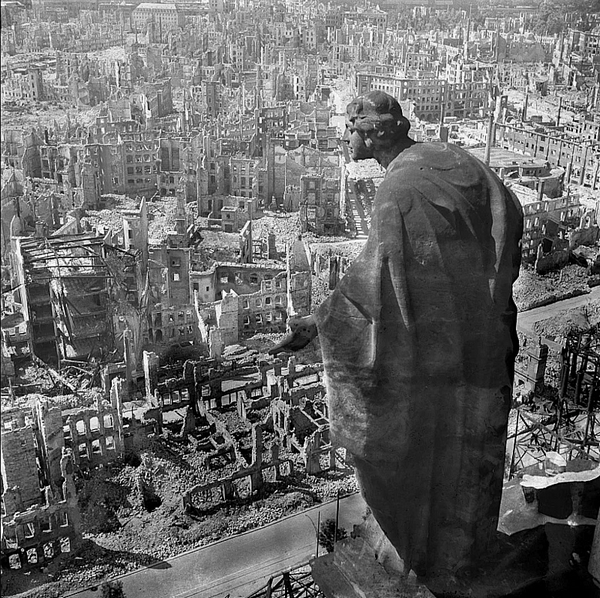
While the jobs that make up the symbolic professions have always existed in one form or another, they rose in prominence during the decades bracketing the First World War. The disorder and chaos of the era created a strong sense that civilization needed to be changed on a fundamental level:
Into this milieu stepped the Progressives. Secularizing the social gospel movement, they promised to help America transcend its divides, redeem its soul, and experience unprecedented peace and prosperity by leveraging science and reason to maximize human flourishing in a way that laissez-faire capitalism never could. They promised a world where robber barons would be restrained by technocrats, where corruption, nepotism, exploitation, and unjust discrimination would be replaced by meritocracy and professionalization. The poor and the unfit would be cared for and gradually eliminated through a combination of aid, education programs, expanded rules and regulations (and intensified enforcement), and eugenics programs. Political partisanship, ethnic and religious conflict, and other forms of tribalistic struggles would be settled by objective and disinterested experts committed to the greater good. Class struggle would be eliminated, not because inequality was vanquished, but because people across the social strata would be made to see that the prosperity and economic dynamism unleashed by free markets could benefit everyone—so long as the wealthy and powerful could be persuaded to entrust a share of their wealth and authority to symbolic capitalists to manage the economy and society writ large. The symbolic professions arose in the service of this project.
As the Progressive movement consolidated political power, members of the symbolic professions worked to administer the goals of Progressivism in both state and private institutions. Through the use of symbolic capital, the symbolic capitalists would lead through expertise, driven by data, and pull levers of policy to achieve desired ends. This caused the various professions of the symbolic capitalist class to more strongly formalize their trade – one example is Harvard creating the Harvard Business School and becoming “the first institution in the world to offer a master of business administration (MBA) degree.” Education, too, became more formalized as a profession:
Progressives simultaneously spearheaded the proliferation of secondary schools and successfully lobbied for mandatory attendance laws, with the aim of assimilating (“civilizing”) ethnic or religious minorities…In order to train the needed army of instructors in how to educate students the “correct” way, teachers’ colleges were established around the country (evolved from “normal schools”), and many colleges and universities established departments or schools of education.
As this new class of elites arose, they also sought to consolidate political power into their own hands:
In order to justify their positions, increase their compensation, and expand their influence, they sought to take more and more decisions out of the realm of democratic contestation by redefining them as matters of expert judgment. It would be for them, the experts, to discern not only what the public did want but what it should want. They would likewise determine the best way to achieve particular goals and officially evaluate progress toward those goals.
This formalizing of the new professional class was accompanied by the heavy use of gatekeeping to keep the riffraff out. As members of the new class took the reins of technocratic power in the state, the establishment ensured only those with the proper symbolic capital would be able to wield that power:
In order to help ensure these jobs ended up being filled by the “right” people, Woodrow Wilson authorized African Americans to be cut from the civil service on the basis of their race and, post-1914, required pictures with job applications to facilitate racial discrimination henceforth. Later, under Franklin D. Roosevelt (and to a lesser extent Harry S. Truman), immigrants and minorities would also be disqualified in various ways from taking advantage of New Deal and Fair Deal job opportunities or benefiting from associated government wealth-building programs.
In the private sector, members of the new professional class created their own barriers to entry through regulatory capture, creating an explosion of licensing and certification requirements, also with the intention of keeping out the “wrong” kind of people:
There were moves to restrict access to journalism jobs to those possessing professional degrees. Teacher certification requirements increased dramatically. New licensing, testing, certification, and degree requirements likewise proliferated for medicine (and derivative fields such as dentistry, pharmacology, nursing, and psychiatry), law, social work, the information professions, and beyond. Scientists (in the natural or social sciences) increasingly required advanced degrees in order to be taken seriously or even officially work as scientists. These measures were taken somewhat explicitly to ensure the “right” kinds of people (upper-middle-class WASPs) ended up in these jobs while the “wrong” kinds of people (ethnic and religious minorities) were filtered out. The American Medical Association, the American Bar Association, and many other professional organizations explicitly restricted membership to whites and denied accreditation to most of the schools that arose to train immigrants and minorities in the professions.
Even when these barriers weren’t officially explicit in their purpose to keep out the wrong kinds of people, they were often consciously adjusted in order to ensure the desired results were created:
Colleges and universities increasingly began awarding scholarships and admission on the basis of “merit.” However, when too many of the “wrong” people (i.e., Jewish people) started qualifying for meritocratic admission and aid, universities shifted to a “holistic” decision-making process that would allow them to discreetly cut “undesirables” who otherwise qualified on the basis of grades and exam scores.
Overall, the system of credentialism, licensing, certification, and other barriers to entry created by the new symbolic capitalist class was extremely profitable for them. Citing the work of the sociologist Randall Collins, al-Gharbi notes (ellipsis in original),
Indeed, Collins’s research shows that although the symbolic professions and the credentialing system were ushered in under the auspices of transferring wealth and opportunity from those at the top to those that were needy and desperate, in fact the primary wealth transfer that actually occurred during this period was from the upper class to the upper-middle class. Symbolic capitalists took from the rich and gave…primarily to themselves.
Yet while the symbolic professions gained wealth and power for themselves, the whole raison d’être of the Progressive movement they supported was supposed to be about improving the conditions of the poor and vulnerable. Thus, it’s critically important for symbolic capitalists to portray their technocratic power, and the institutional barriers they erect and maintain to protect their status, as being motivated by a concern for the good of society in general and of the poor in particular, because if they “are perceived to be selfish or myopic, as serving elite interests at the expense of the broader public, or as parasitic on society rather than advancing the greater good, their authority and job security can be severely undermined.” This creates an arms race within members of the symbolic professions:
This mode of legitimation also sets the stage for a unique form of status competition within the symbolic professions: those who are perceived to be more effective or committed to promoting the common good and (especially) helping the vulnerable, marginalized, and disadvantaged are generally perceived to be more worthy of prestige, deference, autonomy, and so on. Meanwhile, those who are successfully portrayed as possessing values, priorities, and behaviors that seem unworthy of their profession will often find their jobs and social status in a precarious position. And when times get hard, symbolic capitalists grow even more aggressive in trying to preserve or enhance their social position by demonstrating that their peers and rivals have never been woke.
This aggressive competition is what gives rise to “Awokenings.” While that term was only recently coined to describe “the Great Awokening” among symbolic capitalists post-2010, al-Gharbi argues that this is only the most recent instance of a recurring event. There have been many Awokenings, all driven by members of the symbolic professions. But when al-Gharbi says this happens “when times get hard,” it’s a particular kind of hardship he has in mind.
In the next post, we will look at al-Gharbi’s argument about what kinds of conditions lead to Awokenings, as well as what eventually causes their abatement.