No Result
View All Result
  • Login
Wednesday, February 4, 2026
FeeOnlyNews.com
  • Home
  • Business
  • Financial Planning
  • Personal Finance
  • Investing
  • Money
  • Economy
  • Markets
  • Stocks
  • Trading
  • Home
  • Business
  • Financial Planning
  • Personal Finance
  • Investing
  • Money
  • Economy
  • Markets
  • Stocks
  • Trading
No Result
View All Result
FeeOnlyNews.com
No Result
View All Result
Home Economy

Do WNBA Players Really Want to Be Paid What They Are Owed?

by FeeOnlyNews.com
6 months ago
in Economy
Reading Time: 4 mins read
A A
0
Do WNBA Players Really Want to Be Paid What They Are Owed?
Share on FacebookShare on TwitterShare on LInkedIn


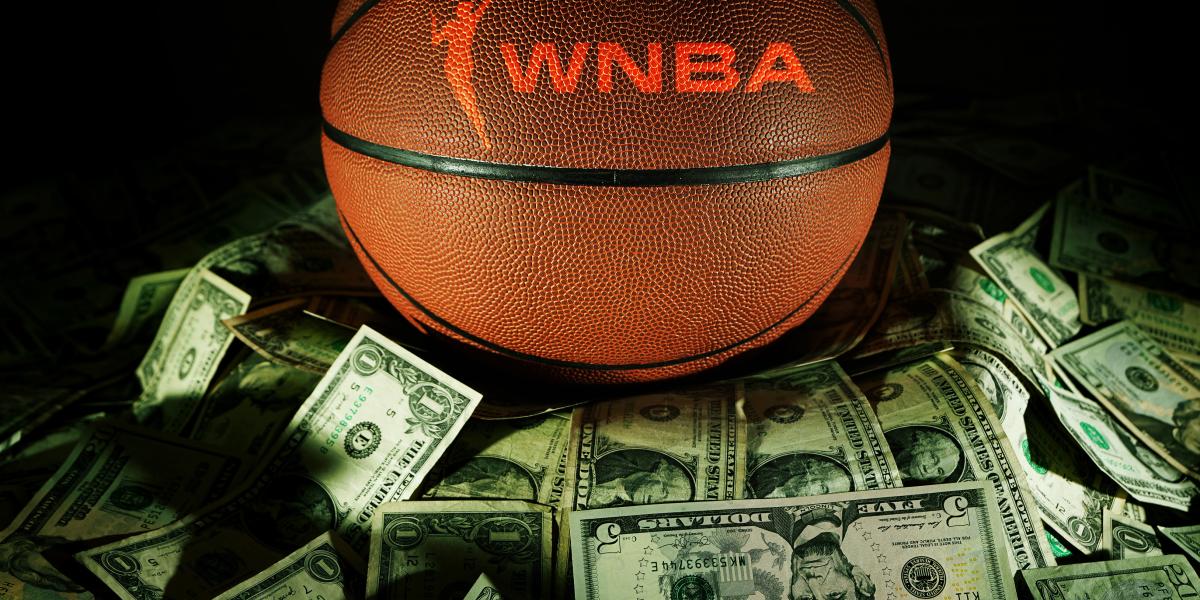
More than 16,000 people showed up at the WNBA All-Star game July 19, but the big news wasn’t that Team Collier pummeled Team Clark by the grotesque score of 151-131, or even that this was the highest-attended WNBA All-Star game in the league’s history. Instead, the big news was that the players pre-game wore T-shirts with a demand to the league: “Pay Us What You Owe Us.”

Last month, I took issue with claims that WNBA players were underpaid, as I pointed out—using the economic analysis of the Austrian School of economics—that, given the lack of profitability by the league, the notion that the players are experiencing an “economic injustice” is ludicrous. Others, such as sports columnist Skip Bayless have pointed out that the only reason that the WNBA has seen the growth that has brought on the demand for higher pay has been the arrival of Caitlin Clark, something that the rest of the league has been unwilling to admit.

While people speak of the WNBA’s growth in fans and merchandise sales with the arrival of Clark last year, the numbers must be put into perspective. For example, the WNBA recently signed a 11-year, $2.2 billion media rights deal with Disney, Amazon Prime Video, and new rights-holder NBCUniversal. That number could grow to about $3 billion with other media partnerships, such as current deals with ION and CBS.

However, that number must be put into perspective. The NBA recently signed an 11-year, $76 billion deal which means that Disney (ABC and ESPN), Comcast (NBA and Peacock) and Amazon will broadcast NBA games through the 2035-36 season. As one can see, while the WNBA’s deal is impressive from where the league had been, it is less than three percent of the NBA agreement.

At the present time, the average WNBA base salary is $102,249, while the average NBA salary is $11,910,649. In the NBA, the players’ share of the league revenues is between 49 and 51 percent while in the WNBA, the players’ share of the league revenues is 9.3 percent. So, doing some simple math, the WNBA players are demanding the same percentage of revenues as their male counterparts, thus what they are “owed.”

There is a problem with those calculations, however. The most recent count for WNBA revenues is $200 million, while two years ago, revenues for the NBA passed $11 billion. Both leagues have expenses well beyond player salaries, and even with the WNBA’s newfound popularity, the league lost $40 million last year. Economically speaking, the WNBA is not producing wealth but rather destroying it.

This is not an irregular occurrence, but rather a standard feature of the WNBA since its founding in 1997. Had it been an ordinary business, it would have folded years ago, but instead is kept alive in large part because of subsidies from the NBA, which owns 42 percent of the league. Given that this arrangement has lasted for the past 28 years, it is doubtful that the NBA will pull the plug anytime soon. But while the WNBA players are demanding more “revenue sharing,” they ignore the fact that revenues are not what is significant; profits are. Should the players be paid via 50 percent of the revenues, as they are demanding, the league’s losses would grow significantly, enough to scare off potential investors and possibly the NBA itself.

Why is the WNBA losing money while salaries are less than 10 percent of revenues while the NBA is profitable even when half of its revenues are spent on the players? The simple answer is that the NBA has more than $5 billion to pay its other expenses while the WNBA would have only about $100 million for all other expenses if the league’s leadership were to give into the players’ demands.

As I noted in my June article, Nobel-winning economist Claudia Goldin wrote in a New York Times op-ed that “nothing can justify this extraordinary pay gap” between NBA and WNBA players. Her reasoning, however, was not based upon revenues generated but rather upon a formula she created that looks at television viewing audiences for league games in which she claimed would set the “justified” WNBA salary at about “roughly one-quarter to one-third of the average N.B.A. salary to achieve pay equity.”

Goldin was thinking like a feminist academic, not as an economist. Salaries are paid by real funds, not abstract formulas. She, along with many of the league’s players and fans, believes that all that is needed is for the WNBA management to significantly boost salaries and the money needed will “come from somewhere.” Sports analyst and talk show host Pat McAfee reflects that thinking:

“If we’re already losing $40 million, could you not just bump [the players’ salaries] up to at least six figures?” McAfee said. “$70,000 as a paycheck is a very—that’s an embarrassment. Especially for Caitlin Clark and all these people in professional sports.

“With how long the WNBA has been around, to say the $40 million loss is the reason you can’t give them money, that should be pretty easy to make happen. If you just add $30,000 to each one of them, get that up to over $100,000. That’s another like $4.6 million, so you’re $44.6 million this way, there has to be $4 million you can find somewhere in here that you can give up to give the players at least a little more money.”

And yet, as sportswriter Skip Bayless has pointed out, when Caitlin Clark came to the WNBA last year as a near-force of nature that provided a huge boost in fan interest in the league, the response of most of the players bordered on violence, as Clark faced hard fouls, physical attacks, and other signs of disrespect as the players simply could not accept the presence of a white and sexually straight superstar. While the players might be serious basketball players—and the American women’s basketball teams have dominated the recent Olympic Games—they clearly are not serious about accepting what must be done to improve their pay prospects.

As I have written before, the WNBA owes its existence and longevity to the politics of sex and race. Even with the boosted interest in the league following the entrance of Caitlin Clark, the long-term prospects for profitability for the WNBA probably are not good. The fact that the league’s top officials have shown no desire to protect Clark from physical attacks on the court demonstrates that they really are not serious about making the WNBA anything more than what it currently is: a charity that keeps women basketball players in this country employed. In the meantime, economically speaking, should the WNBA player receive their discounted marginal value product to the WNBA, they would find that number to be zero.


Source link

Tags: owedPaidPlayersWNBA
ShareTweetShare
Previous Post

10 Overvalued Dividend Stocks To Sell

Next Post

Ameriprise wealth earnings dropped in q2 due to volatility

Related Posts

Ukraine & Trump | Armstrong Economics

Ukraine & Trump | Armstrong Economics

by FeeOnlyNews.com
February 3, 2026
0

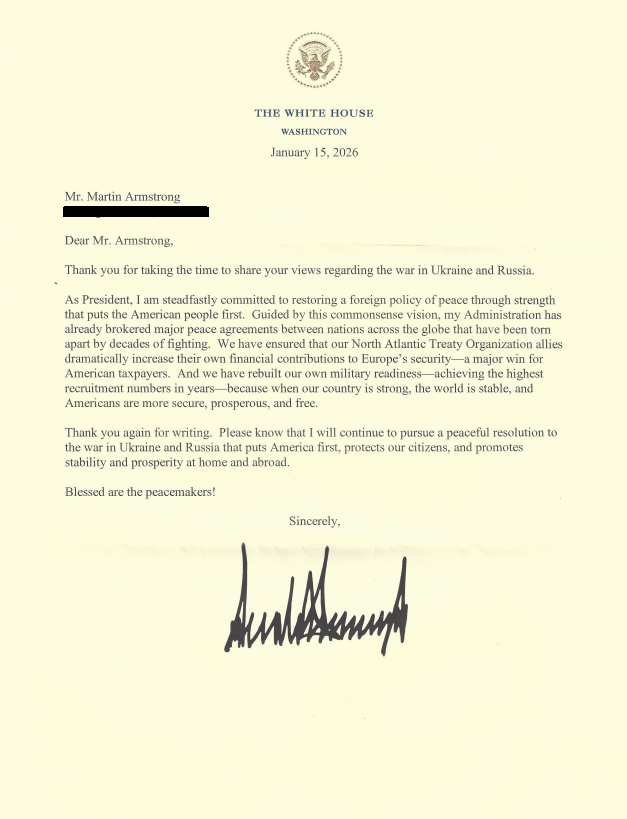
The letter I  received from Trump, dated January 15th, discusses foreign policy, not domestic economics. It also says thank you...

Coffee Break: Armed Madhouse – The Folly of Bombing Iran

Coffee Break: Armed Madhouse – The Folly of Bombing Iran

by FeeOnlyNews.com
February 3, 2026
0

Escalation talk surrounding a potential U.S. bombing campaign against Iran rests on a familiar premise: that sufficient military bombardment can...

US Military Helping DHS Build Massive Network of ‘Concentration Camps,’ Navy Contract Reveals

US Military Helping DHS Build Massive Network of ‘Concentration Camps,’ Navy Contract Reveals

by FeeOnlyNews.com
February 3, 2026
0

Yves here. The fact presented in the headline is bad enough, but the potential expenditures, even more so, since it...

The Not-So-New Dollar Strategy: Monetize Productivity in Advance

The Not-So-New Dollar Strategy: Monetize Productivity in Advance

by FeeOnlyNews.com
February 3, 2026
0

We have been here before – the Fed monetizing a productivity surge. There are two important differences this time, though,...

Adam Smith Misunderstood the Origins of the Division of Labor

Adam Smith Misunderstood the Origins of the Division of Labor

by FeeOnlyNews.com
February 3, 2026
0

Labor divided into the production of different goods or even into various tasks involved in the production of a single...

Trump responds to Europe with U.S.-India trade deal

Trump responds to Europe with U.S.-India trade deal

by FeeOnlyNews.com
February 3, 2026
0

President Donald Trump greets Indian Prime Minister Narendra Modi to the White House in Washington, Monday, June 26, 2017.Alex Brandon...

Next Post
Ameriprise wealth earnings dropped in q2 due to volatility

Ameriprise wealth earnings dropped in q2 due to volatility

These 8 Cost-Cutting Tips Are Actually Outdated in 2025

These 8 Cost-Cutting Tips Are Actually Outdated in 2025

  • Trending
  • Comments
  • Latest
Self-driving startup Waabi raises up to  billion, partners with Uber to deploy 25,000 robotaxis

Self-driving startup Waabi raises up to $1 billion, partners with Uber to deploy 25,000 robotaxis

January 28, 2026
Student Beans made him a millionaire, a heart condition made this millennial founder rethink life

Student Beans made him a millionaire, a heart condition made this millennial founder rethink life

December 11, 2025
Sellers Are Accepting Even Less

Sellers Are Accepting Even Less

January 23, 2026
Episode 242. “Our couples therapist couldn’t fix this. Please help.”

Episode 242. “Our couples therapist couldn’t fix this. Please help.”

January 6, 2026
US SEC Issues Key Crypto Custody Guidelines For Broker-Dealers

US SEC Issues Key Crypto Custody Guidelines For Broker-Dealers

December 19, 2025
How to sell a minority stake in RIA M&A

How to sell a minority stake in RIA M&A

November 11, 2025
Supermicro, Eli Lilly stocks pop on upbeat forecasts, AMD and Uber slide

Supermicro, Eli Lilly stocks pop on upbeat forecasts, AMD and Uber slide

0
From Ivory Tower to Investment Toolbox: Why Research Matters

From Ivory Tower to Investment Toolbox: Why Research Matters

0
Dogecoin Price Analysis: Is $DOGE’s alt=

Dogecoin Price Analysis: Is $DOGE’s $0.10 Level a Smart Entry or Market Trap?

0
‘SaaSpocalypse’: What is Anthropic’s newest AI tool and what are the consequences for global tech companies?

‘SaaSpocalypse’: What is Anthropic’s newest AI tool and what are the consequences for global tech companies?

0
5 Financial Favors That Are Hard to Undo

5 Financial Favors That Are Hard to Undo

0
PayPal Holdings, Inc. (PYPL) Q4 2025 Earnings Call Transcript

PayPal Holdings, Inc. (PYPL) Q4 2025 Earnings Call Transcript

0
Supermicro, Eli Lilly stocks pop on upbeat forecasts, AMD and Uber slide

Supermicro, Eli Lilly stocks pop on upbeat forecasts, AMD and Uber slide

February 4, 2026
Binance completes second batch of Bitcoin conversion, acquires 0M in BTC

Binance completes second batch of Bitcoin conversion, acquires $100M in BTC

February 4, 2026
Silver & gold ETFs rally up to 9% as bullion boom continues. Should you invest now?

Silver & gold ETFs rally up to 9% as bullion boom continues. Should you invest now?

February 4, 2026
‘SaaSpocalypse’: What is Anthropic’s newest AI tool and what are the consequences for global tech companies?

‘SaaSpocalypse’: What is Anthropic’s newest AI tool and what are the consequences for global tech companies?

February 4, 2026
XRP Open Interest Falls to Lowest Level Since 2024: Market Reset Or Warning Signal?

XRP Open Interest Falls to Lowest Level Since 2024: Market Reset Or Warning Signal?

February 4, 2026
Clorox outlines 0–1% category growth target and innovation-led recovery as ERP transition ends (NYSE:CLX)

Clorox outlines 0–1% category growth target and innovation-led recovery as ERP transition ends (NYSE:CLX)

February 3, 2026
FeeOnlyNews.com

Get the latest news and follow the coverage of Business & Financial News, Stock Market Updates, Analysis, and more from the trusted sources.

CATEGORIES

  • Business
  • Cryptocurrency
  • Economy
  • Financial Planning
  • Investing
  • Market Analysis
  • Markets
  • Money
  • Personal Finance
  • Startups
  • Stock Market
  • Trading

LATEST UPDATES

  • Supermicro, Eli Lilly stocks pop on upbeat forecasts, AMD and Uber slide
  • Binance completes second batch of Bitcoin conversion, acquires $100M in BTC
  • Silver & gold ETFs rally up to 9% as bullion boom continues. Should you invest now?
  • Our Great Privacy Policy
  • Terms of Use, Legal Notices & Disclaimers
  • About Us
  • Contact Us

Copyright © 2022-2024 All Rights Reserved
See articles for original source and related links to external sites.

Welcome Back!

Sign In with Facebook
Sign In with Google
Sign In with Linked In
OR

Login to your account below

Forgotten Password?

Retrieve your password

Please enter your username or email address to reset your password.

Log In
No Result
View All Result
  • Home
  • Business
  • Financial Planning
  • Personal Finance
  • Investing
  • Money
  • Economy
  • Markets
  • Stocks
  • Trading

Copyright © 2022-2024 All Rights Reserved
See articles for original source and related links to external sites.